White House’s sweeping Canada tariffs put US prices at risk
The White House announced on July 20 that it will impose 50% tariffs on close to $20 billion worth of Canadian imports, covering everything from cement and clothing to hockey sticks and swimming pools.
The duties take effect on August 19 and represent some of the broadest levies the administration has placed on a single trading partner during this term, matching the 50% rate already applied to Canadian steel and aluminum imports since March 2025.
What makes this round different from previous U.S.-Canada tariff disputes is the legal mechanism behind it.
President Trump signed three proclamations under Section 338 of the Tariff Act of 1930, a provision that allows the president to impose duties of up to 50% when another country is found to discriminate against American goods, the White House confirmed in a fact sheet.
The administration accuses Canada of targeting three American industries
The White House framed the tariffs as a direct response to what it called Canada’s “discriminatory treatment” of U.S. exports in three categories: motor vehicles, alcoholic beverages, and dairy products.
The administration pointed to specific trade data to support its case. Canadian imports of U.S. motor vehicles fell by about 22%, or $5.6 billion, between April 2025 and March 2026 compared to the prior 12-month period, the White House fact sheet stated.
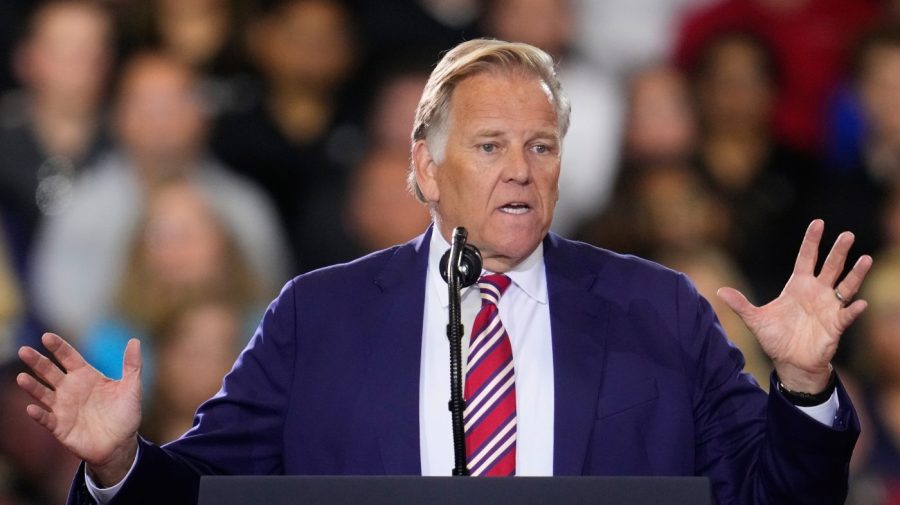
Mark Carney, Canadian Prime Minister, acknowledged rising household costs and signaled openness to negotiations.
This trade dispute has raised costs for families, particularly in the U.S…Canada stands ready to engage intensively to address outstanding issues with the U.S. to the mutual benefit of our citizens
From March 2025 through February 2026, Canadian purchases of U.S. alcoholic beverages dropped by roughly 81%, or $582 million, compared with the prior year.
All but two Canadian provinces and territories pulled U.S. liquor from store shelves in response to earlier tariffs imposed by the Trump administration, the White House noted.
The administration also argued that Canada’s dairy system and auto import policies favor European and other foreign competitors over American producers.
While the Administration continues to secure fair and reciprocal trade deals with our trading partners, Canada, unlike other partners and allies, continues to retaliate against the United States for its efforts to rebalance trade and protect U.S. industry in national-security sensitive sectors,” Jamieson Greer said in a USTR statement.
A Depression-era law creates new legal uncertainty in the U.S. trade landscape
The decision to invoke Section 338 carries implications that go well beyond the products on the tariff list.
Because the law had never been tested at this scale, trade experts warn it introduces a layer of unpredictability into the broader U.S. trade landscape.
Scott Lincicome, vice president of general economics at the Cato Institute, told the Associated Press that the move represents the most aggressive tariff tool the administration has deployed to date.
More Economy:
- Massive AI spending has unexpected effect on U.S. inflation
- White House sends warning to nations relying on the Strait
- PepsiCo CEO warns on gas prices, consumer spending
“We crossed the Rubicon,” Lincicome said. “The invocation of 338 is the nuclear option for Trump tariffs.” The tariffs could also be applied to trading partners beyond Canada, which injects what Lincicome described as “massive uncertainty” into the global economy.
That concern is especially relevant after the Supreme Court ruled in February 2026 that the president lacked legal authority to impose sweeping tariffs under the International Emergency Economic Powers Act, or IEEPA.
The administration has since been searching for alternative legal tools to advance its trade agenda.
These tariffs bypass the USMCA for the first time
One of the most significant features of this tariff action is that the duties apply to all covered goods regardless of whether they qualify for preferential treatment under the United States-Mexico-Canada Agreement.
Previous tariff rounds largely spared USMCA-compliant goods, which provided a buffer for cross-border supply chains and helped limit the impact on consumer prices.
That buffer is now gone for nearly $20 billion in Canadian imports, Capital Economics noted in a research note.
The firm estimated that only about 5% of Canadian imports would be directly affected by the new tariffs, which amounts to roughly 0.6% of total U.S. imports.
Stephen Brown, chief North America economist at Capital Economics, wrote that the administration’s choice of legal authority itself is a signal worth watching.
“Taking a step back, it’s striking that the Trump administration is now reaching for a new method to implement tariffs,” Brown wrote in the note.
The U.S. did not renew the USMCA when it came up for extension, triggering renegotiations that could run as late as 2036, Axios reported. The decision to override the agreement’s protections on this round of tariffs could complicate those negotiations further.
What the tariffs mean for household budgets
Tariffs are import taxes paid by companies bringing foreign goods into the United States, with costs typically passed along to consumers through higher retail prices.
For households purchasing Canadian-sourced wine, cheese, building materials, or furniture, the 50% duty could meaningfully increase prices at the register starting in late August.
The 30-day delay leaves room for negotiations, and the administration has previously revised or withdrawn announced tariff increases, according to Yahoo Finance.
The “Liberation Day” tariffs from April 2025, for example, were rolled back after triggering market turmoil.
Whether the Section 338 duties survive legal challenges remains uncertain, but pricing pressure on affected goods could begin well before August 19.
Related: $49B in tariff refunds put U.S. deficit on dangerous path