


UBS Warns Trump’s 100% Generic Drug Tariff Puts Indian Pharma “On Notice”; Goldman Flags Reshoring Winners
UBS Warns Trump’s 100% Generic Drug Tariff Puts Indian Pharma “On Notice”; Goldman Flags Reshoring Winners
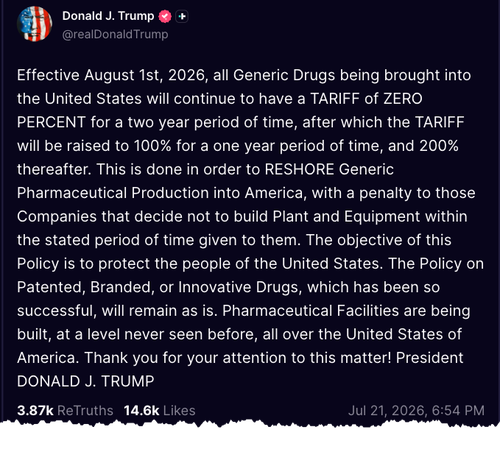
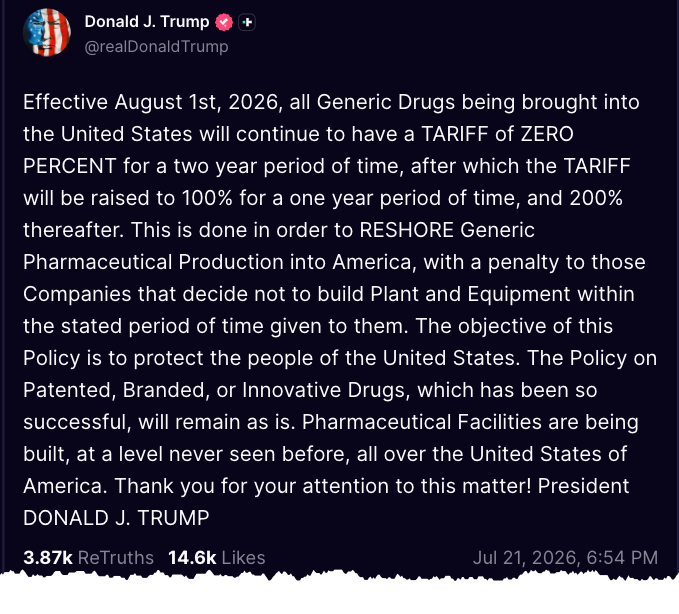
President Trump will impose a 100% tariff on imported generic drugs starting in August 2028, rising to 200% a year later, unless manufacturers shift production to the US.
“This is done in order to RESHORE Generic Pharmaceutical Production into America, with a penalty to those Companies that decide not to build Plant and Equipment within the stated period of time given to them,” Trump wrote on Truth Social late Tuesday.
He continued, “The objective of this Policy is to protect the people of the United States. The Policy on Patented, Branded, or Innovative Drugs, which has been so successful, will remain as is,” adding, “Pharmaceutical Facilities are being built, at a level never seen before, all over the United States of America.”
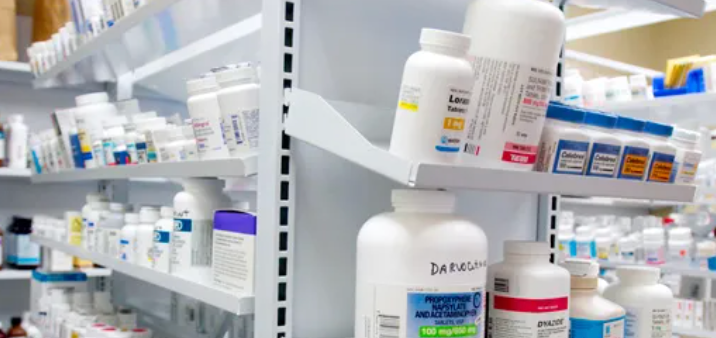
Trump’s announcement is the latest effort to reshore critical supply chains, and in this case, boost domestic production of generic drugs. Trump has been pressuring drugmakers through his most-favored-nation drug pricing policy to lower prices to what people pay in other high-income countries. At least 90% of medicines sold in the U.S. are generics.
UBS analyst Aditi Samajpati told clients earlier that Trump’s move to reshore generic drug production puts Indian pharmaceutical companies “on notice.”
Samajpati said:
President Donald Trump has threatened steep tariffs on generic-drug imports to push manufacturing back to the US, though his plan includes a two-year tariff-free window before levies rise to 100% from August 2028 and 200% from August 2029. India is highly exposed: its generic medicines account for nearly 40% of US generic-drug volume, used widely to treat hypertension, diabetes, cancer, and infectious diseases.
In FY2024-25, India’s pharma exports to the US totalled $9.7bn, according to the Global Trade Research Initiative. Yet implementation is uncertain given prior unfulfilled tariff threats, a February bilateral trade pact that included negotiated outcomes for generics, and India’s 30%-50% manufacturing-cost advantage. The risk of immediate disruption is limited as investors assess whether policy pressure can realistically shift low-cost supply chains back to the US, especially if execution stretches beyond Trump’s term.
Goldman analyst Matt Dellatorre offered clients a way to profit from this announcement:
For our generics coverage, we view the group as relatively well-positioned given: AMRX (significant US infrastructure), TEVA (diversified manufacturing; branded portfolio), and VTRS (diversified manufacturing; limited US exposure).
The national security case for reshoring critical generic-drug supply chains stems directly from Covid-era disruptions of essential medicines, active pharmaceutical ingredients, protective equipment, and medical devices. Years of offshoring have left the US dangerously dependent on foreign production, such as that in India.
In the event of a future supply shock, particularly one triggered by conflict in the Pacific, Washington could be confronted with shortages far more severe than the Covid-era. Rebuilding domestic production would give the US greater resilience to absorb any future supply shock without jeopardizing access to critical medical supplies.
Tyler Durden
Wed, 07/22/2026 – 09:45