



The next UN secretary-general will face a daunting task: to restore trust in the faltering institution
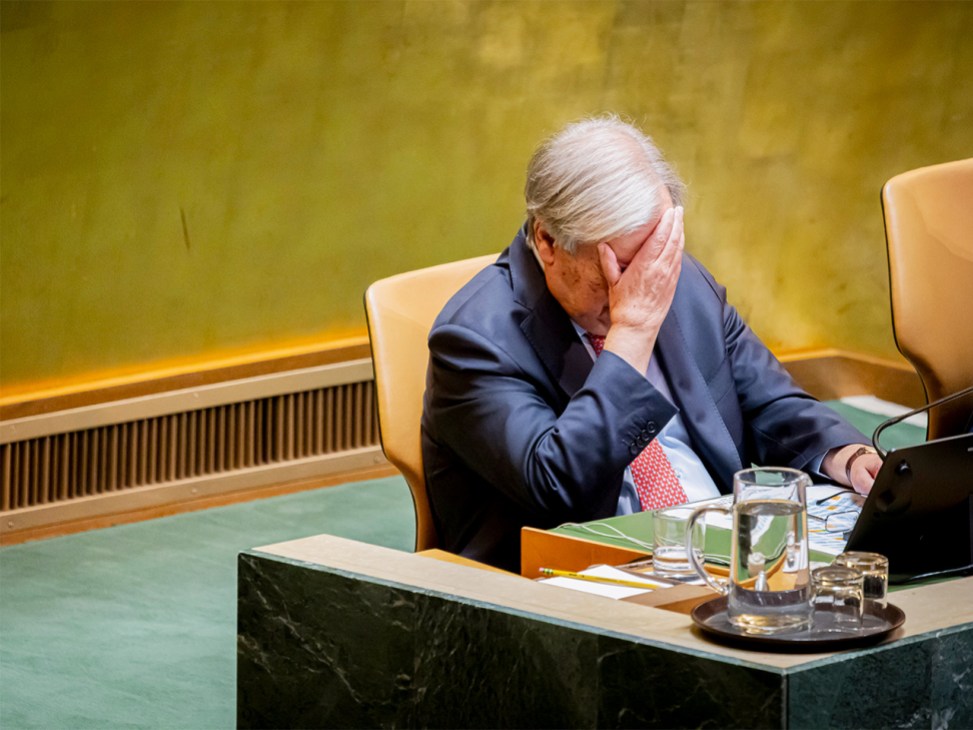
With multilateralism seemingly in retreat, a hostile US administration, major powers waging unilateral wars and a sharp budget cut, the position of UN secretary-general is surely one of the world’s toughest jobs right now. Who would want to fill the shoes of António Guterres, whose second five-year term ends in December?
Lining up for consideration are eight people with impressive CVs, from the current head of the International Atomic Energy Agency to a former president of Senegal. Their job, should they succeed Guterres, will be to overhaul the entire institution, which has long been haemorrhaging trust among both its member states and the public. The candidates’ statements all cite a pressing need to inject new life into the UN, increase transparency and return the body to its core mandate of preventing conflict.
Senior UN trade official Rebeca Grynspan Mayufis of Costa Rica, an early frontrunner, says that the organisation is “too distant from the daily needs of people”. Ecuadoran diplomat Ivonne A-Baki calls it “slow, fragmented and expensive”. Macky Sall, the former president of Senegal, has accused the UN Security Council of being “the last vestige of a bygone world order”.
The opaque selection process involves a series of secret ballots held by the 15-member Security Council. The five permanent members (P5) – the UK, France, the US, Russia and China – wield a veto. As a result, while candidates have identified the problem, a strident reformer is unlikely to emerge as the victor.
Secret straw polls began on 30 July, in which the P5 members and the 10 non-permanent members cast ballots. The candidates have no idea which country gave which ballot and must figure out who to target with renewed lobbying. With its intricacies and potential for Machiavellian power plays, the process has been compared to a papal conclave.
So far, three rounds have taken place, with Grynspan Mayufis and Carolyn Rodrigues Birkett, Guyana’s permanent representative to the UN, in the lead – though some insist that these early ballots are part of the negotiating process, rather than a true indication of candidates’ prospects. Another round is expected to take place soon. If a frontrunner emerges, a further round of polling will take place, in which the P5 will use different coloured ballot papers. A “discourage” vote from one of them means that they could face a veto. And once a candidate has the support of at least nine Security Council members without a veto from a P5 member, they will face a full vote at the 193-member General Assembly, which is expected to back the Security Council’s recommendation.
Conventional wisdom holds that a candidate from South America will prevail, given that only one of the nine secretary-generals to date have come from the region. There are also five female candidates and many have argued that it’s time for a woman to take the helm.
Much of the lobbying by candidates this year has been targeted at the US, given Donald Trump’s open hostility to the UN, the country’s withdrawal from 31 of its affiliated organisations and the president’s threats to its funding. “It’s symbolically, financially and politically vital to have the trust and the backing of the United States,” says secretary-general candidate and former Ecuadorean defence and foreign affairs minister María Fernanda Espinosa Garcés.
Another potential pitfall lies ahead. In theory, a successor from the current crop should be chosen by December. However, any member state can throw a spanner in the works by nominating a new candidate at any point in the process and speculation has been rife that Trump might try to foist the head of Fifa, Gianni Infantino, into the role. While this seems unlikely given Infantino’s recent troubles after trying to sell off rights to the World Cup, the US president is a known disruptor on the international stage. And because of the way that the selection process is designed, with huge power given to the P5 members, it’s more than likely that we’ll see some drama before any white smoke.
The post The next UN secretary-general will face a daunting task: to restore trust in the faltering institution appeared first on Monocle.