


Move Over Rivals – House of Block’s Fourth Annual Global Conference & Polo Day is Top-Tier Entertainment
Now in its fourth year, the annual Digital Assets & Web3 Global Conference and Polo Event at Ham Polo Club combines discussions on geopolitics, stablecoins, AI and tokenisation with an afternoon of polo and networking. It is a format that feels closer to a private members’ gathering than a traditional conference and that appears to be entirely intentional.
“House of Block was created to bring senior leaders together in a more intimate setting — to have the conversations that don’t happen on the main stage,” said Korby Hayre, Founder and Producer of House of Block. “We focus on depth over scale, creating the right environment for leaders shaping the future of money, from financial services and digital assets to AI and government, to step back from the noise, challenge ideas and build relationships that last beyond the event itself.”
Proceedings opened with a discussion on geopolitics, featuring Professor Brunello Rosa, Katie Ramsey from the UK Government’s Venture Capital Unit and Freddie New, CEO of B HODL, the first publicly listed Bitcoin treasury company in the UK. Moderated by BBC journalist Thomas Mason, the conversation explored the intersection of conflict, capital and consequence, setting the tone for many of the discussions that followed.
It proved a useful framing. References to energy security, infrastructure investment, technological competitiveness and geopolitical fragmentation resurfaced throughout the afternoon as speakers debated everything from stablecoin regulation to artificial intelligence and digital assets.
One of the most engaging discussions of the day centred on agentic AI and the future of financial services. Chaired by Emma Lovett of JPMorgan Chase, the session featured Robby Yung of Animoca Brands, Dmitry Lazarichev of Wirex, Pascal Podvin of nSure.ai and Lex Sokolin of Generative Ventures.
Lovett skilfully turned the conversation into a live debate, inviting audience participation and encouraging speakers to defend opposing perspectives. And while participants were occasionally pushed into taking sides between traditional and digital financial systems, many seemed reluctant to remain in their assigned camps. Advocates of established financial infrastructure acknowledged the benefits of innovation, while digital asset proponents readily recognised the importance of regulation, trust and institutional adoption. Although the audience was invited to choose between digital and fiat many of the panellists appeared to have already moved beyond the distinction and good fun was had by all if indeed “nothing ever changes, it’s hopeless and the banks will win” was said through gritted teeth.
The stablecoin discussion, chaired by John Orchard of the Digital Monetary Institute, brought together Nima Elmi of Circle, Julie Ng of Moody’s and Kaushik Sthankiya of the Digital Money Association to examine how the industry is responding to emerging regulatory frameworks such as MiCA in Europe and the GENIUS Act in the United States.
The conversation reflected a sector increasingly focused on practical implementation rather than ideology. Questions around regulation, treasury management, risk, settlement and banking partnerships featured more prominently than the disruption narratives that once dominated digital asset events.
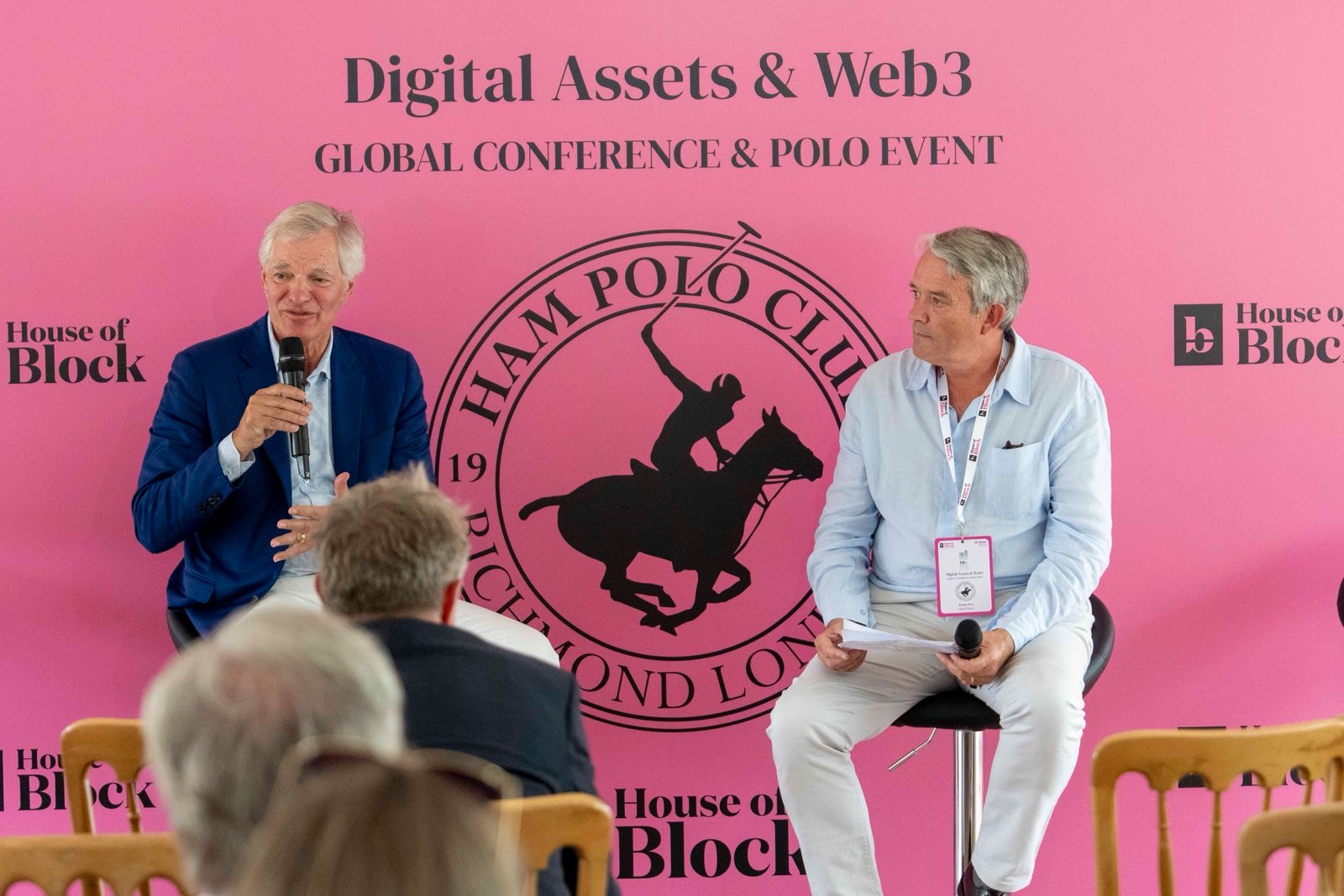
That shift was reinforced by a fireside conversation between fintech commentator Jonny Fry and Charles McManus, Co-Founder and Board Director of ClearBank. Combining humour, audience engagement and a steady flow of data-driven observations, the discussion moved beyond the headlines and into the realities of payments infrastructure and financial services innovation.

Rather than positioning banks and digital assets as opposing forces, many conversations throughout the day explored how the two are becoming increasingly intertwined.
The final session came from Ronit Ghose, Citi’s Global Head of Future of Finance, who explored the long-term evolution of money and financial infrastructure. While much of the discussion focused on future trends, one of the most memorable observations concerned the history of money itself.
Long before digital wallets, stablecoins and blockchain networks, traders travelling the Silk Road sought alternatives to carrying large quantities of coins across vast distances. The solution was a form of paper notes that could be redeemed or settled further along the trade route, creating an early version of portable financial infrastructure.
The parallel with today’s discussions was difficult to ignore.
While the technologies have changed dramatically, the underlying challenge remains remarkably familiar: how can value be moved more efficiently, more securely and with greater trust?
And with that, the conference element of the day came to a close. This reporter slipped away before the first chukka, leaving bankers, builders, policymakers and digital asset pioneers to continue the conversations that had defined the day. And to perhaps stomp on a few divots along the way.

The post Move Over Rivals – House of Block’s Fourth Annual Global Conference & Polo Day is Top-Tier Entertainment appeared first on The Fintech Times.