


Collectible Toy Stores Could Become One of Retail’s Most Powerful Traffic Drivers
Retail has been searching for a solution to the foot traffic problem for the better part of a decade. E-commerce has been slowly eating market share from brick-and-mortar stores. A long string of closures left shopping centers with the difficult task of reinventing themselves as destinations without the stores that once justified the trip. The answer the industry landed on, experiential retail, was real but frustratingly vague. What does experiential actually mean in practice, and more importantly, what does it look like in a tenant mix? Now it looks like malls and shopping centers have found an answer: collectable toys. The collectibles boom is providing one of the clearest answers the industry has produced yet, and the landlords paying attention are rethinking what a strong tenant actually looks like.
The best collectible brands have borrowed the luxury playbook and applied it to products that cost between ten and fifty dollars. Manufactured scarcity, limited drops, short production windows, and blind box mechanics that make the chase as addictive as the product itself have turned ordinary figurines and plush toys into high-demand objects with genuine cultural currency. Adult shoppers spent $1.8 billion on toys in the first quarter of 2025 alone, making them the largest spending cohort across all age groups.
The demographic driving that spending is more varied than the category’s toy-adjacent branding might suggest. The “kidult” segment now accounts for 28% of global toy sales, valued at $43.4 billion in 2026. Gen X and Boomers are paying premium prices for products tied to childhood nostalgia. Gen Z is hunting for the latest drop as a form of social currency, with three in five consumers reporting pressure to buy the hot item of the year and one in three collectors saying rare items make them feel more socially connected. “Gen Zers are looking at malls as experiential places,” said Anjee Solanki, National Director of Retail Services at Colliers. “Now they want to hang out, but they also want to be connected with something new.” The collectible store delivers both at once, which is a combination that most retail categories struggle to provide.
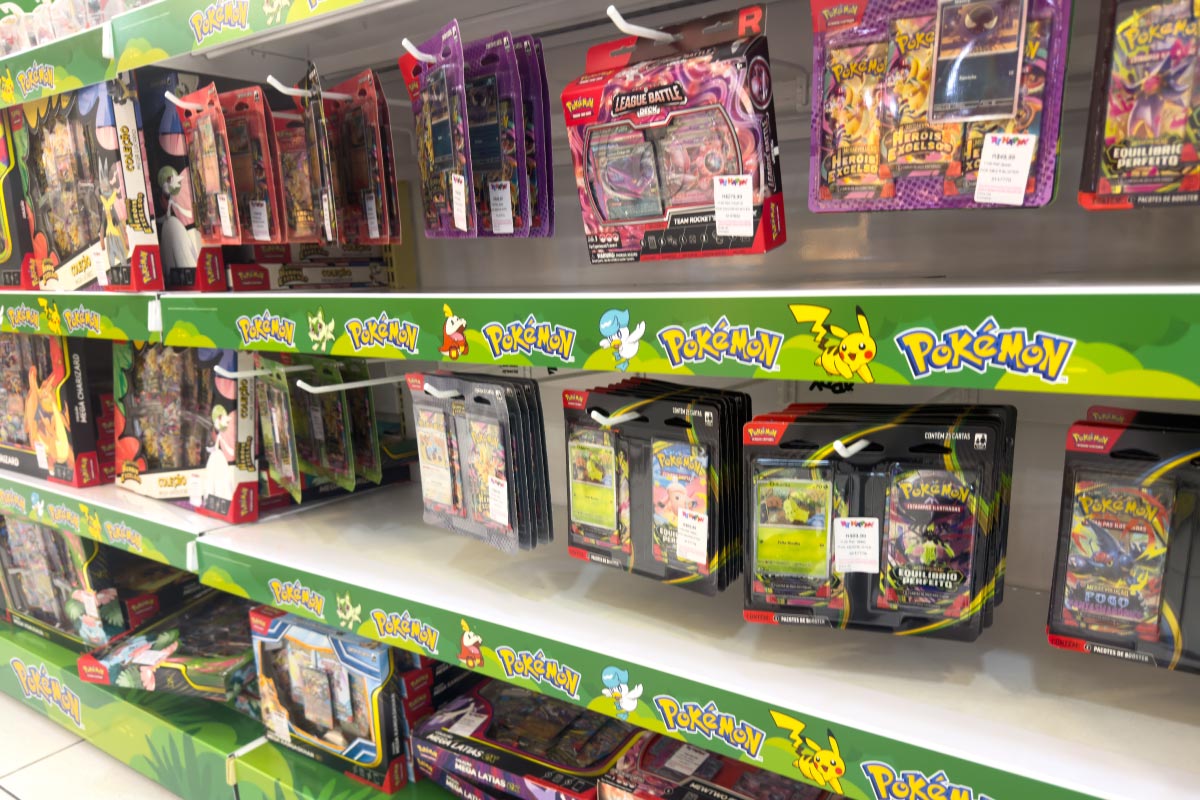
Part of what makes these stores work so well as physical retail is the hole they’re filling. Buying a popular toy online is not the same as being in a store when a new series drops. “FAO Schwarz and Toys R Us used to be this experience,” Solanki said. “These new stores are small versions of those.” Pop Mart, which makes the Labubu figurine, has opened locations at a breakneck pace. Miniso, which has evolved from a general goods store into a full IP-driven pop culture destination featuring licensed consumer goods and blind boxes, is opening new locations from strip malls to large shopping centers.
The events that these stores run around new product releases are where the shopping center dynamic becomes most interesting. Collectible drops draw lines. Not the kind of lines that indicate a problem to be managed, but the kind that signal cultural relevance in ways that no amount of marketing can manufacture. “It is like waiting in line to get tickets to a concert,” Solanki said, “and creates a community around these products. You can’t get this kind of excitement online.” A line of people waiting outside a store in a shopping center does something that a shopping center has struggled to create organically for years. It makes other shoppers curious, it creates a social atmosphere around the act of being present in that place, and it signals to everyone who walks past that something worth experiencing is happening inside. That social proof is valuable to a landlord in ways that extend well beyond the collectible store’s own sales figures.
The speed at which these brands can convert cultural moments into physical products is another dimension of what makes them so effective as traffic drivers. The manufacturing partnerships that collectible brands have built, many of them in China, allow them to move from licensed IP to shelf-ready merchandise with a velocity that conventional toy companies can’t match. “Because of the manufacturing partnerships, they can turn product so fast,” Solanki said. “A new movie comes out and they will already have every possible product for it.” That velocity keeps the assortment fresh, gives customers a reason to come back on a short cycle, and ensures that the store always has something new to discover, which is a traffic pattern that most retail categories aspire to and few actually achieve.
For landlords, all of this translates into something they have been chasing for years. “Landlords are seeing how useful these types of stores are to a tenant mix when it comes to dwell time and bringing in new demographics,” Solanki said. Dwell time is the metric that shopping center operators care about most, because it correlates directly with spending across the entire property rather than at any single store. A shopper who comes in for a Labubu drop and stays for ninety minutes is worth considerably more to the landlord than a shopper who completes a single transaction and leaves. Foot traffic to shopping centers has been increasing, but it is the increase in dwell time that is the more meaningful signal, and collectible stores are contributing to both. The category is not a niche. It is a traffic engine, and the landlords building their tenant mix around that reality are the ones whose properties will look different, and perform better, than those still waiting for a department store anchor to come back.
The post Collectible Toy Stores Could Become One of Retail’s Most Powerful Traffic Drivers appeared first on Propmodo.