An unlikely mix of surreal and classical architecture makes Gibellina Nuova well worth a visit
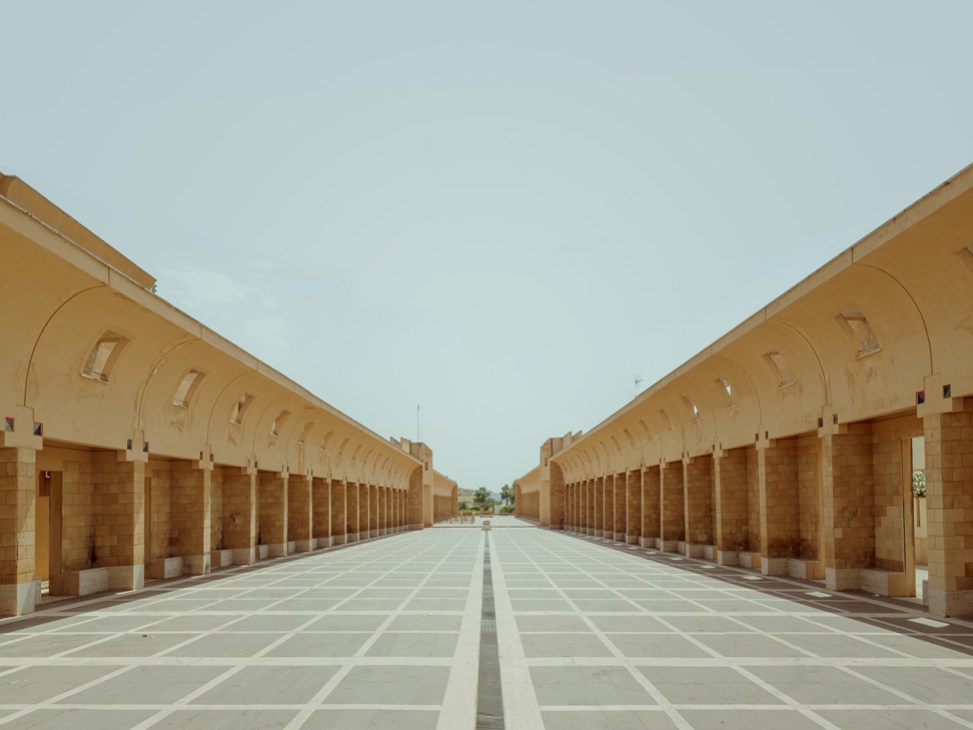
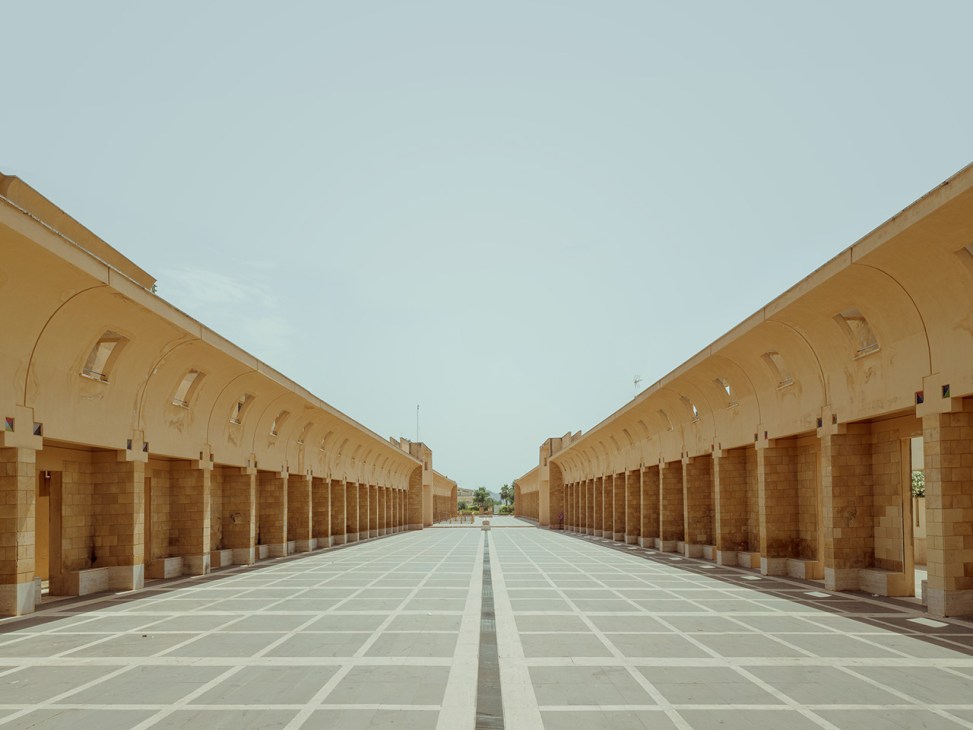
“What are you seeing in this place?” It was a fair question from my Australian family, who I had dragged to Gibellina Nuova, a small town in the centre of Sicily. It was a baking hot summer day and we were staring at the empty sistema delle piazze – built to the design of architects Franco Purini and Laura Thermes in 1990. Constructed from scratch between 1970 and 1990, the conurbation was intended to house some 100,000 people displaced by an earthquake that devastated the Belice Valley area.
Despite its relative newness, the town appeared lifeless when we rolled through. But so are most places at 14.00 at this time of year in Sicily. Still, it was hard to imagine it ever being described as vibrant – maybe if the local football team won the league, you could picture a procession around the piazze. The issue, from my rudimentary initial assessment, is its scale. The town has a population of about 4,000 but was created with the infrastructure and dimensions of one packed with 20,000 people. Slow initial construction and a subsequent lack of jobs meant that its vast plazas, enormous civic buildings and wide streets never filled up.
So, why visit? For a start, the buildings, despite their scale, are remarkable works of art. The mayor at the time of the earthquake, Ludovico Corrao, commissioned a murderers’ row of post-modern Italian architectural talent. The result is a bizarre mix of buildings defined by surreal and classical architectural details, with highlights including the orb-like Chiesa Madre church by Ludovico Quaroni and Luisa Anversa from 1985, a curving glass-and-metal theatre by Pietro Consagra (1976) and a pharmacy that looks like a rudimentary house tacked onto boxy concrete blockwork (again, by Purini and Thermes, 1980). Despite the wide, carbon-copy, car-friendly avenues complete with a mix of parking spaces and pedestrian boulevards, the residential side features villas with varied façades. There are Art Nouveau-inspired townhouses that look as though they were plucked from Brussels and Streamline Moderne structures that would be right at home in Los Angeles, all sitting side-by-side.
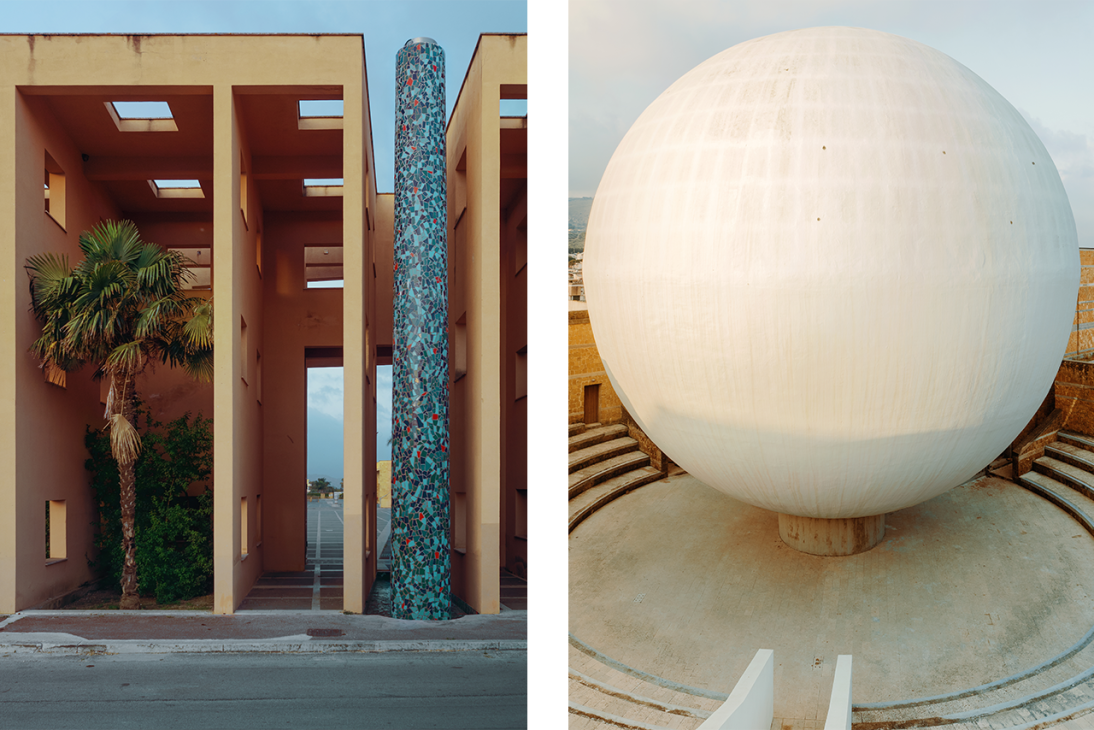
The result is an architectural mix that is significantly different from most towns on the island. About 50 to 60 per cent of all structures on Sicily were built before 1970, with urban environments either defined by centuries-old stone masonry or simple postwar concrete-block buildings. In contrast, there is no one shared style, no single hand guiding Gibellina Nuova – there was a mayor, a community and a host of architects convinced that ambitious expression matters more than consensus. It makes the architecture here a uniquely varied time capsule – one that reflects the aspirations of a Sicilian community able to express itself en masse. While it might not be a town that works in a conventional sense, what I see is a celebration of the sheer variety of human taste. That alone makes it worth a visit.
Postmodern perfection:
Read the full report on Gibellina Nuova’s development over the years here
The post An unlikely mix of surreal and classical architecture makes Gibellina Nuova well worth a visit appeared first on Monocle.