



Warren Buffett’s favorite fund quadrupled your money in 10 years
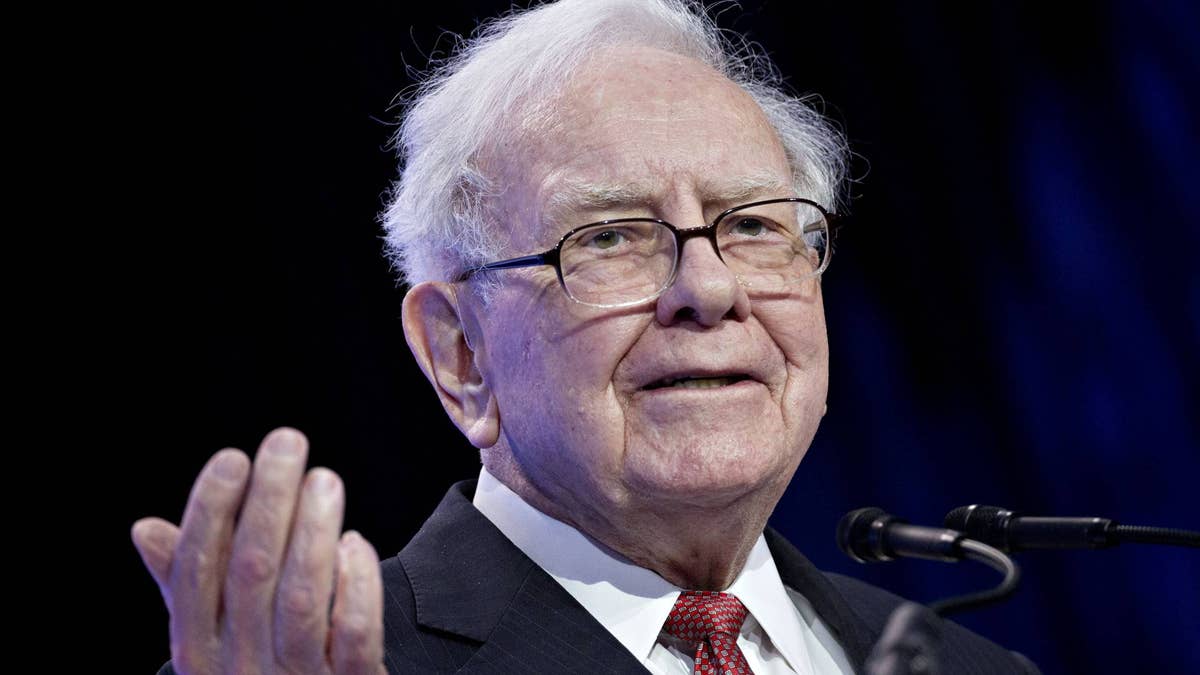
Warren Buffett has spent six decades turning individual stock picks into one of the largest personal fortunes in American history.
Buy a low-cost S&P 500index fund, leave it alone, and stop trying to outguess professional traders, he has told shareholders repeatedly.
Fresh performance data makes it clear that investors who followed Buffett’s recommendation have been rewarded handsomely for their patience over time.
The Vanguard S&P 500 ETF (VOO), the ETF share class of the Vanguard 500 Index Fund that Buffett effectively endorsed in his 2013 Berkshire Hathaway shareholder letter when he wrote “I suggest Vanguard’s,” produced a total return of 303% over the past decade.
A $10,000 investment made 10 years earlier grew into more than $40,000 as of July 28, 2026, according to data compiled by The Motley Fool.
That growth is striking on its own, but it takes on sharper meaning when stacked against the track record of full-time portfolio managers.
How the Vanguard S&P 500 ETF turned modest savings into $40,000
VOO holds every stock in the S&P 500 index, weighted by market capitalization, and charges an annual expense ratio of 0.03%.
That fee amounts to $3 per year for every $10,000 invested, well below the 0.72% average for similar large-cap equity funds, Vanguard data shows.
VOO became the first ETF to cross $1 trillion in assets on June 2, 2026. Combined with its mutual fund share class, the underlying Vanguard 500 Index Fund holds approximately $1.6 trillion in total assets, InvestmentNews reported.
That growth reflects a broader shift into passive index funds; VOO alone attracted more than $69 billion in net inflows in the first half of 2026.
Robert R. Johnson, Professor of Finance at Creighton University’s Heider College of Business, told U.S. News that the cumulative drag of fund fees works against investors over time in the same way that returns compound in their favor.
The returns of the market have been driven by a small percentage of big winners. For most, trying to pick winners ex-ante is a loser’s game, so the solution is to invest in diversified index funds where you don’t have to pick the winners
An investor who placed $10,000 in VOO a decade ago and reinvested dividends would hold a position worth roughly $40,300 today. That outcome required no individual stock research, no rebalancing, and no management fees eating into annual gains along the way.
The SPIVA scorecard reinforces Buffett’s case against stock-pickers
The semi-annual S&P Indices Versus Active Funds report, known as the SPIVA scorecard, measures how actively managed funds perform against benchmarks.
The 2025 year-end edition delivered a pointed verdict on the active management industry and its consistency in adding value for investors.
In 2025, roughly 79% of actively managed large-cap equity funds trailed the S&P 500, the SPIVA Year-End 2025 scorecard confirmed. That rate jumped sharply from 65% the prior year, making it the fourth-worst showing across the scorecard’s full 25-year history.
More Warren Buffett:
- Buffett’s $400 billion war chest stays on the sidelines
- Warren Buffett has a message on energy prices for all Americans
- Warren Buffett’s Berkshire sends jarring signal to stock buyers
“Market regimes characterized by benchmark declines and high volatility are supposedly those in which active managers should shine,” said Anu Ganti, head of U.S. index investment strategy at S&P Dow Jones Indices, in the SPIVA commentary.
Over the 15-year period ending December 2025, the SPIVA scorecard found no equity fund category in which a majority of active managers beat their benchmark.
That pattern has persisted through bull runs, corrections, and volatile periods, reinforcing the difficulty of sustained outperformance even among seasoned portfolio professionals.
The S&P 500’s rising concentration introduces a new wrinkle
Buffett’s 10-year results for VOO are hard to dispute on the numbers, but several Wall Street strategists have raised concerns about the index itself.
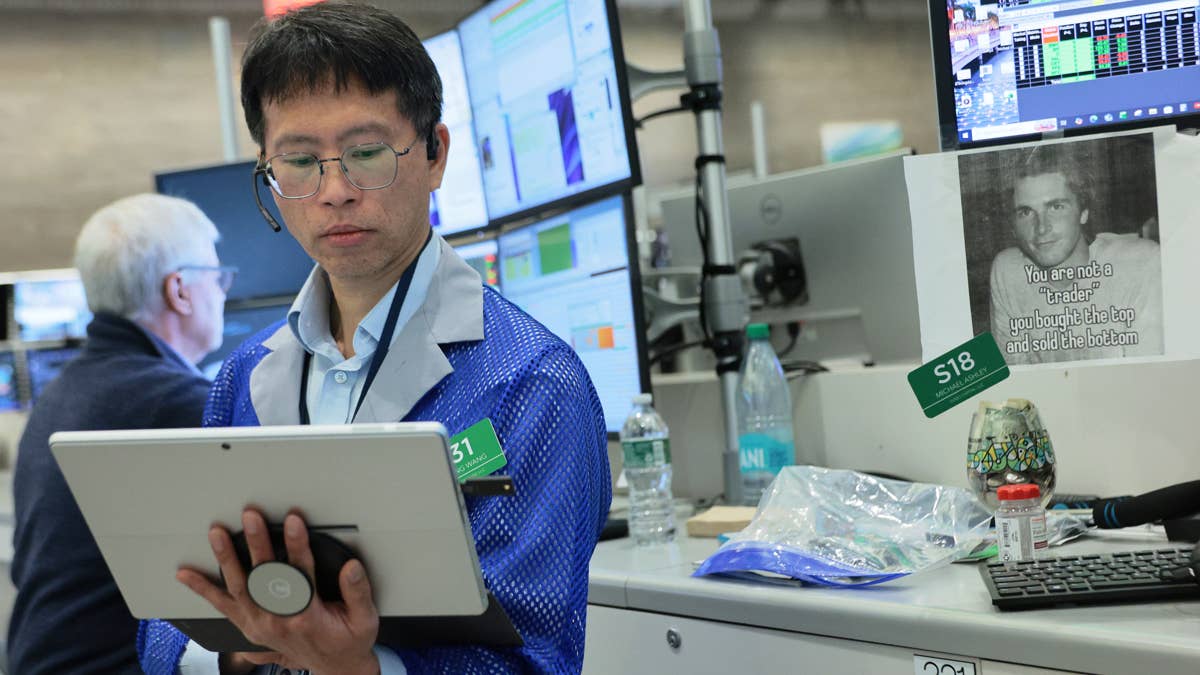
The S&P 500 has grown increasingly top-heavy, with a small group of mega-cap technology stocks now commanding a disproportionate share of its total weight.
The index’s 10 largest stocks reached a record 40.7% of total weight at the end of 2025, nearly doubling from about 19% at the end of 2015, according to RBC Wealth Management’s “Great Narrowing” analysis of S&P 500 constituent data.
A selloff concentrated in a handful of dominant technology names could pull the broader fund lower, even if the remaining 490 stocks perform well.
“We don’t think that the set-it-and-forget-it, S&P 500-only strategy is the right strategy” for investors looking at one-to-three-year returns, Lisa Shalett, chief investment officer at Morgan Stanley Wealth Management, told CNBC.
What Buffett’s results mean for long-term investment plan
Buffett’s core recommendation has stayed the same for more than a decade, and VOO’s 303% total return over that period is the type of result he has pointed to, according to Motley Fool data.
The SPIVA data shows that over the 15-year period ending December 2025, no equity fund category had a majority of active managers beat their benchmark.
Shalett and other strategists have flagged that rising concentration in a few mega-cap names makes the index less diversified than it appears, CNBC reported.
Whether a single-index strategy is right for a portfolio depends on factors like savings rate, investment timeline, and comfort with market swings.
Morgan Stanley Wealth Management and other advisers say these factors matter even more today because the S&P 500 is becoming increasingly dominated by a handful of mega-cap companies.
Related: Warren Buffett’s 2 rules look prescient as S&P 500 slides