Verizon makes cost-cutting move as customers continue to leave
Verizon has struggled to slow customer losses in its wireless business in recent years, and under new leadership, it is making major workforce changes.
Dan Schulman, who became CEO of Verizon in October last year, has accelerated efforts to transform the company after it lost about 2.25 million wireless customers over the past three years, following back-to-back price increases and amid heightened competition.
“We are not delivering the shareholder returns our investors expect,” said Schulman during an earnings call in October. “Despite investing significantly in network leadership, we have not been able to translate that into winning in the market.”
Verizon later laid off more than 13,000 employees in November to simplify its operations and reduce complexity and friction in its business to better serve customers. It also sold 179 corporate-owned retail stores.
The company later cut hundreds of jobs nationwide in May, impacting less than 1% of its global workforce, according to a Business Insider report.
Verizon conducts more layoffs and sells hundreds of stores
Now Verizon is once again shrinking its workforce and retail footprint, this time affecting over 3,000 workers, according to a recent report from the Wall Street Journal.
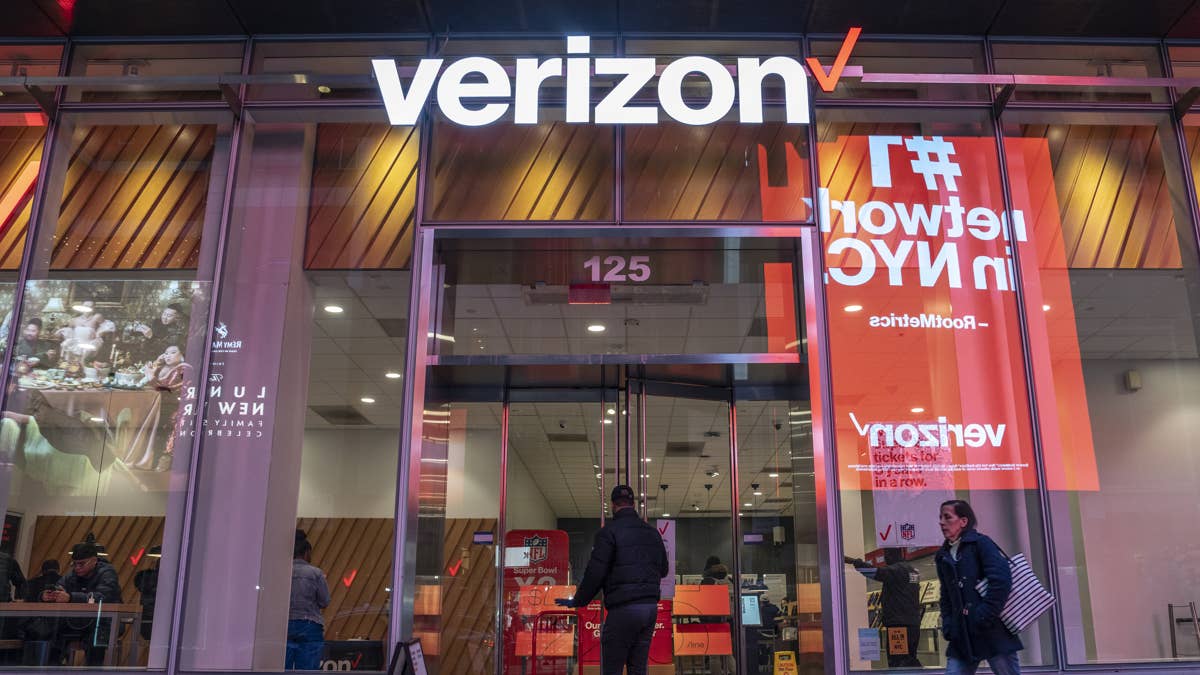
Verizon is planning to sell 274 company-owned retail stores to franchisers, bringing its total store footprint to 1,000 after the sale, which will take effect on Aug. 16.
In an internal memo obtained by the Journal, Verizon told employees that having at least 1,000 corporate-owned stores over the next three years will be sufficient to support its long-term strategy.
In a statement to TheStreet, RTMNexus CEO Dominick Miserandino said Verizon’s move to sell 274 of these stores is “a massive exercise in offloading operational risk.”
“Running a physical retail store today is incredibly expensive — you have soaring commercial rents, utility bills, and heavy payroll costs,” said Miserandino. “By handing these keys over to independent, authorized franchise dealers, Verizon gets to keep its name on the building while completely scrubbing the operating liabilities off its books.”
Related: Verizon acquires 35-year-old wireless carrier as it shuts down
While most of Verizon’s 3,000 job cuts will be from selling these retail locations, the carrier is also laying off 500 corporate employees.
John Sinclair, head of consulting and transformation delivery at Americas at Bosch USA, criticized Verizon’s strategy to cut jobs in a recent post on social media platform X, claiming that the move reflects poor leadership.
“Verizon was once a pillar of American innovation,” said Sinclair. “Today it reflects strategic drift and a failure to lead. With no clear path to growth or meaningful differentiation, CEO Dan Schulman appears to be reverting to the oldest and weakest playbook: cutting skilled American workers to prop up short term stock bump.”
“This tactic ignores a fundamental truth,” he added. “A company cannot hollow out its own institutional knowledge without consequence. The talent being discarded is the very foundation that made Verizon great.”

Verizon struggles to compete in a challenging wireless market
The changes from Verizon come after it reported in its latest earnings report that its wireless retail postpaid phone churn, the percentage of smartphone customers who canceled service, increased by 2 basis points year over year in the first quarter of 2026.
The wireless market has intensified in recent years as Verizon’s top rivals, T-Mobile and AT&T, have doubled down on offering more value and generous promotions to attract price-conscious customers.
All three carriers also face increased competition from mobile virtual network operators (MVNOs), which are becoming more popular for offering consumers mobile service at lower prices compared to traditional wireless providers.
Cable companies such as Spectrum and Comcast are also successfully luring new wireless customers through bundled internet, TV, and mobile offers.
Amid tougher wireless competition, the average cost of an unlimited wireless service plan decreased by over 10% in 2025, according to recent data from Ctia.
More Verizon News:
- Verizon CEO doubles down on removing free offers for customers
- Verizon adds generous offers for customers after price increase
- Verizon makes surprising phone plan change that could backfire
Verizon isn’t the only wireless carrier that has axed jobs to better compete in a challenging wireless market.
T-Mobile quietly cut jobs in January, March, and April, impacting employees in departments such as sales, consumer and retail, product, end-user support, etc.
Additionally, some T-Mobile employees took to social media platform Reddit in May to flag that the company is also quietly closing some of its authorized retail locations, operated by independent third-party dealers, which is resulting in additional layoffs.
AT&T also reportedly conducted layoffs across multiple departments in June.
These job cuts also come at a time when tech layoffs are becoming more common as companies increasingly rely on artificial intelligence to improve their operations, according to recent data from Challenger, Gray & Christmas.
“The cuts we are seeing remain concentrated in technology, and artificial intelligence continues to reshape how companies think about headcount,” said Andy Challenger, workplace expert and chief revenue officer for Challenger, Gray & Christmas, in a press release.
The tech industry announced 15,503 layoffs in June, the highest total of any sector. This brought the total job cuts announced in the tech industry this year to 139,156, an 83% jump from the 76,214 cuts announced in the sector during the first six months of 2025. The telecom sector alone has reported 2,269 layoffs up to June this year.
Related: Verizon adds generous offers for customers after price increase