



The Sensor Revolution Coming to Multifamily Buildings
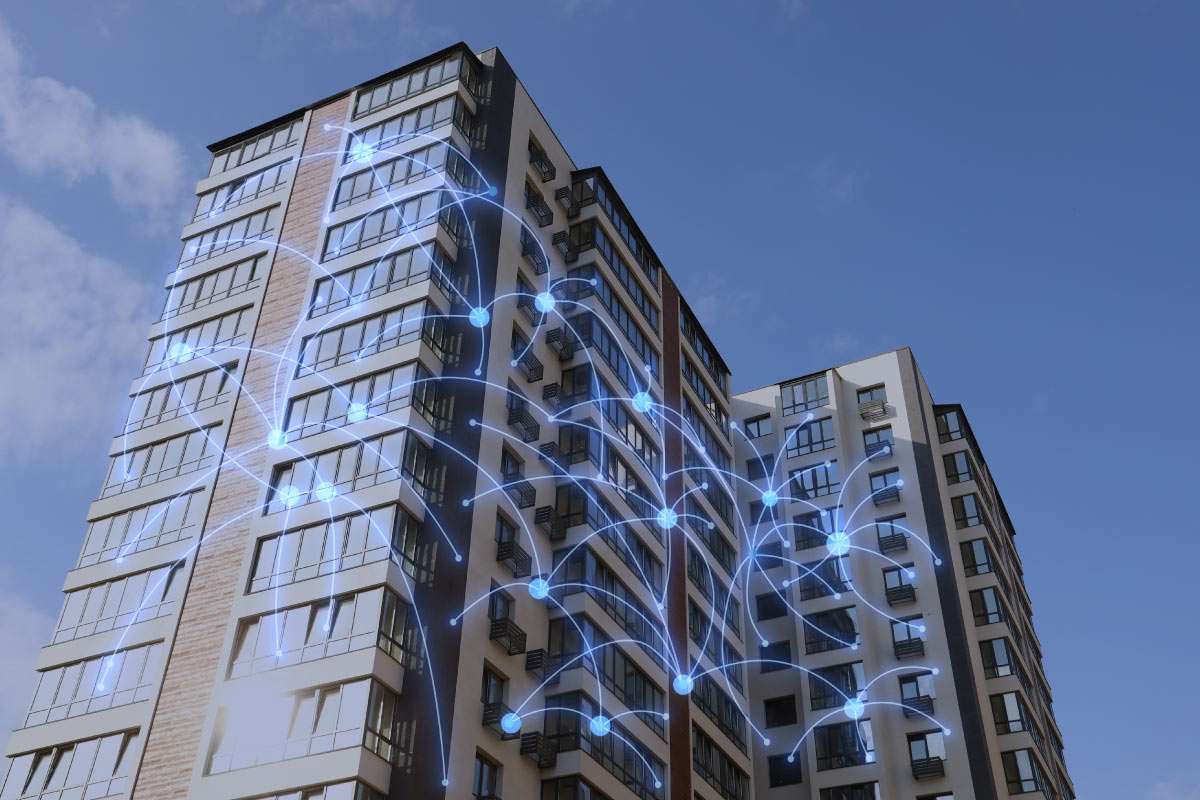
Not long ago, a residential building manager’s primary relationship with the physical condition of their property was reactive. Something broke, a resident called, someone went to look at it. The building revealed its problems through complaints and crises rather than through continuous monitoring. That model is changing quickly. Sensors are proliferating across multifamily properties at a pace that would have seemed impractical even five years ago, driven by falling hardware costs, more accessible wireless infrastructure, and a growing recognition that the data sensors generate has real operational and financial value. The modern residential building is becoming a network of monitoring points, each one watching a different dimension of the property’s condition and feeding information to the platforms that property managers use to run their operations. Understanding what those sensors are, what they’re connected to, and how the connectivity works is increasingly essential knowledge for anyone responsible for managing residential real estate.
Leak detection is arguably the sensor category generating the most urgent interest, because water damage is one of the most expensive and most preventable causes of loss in residential buildings. A single undetected leak can damage multiple units, destroy finishes and structure, create mold liability, and generate insurance claims that compound over time. Modern leak sensors are small, inexpensive, and can be placed under sinks, behind appliances, beneath air conditioning units, in mechanical rooms, and along plumbing runs throughout a building. In a 150-unit building, two or three sensors per apartment alongside mechanical room coverage can add up to more than 450 individual monitoring points, supported by a handful of gateway hubs distributed strategically throughout the building that relay sensor signals to the cloud. When moisture is detected, the system alerts property management immediately, often through multiple channels simultaneously, giving staff the chance to respond before a drip becomes a flood.
Temperature and humidity sensors form the next layer of environmental monitoring that most residential buildings are deploying. These devices track conditions inside units and in common areas, giving property managers visibility into HVAC performance, ventilation issues, and potential comfort complaints before they generate a maintenance request. In older buildings with inconsistent mechanical systems, temperature data across multiple units can reveal patterns that point to equipment problems or distribution inefficiencies that no individual complaint would surface. Humidity monitoring adds a mold-prevention dimension, flagging conditions in units or mechanical spaces where moisture accumulation is trending toward a threshold that creates risk.
Air quality sensors are growing in adoption as resident expectations around indoor environmental health have risen and as the tools to measure air quality have become more affordable and accessible. These devices monitor carbon dioxide levels, particulate matter in the PM2.5 and PM10 ranges, volatile organic compounds, and sometimes noise, giving operators a continuous picture of the air residents are breathing in their homes and in shared spaces. CO2 sensors in particular are valuable for detecting ventilation problems, since elevated carbon dioxide is a direct indicator of insufficient fresh air exchange, which affects both comfort and cognitive function. In amenity spaces, fitness centers, and coworking lounges where occupancy fluctuates throughout the day, air quality monitoring enables responsive ventilation management rather than systems running on fixed schedules regardless of actual conditions.
Occupancy sensors represent one of the more strategically interesting categories for multifamily operators, because they generate data that has implications well beyond the individual unit. In common areas, occupancy data reveals how amenity spaces are actually being used relative to how they were intended to be used, informing decisions about space repurposing, programming adjustments, and future design. Occupancy sensors allow building owners to collect data about where, how long, and how many people are inside the building, and that data becomes increasingly valuable as operators try to demonstrate the utilization and value of amenity investments. Motion-based sensors are the simplest approach, detecting presence through infrared or ultrasonic detection. More sophisticated systems use CO2 levels as a proxy for occupancy, inferring how many people are in a space from the carbon dioxide concentration without any direct detection of individuals.
Energy monitoring sensors close out the most commonly deployed sensor categories, tracking consumption at the circuit, appliance, or system level to give operators and residents visibility into where energy is going. In multifamily buildings where utility costs are managed centrally, energy sensors identify units or systems that are consuming anomalously, pointing toward equipment problems or behavioral patterns that drive cost. As utility costs continue to rise and operators face growing pressure to demonstrate sustainability performance, granular energy data is shifting from a nice-to-have to an operational necessity.
All of these sensors need to communicate their data back to the systems that make it actionable, and the connectivity protocols that carry that communication are not interchangeable. Each has different characteristics in terms of range, power consumption, data capacity, and infrastructure requirements, and the choice of protocol has real implications for what a deployment costs and how well it performs in a real building environment. WiFi is the most familiar protocol and the one that requires the least additional infrastructure in buildings where managed WiFi networks already exist. It handles high data throughput well and connects devices directly to IP networks without additional translation hardware. The tradeoff is power consumption: WiFi is relatively demanding in energy terms, which means devices running on batteries drain quickly, limiting where WiFi sensors can be practically deployed without power outlets nearby.
Bluetooth Low Energy addresses the power problem by using a protocol optimized for very short, infrequent data transmissions that draw minimal current. BLE sensors can run for months or years on small batteries, which makes them practical for placement in locations where running power is impractical. The limitation is range. Bluetooth is designed for short distances, typically under ten meters without obstacles, and building materials like concrete and steel attenuate the signal significantly. In multifamily buildings, BLE typically requires a receiver or gateway in close proximity to each sensor or small cluster of sensors, which adds to the infrastructure cost of a large deployment.
Zigbee and Z-Wave take a different architectural approach, using mesh networking to extend range by routing signals through intermediate devices on their way to a central hub. Each device in a Zigbee or Z-Wave network can act as a repeater for others, which means the coverage area grows as more devices are added rather than being fixed by a single access point’s range. Both protocols operate at low power and are well established in the smart home and building automation space. Zigbee operates in the 2.4 GHz band, the same spectrum used by WiFi and Bluetooth, which creates interference potential in dense multifamily environments where every unit adds its own competing radio traffic. Z-Wave operates in a sub-gigahertz frequency band that avoids that congestion, but its proprietary nature and lower device ecosystem have limited its adoption in large-scale commercial deployments.
LoRaWAN represents the protocol most specifically designed for the large-scale, battery-powered sensor deployments that multifamily buildings increasingly require. LoRa does not rely on mesh networking and supports far more devices per gateway than Z-Wave or Zigbee deployments, meaning multifamily buildings require significantly fewer network access points. Its sub-gigahertz radio frequencies penetrate building materials far more effectively than WiFi or Zigbee, making it particularly well suited to the concrete and steel construction common in mid- and high-rise residential buildings. Battery life for LoRaWAN sensors is measured in years rather than months. The tradeoff is low data throughput, which makes LoRaWAN unsuitable for applications that require streaming or frequent high-volume data transmission but well matched to sensors that report readings periodically rather than continuously.
The connectivity question ultimately determines what’s possible at the platform layer, where sensor data gets aggregated, analyzed, and surfaced to property managers through building management systems and property management software. The most capable deployments are those where sensor data flows automatically into the platforms that operations teams are already using, generating alerts, populating maintenance workflows, and feeding analytics dashboards without requiring manual data entry or separate monitoring interfaces. The sensor network and the management platform function as a single system rather than two separate ones, and the protocol choices that were made at the hardware layer are what determine whether that integration is seamless or perpetually problematic. As sensor deployments in residential buildings continue to grow in scale and sophistication, the operators who understand the infrastructure beneath the devices will be the ones building systems that actually deliver on the promise of a more intelligent, more responsive building.
The post The Sensor Revolution Coming to Multifamily Buildings appeared first on Propmodo.