



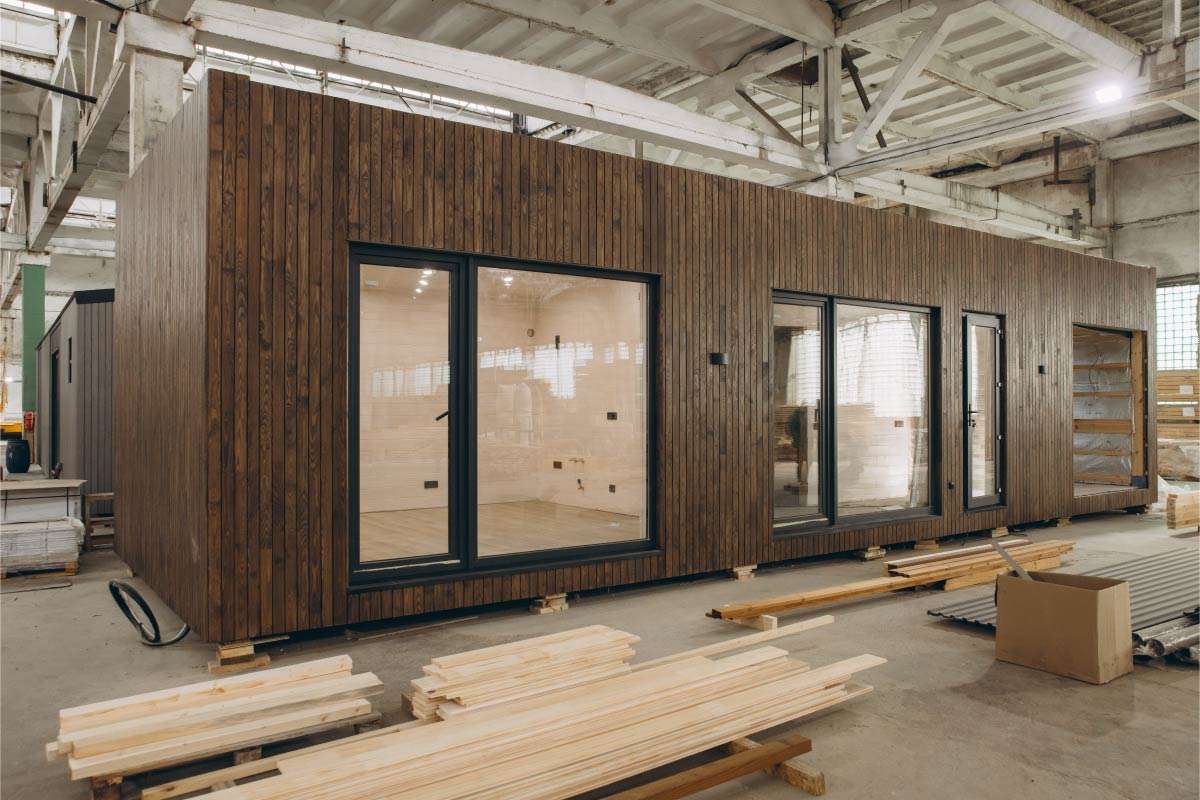
The Manufactured Housing Fix That Might Actually Work—If Politics Don’t Get in the Way
Congress is quietly working on something that could reshape American housing. Buried in a bipartisan bill is a proposal to remove the chassis requirement from manufactured homes. The change sounds technical. It’s actually significant. Removing the steel frame requirement could save consumers $4,000 to $13,000 per home and open up new design possibilities. More importantly, it addresses one of the few corners of housing policy where federal regulation actually has teeth. Manufactured homes are governed by federal building code, not local zoning. That means Washington can actually change how they’re built without waiting for thousands of local governments to cooperate.
The economic case for factory-built housing is straightforward. Manufactured homebuilders can negotiate better material pricing than a builder thanks to economies of scale. Factory construction also eliminates weather delays. The US construction industry saw productivity fall more than 30% from 1970 to 2020, while overall US productivity doubled. Sweden produces 84% of homes with significant prefabrication. Japan does 15%. Currently, the US does 5%.
The gap represents an opportunity. Factory-built homes can be completed up to 50% faster. They require fewer workers at a time when the construction industry faces labor shortages. The math works. The average manufactured home costs $123,300. A new site-built home averages $514,500.
But removing the chassis requirement solves only part of the problem. The real barriers are financing and zoning. Between 42% and 90% of manufactured homes are financed through higher-cost chattel loans rather than mortgages. A home that looks like a conventional house might qualify for a mortgage, but it has to look like a conventional house first. New models of manufactured homes are dealing with this through better design. New manufactured homes are modern, aesthetically pleasing and can be expanded to be as large as many traditionally built homes. They also qualify for conventional financing.
Zoning still remains the wall. Most communities don’t allow manufactured housing. Aesthetic rules around roof pitch, foundation height, and lot setback give localities a way to exclude manufactured homes without explicitly banning them. These aren’t accidents. They’re designed to keep out housing that communities associate with trailer parks and lower-income residents.
The chassis removal could push that aesthetic evolution further. Without the transport frame, manufactured homes can sit closer to the ground and potentially be built as multistory structures. That makes them harder to distinguish from conventional houses. It also creates a perverse problem. When manufactured homes blend in visually, people don’t realize what they’re looking at. The stigma persists because consumers don’t see the product that contradicts their assumptions. A 1960s trailer confirms stereotypes about manufactured housing quality. A home that looks indistinguishable from site-built housing doesn’t change anyone’s mind because they don’t know it’s manufactured. The perception gap between what manufactured homes actually are and what people think they are could persist even as the product improves.
Generational attitudes suggest a path forward. Generation Z and millennials show more positive attitudes toward manufactured housing. They’re the market for affordable starter homes. But the people making zoning decisions tend to be Gen X and Boomers, who have reservations. Policy change at the federal level only works if it creates pressure for local change. Removing the chassis requirement and improving design standards creates the conditions for manufactured housing to compete on cost and quality. But zoning reform has to happen at the local level, where opposition is strongest and politically costliest.
Manufactured housing represents 5% of US housing stock but houses 22 million Americans on a median household income of $40,000. It’s the country’s largest source of unsubsidized affordable housing. Removing the chassis requirement for these types of dwellings addresses a genuine inefficiency. But it won’t solve the housing crisis alone. It is one of the few policy changes with measurable economic impact that Washington can actually implement without waiting for thousands of local governments to cooperate. That makes it worth a try.
The post The Manufactured Housing Fix That Might Actually Work—If Politics Don’t Get in the Way appeared first on Propmodo.