



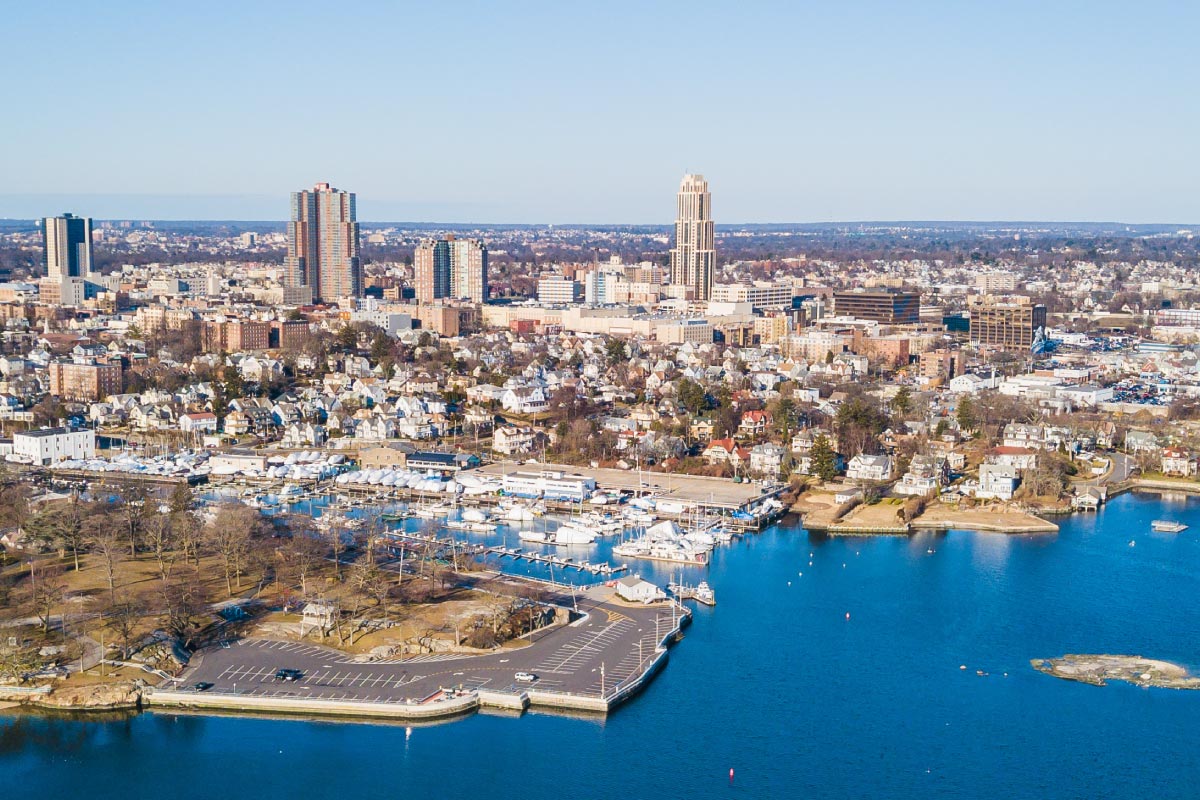
The City That Rewrote Permitting to Transform Its Skyline and Finances
Most cities say they want more development. Few have done the hard work of actually making it easy. The typical American municipal permitting process is a gauntlet of community meetings, zoning variance requests, environmental reviews, and political negotiations that can stretch a project from conception to groundbreaking across years of uncertainty. Developers price that uncertainty into their decisions, and the cities that created it wonder why the investment doesn’t come. New Rochelle, a city of roughly 80,000 people in Westchester County, about 25 minutes from Manhattan by train, decided more than a decade ago to do something different. What it built since then, more than a billion dollars in private investment, thousands of new housing units, and a pipeline of projects that keeps growing, is starting to look like one of the more instructive case studies in urban development policy seen so far.
The foundation was laid about eleven years ago, when the city made a decision that required significant political will and a willingness to rethink how municipalities relate to the development process. “About 11 years ago we streamlined the process of approving new development,” said Mayor Yadira Ramos-Herbert. The city began by doing something painstaking and unglamorous: it mapped every parcel of developable land in the downtown and identified exactly what could be built on each one and how tall those buildings could go. That exercise produced the Downtown Overlay Zone, a form-based code that established six special districts with specific building and design requirements. The DOZ primed 12 million square feet of land for potential development and earned unanimous, bipartisan support from the city council when it passed in December 2015, following less than a year of drafting work done in partnership with RXR Realty and Renaissance Downtowns.
The mechanism the DOZ created is what makes New Rochelle’s approach genuinely different from most municipal development frameworks. Rather than requiring each new project to navigate its own community review process, the planning board did that work once, comprehensively, establishing the rules that any compliant project would be held to. “We created an overlay zone that doesn’t need community input,” Ramos-Herbert said. “Developers will only be working with our staff to get these permits done. As long as you go through the checklist created by the planning board, it will get built.” A developer who wants to build in New Rochelle’s downtown today reviews the applicable zone’s requirements, designs a project that meets them, submits plans to staff, and receives a decision. Project approvals generally take just 60 to 90 days under the DOZ. There is no separate environmental review for individual projects because the city completed a generic environmental impact statement for the entire overlay zone upfront, absorbing that process into the policy rather than repeating it for each application.
RXR Realty has been the most prominent developer to build within the framework, and its projects illustrate both the scale of what the DOZ makes possible and how the community benefit bonus system built into the code works in practice. RXR’s 360 Huguenot, a 28-story mixed-use tower, earned four additional stories by including a 10,000-square-foot black-box theater and a replica of the historic Loew’s Theater marquee over the entrance as community benefit bonuses. A subsequent 28-story development at 26 South Division Street added 352 market-rate apartments, a public plaza, co-working space, and more than 12,000 square feet of retail. RXR alone has invested more than a billion dollars in New Rochelle, and its Two Clinton Park tower, a 390-unit luxury building, recently secured a $126 million refinancing and is 93% leased. The pipeline continues to expand. Projects currently in various stages of development or recent completion include The Leaf, The Alary, Crossroads Centre, Pratt Landing, and an 850,000-square-foot mixed-use waterfront redevelopment by Twining Properties.
Mayor Ramos-Herbert’s own relationship with the DOZ predates her time in office, which gives her perspective on the policy a particular authenticity. “I went to those informational sessions long before I ever even thought about being mayor,” she said. She ran on a platform that embraced and extended the development strategy, which speaks to how politically durable the approach has proven, even as the city has changed leadership. The DOZ concept has also evolved since its original form. In October 2024, the city launched a Vanguard Overlay Zone aimed at fostering contemporary commercial development and pedestrian vitality, and in 2025 proposed a massive expansion of that zone to cover a significantly larger geographic footprint across the downtown’s commercial districts. The city’s development strategy is not static. It is being actively extended to new areas and new use types as the original framework proves itself.
That doesn’t mean the approach has been without friction. Growth at this pace generates real concerns from residents, and New Rochelle has not escaped them. “I am not going to pretend that everyone is skipping down the streets about this,” Ramos-Herbert said. “There are complaints about noise and traffic. Residents say they want more input, which is valid. But the way we are able to give assurances allows us to do some really great projects.” The assurances she refers to include the Fair Share Mitigation Fund, which requires developers building within the Downtown Overlay Zone to cover any public costs that materialize as a consequence of their projects. They also include a deliberate strategy of making the physical benefits of development visible and tangible to residents before opposition has a chance to calcify. Free electric shuttles connecting downtown to the waterfront, new public plazas, murals commissioned through community art competitions, parks, and a cultural center have all been delivered as direct accompaniments to private development, making the relationship between new buildings and neighborhood improvement legible to residents who might otherwise see only the construction.
The fiscal argument is the one that tends to move politicians most durably, and New Rochelle’s numbers make that case compellingly. Studies of the development program project that the investment already underway will generate an additional $200 million in tax revenue in years one through twenty, growing to over $700 million in years twenty-one through forty as the development matures and the tax base it creates compounds. “The one-time fees are nice but you need ongoing taxes to really help a city grow in a sustainable way,” Ramos-Herbert said. That observation contains the central insight of New Rochelle’s approach: the goal was never to extract maximum fees from individual projects but to create conditions under which enough development happens to permanently transform the city’s fiscal position. That transformation takes time to show up fully in the numbers, but a city that approved over thirty projects in its first three years under the DOZ and has maintained momentum for more than a decade is well on its way.
The city is not waiting for developers to find it on their own. New Rochelle actively courts investment through a developer outreach program that puts city officials in front of the real estate industry at conferences and in direct meetings with firms that have not yet built in the city. “We want to get things done and don’t want to be the impediment,” Ramos-Herbert said. “We go to conferences and are constantly taking meetings with new developers so they can get to know us.” A municipal government that presents itself as a partner rather than a gatekeeper is the change that might be needed in order to develop enough housing to help alleviate the burden felt by much of the country. Cities that want development have long known that regulatory certainty is what developers need most. New Rochelle is one of the few that actually built a system to deliver it. The results have been remarkable enough that other cities are beginning to look at the New Rochelle model not as a local experiment but as a template.
The post The City That Rewrote Permitting to Transform Its Skyline and Finances appeared first on Propmodo.