Peter Schiff sends blistering message to Secretary Bessent
Money works because almost nobody checks.
Every bill in your wallet is a promise, and the promise holds only because tens of millions of people agree, silently and simultaneously, not to test it on the same afternoon.
That quiet agreement has been under strain for about two years. Gold climbed from the $2,700 range to a record near $5,595 in late January before sliding back toward $4,000 an ounce, according to Trading Economics. Central banks kept buying. Ordinary savers started picking up bullion at warehouse clubs.
Underneath all of it sits Fort Knox, the most mythologized building in American finance and the one almost nobody outside a small circle has walked through in 50 years. The last time reporters and members of Congress were let inside was 1974.
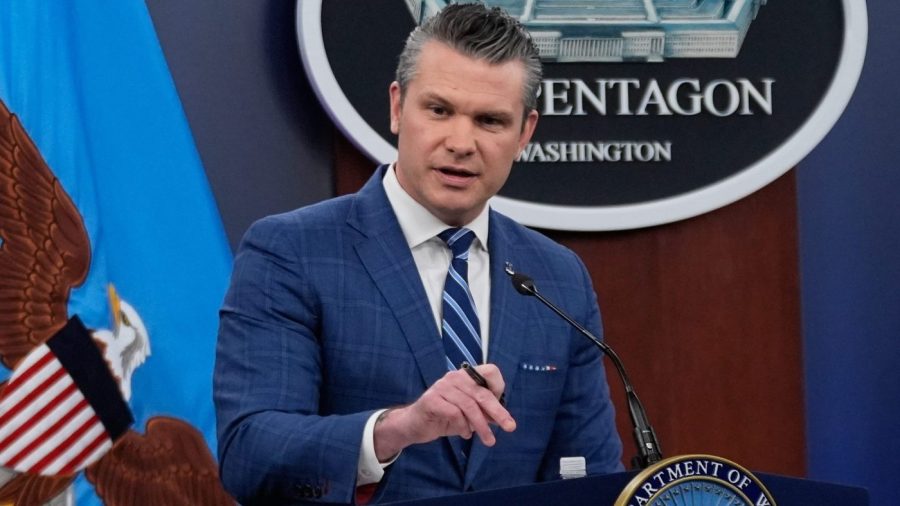
So when the sitting Treasury secretary spent five minutes on national television last week explaining what actually backs the dollar, the details carried more weight than the friendly setting suggested.
Scott Bessent held up a set of old silver certificates and said that if any of them remain outstanding, the metal behind them is “still at Fort Knox waiting for them to be claimed,” according to Fox News.
Peter Schiff read that as a factual error, and said so in public.
What Bessent said about gold and silver certificates
The segment was a tour, not an interview. Bessent moved Watters through the old cash room, the department’s currency collection and the commemorative coin plans for next year’s 250th anniversary.
Then came the question that always arrives eventually. Bessent said he has not visited Fort Knox himself, though members of his staff and U.S. Treasurer Brendan Beach have, and that the bullion is present and accounted for.
More Gold & Silver:
- JPMorgan tweaks gold price target as Fed risks return
- Silver can’t escape a troubling new trend
- Goldman Sachs delivers honest verdict on gold’s selloff
He put the market value of the national gold pile above $1 trillion, which lines up with the roughly 261.5 million troy ounces Treasury reports across its four storage sites.
None of that was the problem. The problem was the sentence just before it, where Bessent suggested the metal behind those old certificates could still be claimed by whoever holds the paper.
Bessent also described the dollar as something that used to be backed by silver, and sometimes gold, which is roughly right as history and completely wrong as present tense. The distinction matters because the whole segment was framed as reassurance.
Related: Bernstein revamps gold price target on Fed-rate shift
Why Peter Schiff called the gold claim misinformed
Schiff, who has spent two decades arguing the dollar is a slowly melting ice cube, took the clip apart on X within a day.
His point was narrow and hard to argue with. Redemption rights on gold and silver certificates were terminated decades ago, and if the Treasury secretary does not know that, the natural follow-up is “what else doesn’t he know,” Schiff wrote on X.
Then he made it concrete, which is the part that traveled. A set of silver certificates sells on eBay for about $32. If Bessent were right, a buyer could carry each set to Kentucky, claim five silver dollars worth roughly $60 apiece and turn that $32 into about $300 in metal, Schiff noted in a follow-up post on X.
That is the tell. A live claim on Treasury metal at those spreads would have been arbitraged into oblivion within about a week.
The Fort Knox audit gap investors keep circling
Rather than take either side’s word for it, I went to the Mint’s own archive. The record is not ambiguous, and it has been sitting in public for 58 years.
- The Treasury stopped exchanging silver certificates for silver dollars in March 1964, according to the U.S. Mint.
- Holders had until June 24, 1968, to swap certificates for bullion at four locations, after which the notes stayed legal currency but “may not be redeemed for silver,” per the Treasury’s Federal Register notice.
- Domestic gold redemption ended in 1933 under Franklin D. Roosevelt, and the last external link between the dollar and gold was cut in 1971.
- The Gold Reserve Transparency Act, introduced by Rep. Thomas Massie in 2025 to require a physical assay every five years, has not advanced.
What struck me in my analysis of that timeline is how little of it is contested. This is not a gold-bug theory. It is settled Treasury history that the Treasury secretary appeared not to have.
Treasury still carries its gold on the books at the statutory price of $42.22 an ounce, frozen since 1973. At that rate, a stockpile worth north of $1 trillion in the market shows up in federal accounting at roughly $11 billion.
There is an annual review. The Treasury inspector general signs off on the deep-storage schedules every year, and the most recent audit gave them a clean opinion. But that process examines vault seals and paperwork rather than opening compartments and assaying bars, which is why the audit argument never quite dies.
What the gold trade actually turns on now
The easy read is that this was a slip on a friendly cable segment, and it was. Nobody is redeeming anything, and no gold left the vault because a secretary misspoke.
The harder read is why it landed so hard.
Gold’s run from $2,700 to $4,000 was not built on jewelry demand. It was built on a slow institutional bet that the people managing the dollar are less reliable than they used to be, and that bet gets marked to market every time an official says something checkable and gets it wrong.
For anyone holding SPDR Gold Shares (GLD) or iShares Silver Trust (SLV), that is the actual position. Not a metals trade. A credibility trade.
Which brings me to the thing worth knowing. If you have a silver certificate in a drawer somewhere, from a grandparent’s wallet or an old coin folder, it is not a claim check on Fort Knox and has not been one since Lyndon Johnson was president. It is worth face value at the register and usually a good deal more to a collector, and that is the entire story.
The claim check that still matters is the one the public holds on the institution itself, and that one has not been independently cashed since 1974. Watch whether Massie’s audit bill gets a hearing this fall. That, far more than any single television appearance, is the number the gold market is quietly pricing.
Related: BofA sees lost year taking shape for gold