


Money20/20 Middle East day two: mada meets HIMYAN live on stage
The Saudi and Qatari central bank governors put the first HIMYAN card payment through the mada network in front of the room. barq closed a $329.5m round at a $1.85bn valuation, Visa was certified for SAMA’s e-commerce interface and two Saudi payment firms went live on domestic financial crime tooling. Tuesday was about capability switching on rather than being promised.
The second day of Money20/20 Middle East produced the most consequential item of the show so far, and it was not a memorandum of understanding. The Saudi Central Bank and Qatar Central Bank announced an agreement enabling the cross-border use of the two countries’ national payment cards, mada in Qatar and HIMYAN in Saudi Arabia. The two governors then put the first HIMYAN card payment through the mada network in Saudi Arabia themselves.
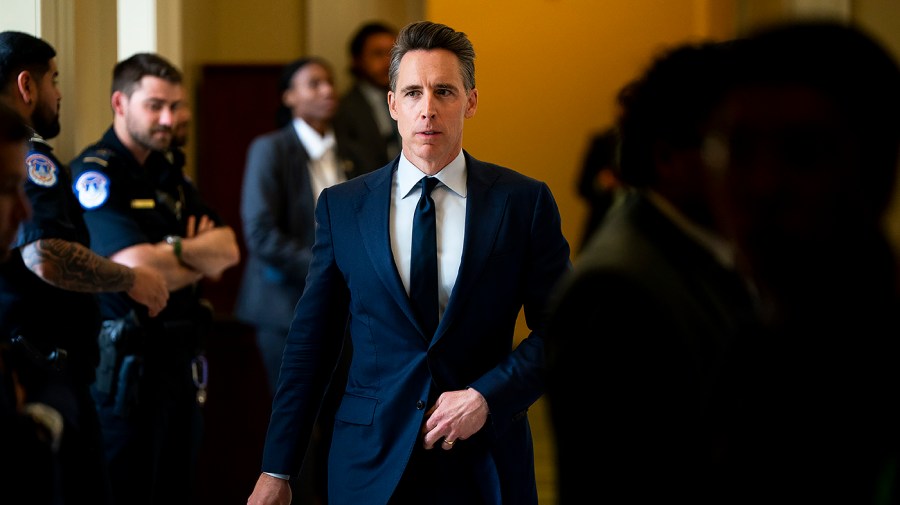
H.E. Ayman M. Al-Sayari, Governor of SAMA, and H.E. Sheikh Bandar bin Mohammed bin Saoud Al-Thani, Governor of the Qatar Central Bank, made the transaction on Tuesday afternoon. Acceptance will be introduced gradually, once the technical and operational integration between the two schemes is complete.
This is a switch-on with a runway attached rather than an overnight change. What makes it significant is what a domestic card scheme is: the most sovereign piece of retail payments infrastructure a country builds, tied to its own settlement rails, fee structures and supervisory reach. Agreeing reciprocal acceptance between two of them is a harder negotiation than opening a QR corridor, because each central bank has to accept the other’s rules inside its own acceptance network. Doing it live shows how far the technical work has already gone.
The regulator’s count
Al-Sayari had opened the Executive Summit earlier in the day with the numbers behind the sector. Saudi Arabia had 371 fintech companies by the end of August, up from 301 in May and against a National Fintech Strategy target of 525 by 2030. Electronic payments made up more than 85 per cent of retail transactions by the end of 2025, and investment in the sector passed SAR 30bn in the first half of this year.
Open banking shows the pace most clearly. SAMA began licensing open banking providers on 26 March, with Lean Technologies the first to receive a licence, moving the activity out of the regulatory sandbox and into a supervised regime less than six months before the show.
barq, and the order things happened in
barq closed a $329.5m Series A at a $1.85bn valuation, with Noon Investments, Sohar International Bank and the M20 Fund among its investors. The company was founded in 2023 by Ahmed Alenazi, licensed by SAMA in January 2024, and says it now has more than 15 million users across more than 210 nationalities and has processed SAR 440bn. During the show it also deepened its partnership with Mastercard, which dates back to 2024, and collected three Visa awards, including fastest-growing fintech across Central and Eastern Europe, the Middle East and Africa.
A Series A of that size three years after founding would look aggressive in most markets. Here the sequence explains it. The licence came first, the users followed and the capital came last, into a business already operating under supervision. It is the same pattern Tabby‘s licence stack showed on Monday.
Processing and compliance, inside the Kingdom
Visa announced that merchants and payment service providers in Saudi Arabia can now process e-commerce transactions locally through the Visa Acceptance Platform, following its certification for SAMA’s new e-commerce payments interface. The platform runs on local cloud infrastructure and brings processing, fraud management, tokenisation and authentication together, with support for mada, card-on-file payments, digital wallets and recurring billing. A global network is fitting itself to a domestic scheme’s requirements and keeping the processing in the country, rather than asking the market to fit around it.
Two Saudi payment firms went live on the same domestic financial crime platform. HyperPay has switched on Mozn‘s financial crime prevention suite, which screens names with an Arabic-first matching engine and maps its monitoring rules to SAMA’s anti-money laundering typologies for payments. Mobily Pay, the SAMA-licensed wallet, has deployed Mozn’s customer risk scoring alongside its fraud management tools.
For a payments company, compliance capacity sets the pace of merchant onboarding and product launches. A local market forming around a local compliance stack is infrastructure in the least visible sense of the word.
Money for small businesses
Fina, the B2B embedded finance arm of SILQ, launched the Fina Fund with Riyadh-based Joa Capital, a direct financing fund with a target size of SAR 500m for Saudi small businesses. The gap it is aimed at is far larger. SILQ puts the Kingdom’s SME financing shortfall at around SAR 400bn, with SME lending at 11.3 per cent of total bank loans in 2025 against a 2030 target of 20 per cent.
On the Capital Stage, Walter Gontarek, chief executive of Channel Capital, argued that lenders outside the banks are turning alternative data into a real advantage over incumbents, and that stronger risk governance in the Kingdom is starting to show up in portfolio returns and cheaper funding for borrowers. SiFi and IDEMIA Secure Transactions added a smaller practical step for business cardholders, launching Tap to Activate, which switches on a new card with a tap against a phone. Geidea and The Saudi Investment Bank signed a memorandum of understanding to develop payment and point-of-sale services for the bank’s customers.
On stage: trust, and who decides
Trust ran through the day’s sessions. Opening The Bridge stage, Fahad Al Guthami, chief executive of American Express Saudi Arabia, said: “The more the world becomes digital, the more the world will require trust. You can build the best accessibility, but if the trust and security are not there, it will not go far.”
Jeff Parker, chief executive of Paymentology, made the point from the other side on a panel about banking the next billion customers with Reem Bank, Revolut and VEON. Regulation gives an institution a baseline of trust, he argued, but a place in someone’s everyday life is earned through the experience and tested when something goes wrong. Wassim Skaff of Visa told the Next-Gen Money stage that the best payment journeys are the ones customers barely notice, provided they still feel informed and in control.
On the Capital Stage the question was who should be making investment decisions as AI moves into the process. “There is a big difference between capability and accountability,” said Fariha Ansari Javed, partner at Stride Ventures. “AI can help us analyse data, identify what we may be missing, but it never takes away human judgement.” Hussain Almarhoon, founding and managing partner of HALA Capital, said his firm treats AI as a challenger rather than a decision-maker, because sophisticated analysis built on incomplete data can create false confidence.
Mohamed Alaadin, general partner at Development Partners International, put the investor case more directly. “Saudi Arabia has shifted from being an interesting market to being an investable market,” he said.
Money20/20 Middle East closes today at the Riyadh Exhibition and Convention Centre in Malham, with the MoneySurge finalists pitching on the Executive Summit stage at 4pm.
Sources:
- SAMA: Commences Licensing of Fintech Companies to Provide Open Banking Services
- Pinsent Masons: Saudi Central Bank announces first fintechs licensed
- Clyde & Co: SAMA licensing framework for open banking
- Arab News: Saudi fintech sector grows to 371 companies
- SAMA Open Banking portal
The post Money20/20 Middle East day two: mada meets HIMYAN live on stage appeared first on The Fintech Times.