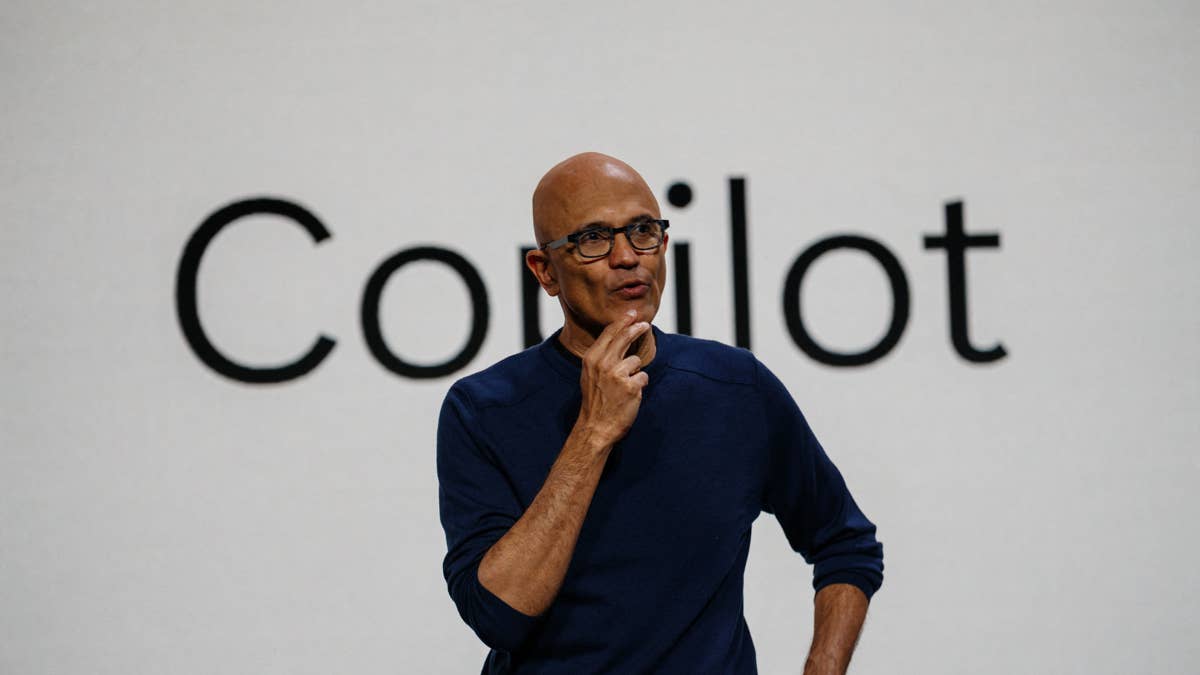
Microsoft wants to keep more of its AI billions from Nvidia
Microsoft (MSFT) is facing a costly artificial intelligence issue.
Two-thirds of the $41 billion in capital expenditures in the latest quarter went to shorter-lived assets such as central processing units and graphics processing units. These are the costly devices that lie behind solutions like Copilot and Azure.
Microsoft now wants to retain a larger portion of that expenditure inside the company. With multi-gigawatt deployments starting in 2027, Microsoft will use its Maia chips to run AI inference across its products and services.
There is an obvious potential loser if Microsoft succeeds: Nvidia (NVDA).
One of the large cloud firms purchasing Nvidia chips to develop AI infrastructure is Microsoft. Microsoft may not need to run all of its workloads on someone else’s processors in order to transfer them cheaply onto Maia.
There is just one issue.
Microsoft’s proprietary processors are still “nowhere close” to the more advanced technology of Nvidia or Alphabet (GOOGL), according to Bloomberg Intelligence analyst Mandeep Singh.
This creates a test worth billions of dollars.
Nvidia doesn’t have to be replaced everywhere by Microsoft. Maia only has to become proficient at the AI tasks that Microsoft does millions of times every day.
Microsoft has a powerful reason to build its own chips
Long after a model has been trained, artificial intelligence may be costly.
Computers must provide the answer each time someone asks Copilot a query, requests code from GitHub Copilot, or ultimately dispatches an AI agent to do a job. That process is called inference.
Because Microsoft runs such services on a massive scale, even modest efficiency improvements may have a significant impact when replicated over millions of users.
Microsoft said its current Maia 200 chip is already serving Copilot workloads. Maia 300, expected to enter production deployments in 2027, is designed to become the company’s primary inference system.
Microsoft also said the Maia 300 can produce seven times the output of the Maia 200 at full rack size and 40% more AI per megawatt than top GPUs. In other words, the company believes it can get more AI work from the infrastructure and power it currently pays for.
Because of the massive expenditure, that is important.
Microsoft added nearly $116 billion of property and equipment during fiscal 2026, compared with about $65 billion a year earlier.
In the June quarter alone, capital expenditures reached $41 billion.
It is not necessary for Microsoft to create a semiconductor that is superior than Nvidia for every use if Maia enables the company to offer Copilot and other repetitive AI tasks at a lower cost.
It could simply lessen the quantity of costly external processors Microsoft need for tasks that its own silicon is capable of handling.
Nvidia is not disappearing from Microsoft data centers
The catch is that making an AI chip and replacing Nvidia are two completely unique things.
Singh contended that when it comes to proprietary AI silicon, Microsoft is still far behind both Nvidia and Google.
Google is especially significant, since it demonstrates what Microsoft is attempting to develop.
More Microsoft:
- Microsoft’s $665 target hinges on a new AI advantage
- Meta and Microsoft just sent employees a memo about Anthropic
- Microsoft just sent a strong message to Anthropic
Alongside external chips, Alphabet has spent years creating its Tensor Processing Units. This gives Google an additional way to manage the price and efficiency of the AI operating in its cloud.
With Maia, Microsoft is attempting to establish a comparable edge.
However, Nvidia has spent years creating the software environment that developers use in addition to CPUs. This makes replacing Nvidia an undertaking that involves more than making competitive silicon.
Additionally, Microsoft has no justification for giving up on Nvidia entirely.
Different hardware is needed for different AI tasks. Serving Copilot replies to clients on a regular basis may need different computer power than training massive frontier models.
Therefore, whether Microsoft continues to purchase Nvidia is not the crucial point. It’s whether Microsoft can alter the economics by moving enough high-volume work to Maia.
Microsoft’s AI bill makes Maia worth watching
The most recent results from Microsoft demonstrate why investors should be concerned.
The tech giant’s 2026 annual report showed that Azure revenue surpassed $100 billion for fiscal 2026, rising 41%, while Microsoft Cloud revenue reached more than $214 billion.
AI is contributing to that company’s growth, but Microsoft is investing heavily to provide the processing power that consumers want.
The June quarter’s $41 billion capital-expenditure bill was larger than Microsoft’s $35.8 billion quarterly net income.
That doesn’t mean the spending is ill-advised. Microsoft is investing because demand is strong. But the larger the infrastructure bill becomes, the more valuable efficiency becomes. That is where Maia could matter.
Microsoft may increase the economics of every encounter without waiting for Nvidia to reduce pricing if it can execute more Copilot requests, coding activities, and AI-agent workloads using processors built around its own software.
And for this to matter, Microsoft doesn’t need to defeat Nvidia. Even a small fraction of an AI infrastructure operation could save tens of billions of dollars.
For this reason, what might otherwise seem to be just another piece of arcane semiconductor news should be of interest to a Main Street investor.
Microsoft is more than just a chip manufacturer. It is attempting to manage one of the largest costs associated with its AI business.
Microsoft may retain a larger portion of Copilot and Azure’s earnings if Maia is successful. If it doesn’t, Microsoft may continue spending heavily on its silicon while Nvidia keeps collecting on the AI boom anyway.
Related: Morgan Stanley sees new hurdle for Microsoft stock