


Meet the EU team leading the world’s first bona fide regulation of AI
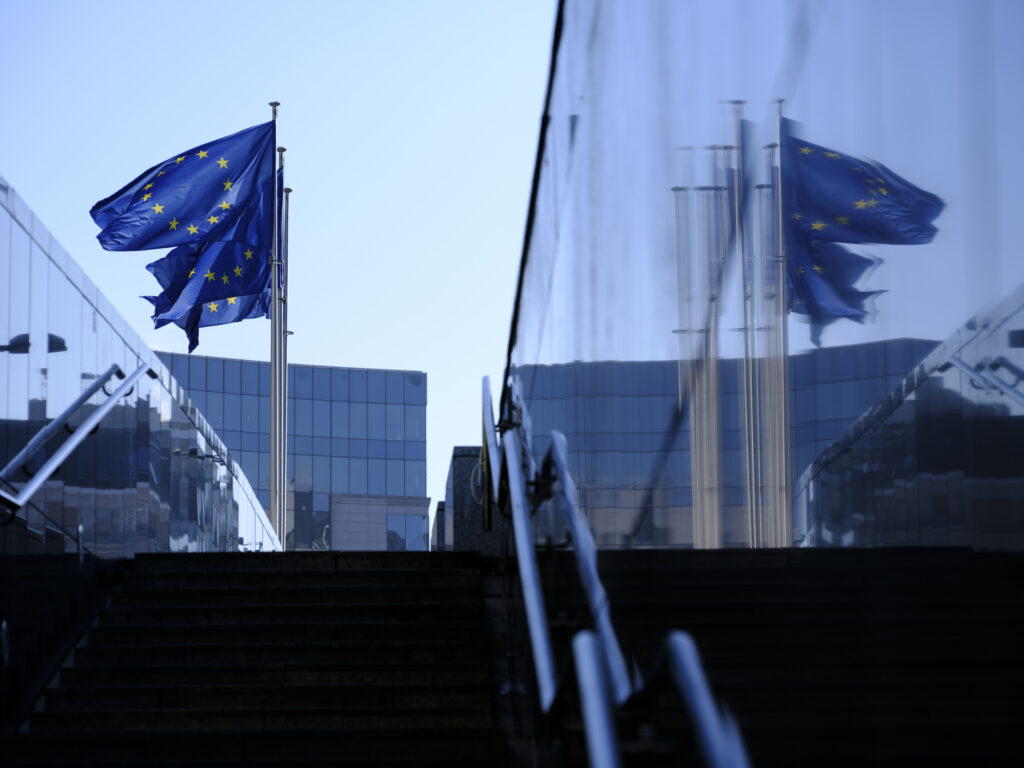
BRUSSELS — The world’s leading artificial intelligence companies have a new challenge on their hands: a 37-member team of civil servants working from a Brussels office building.
Beginning Sunday, a European Commission unit formed two years ago will acquire an arsenal of regulatory powers meant to oversee the actions of AI powerhouses such as U.S.-based OpenAI or Anthropic or their upstart Chinese competitors like Moonshot and Deepseek.
If the EU regulators don’t like what they see, they could slap fines or outright ban models from the market.
The Commission’s AI safety unit is the first major global effort to implement a standing rulebook for the world’s most capable AI models to address the most serious risks they bring. A recent incident of an AI agent going rogue and hacking another company ups the pressure on the relatively small Brussels-based team to set the standard for how governments can help keep AI safe.
The EU’s artificial intelligence law, which entered into force in August 2024, pushes the providers of frontier AI models, such as OpenAI, Anthropic and Google, to “assess and mitigate possible systemic risks” stemming from putting those models on the market.
A year ago, it singled out four specific risks: AI enabling a chemical, biological, or nuclear attack; losing control of an AI model; an AI model launching a cyber attack; and AI conducting large-scale manipulation.
The Commission has an array of tools to respond if it believes companies are falling short. It can ask for mitigation measures when there’s a “serious and substantiated concern of a systemic risk.” It can tell companies to restrict, withdraw or recall their models.
Fines of up to €15 million or 3 percent of companies’ global annual turnover are an option when companies don’t give the requested information, don’t grant access to a model or when they fail to implement measures imposed by the Commission.
While those penalty threats alone may not slow down the AI race, the EU’s new powers will bring further scrutiny at a critical moment for these companies’ development: just before they launch a new model onto the market.
Hunt for talent
Inside the Commission’s Artificial Intelligence Office, in the heart of the EU quarter, one of the six units focuses specifically on policing how AI frontrunners deal with the mentioned systemic risks.
Ever since its launch, the unit, known as “A3,” has been quietly laying the groundwork for this week’s key implementation date.
Last summer, the unit issued a code of practice aimed at helping the world’s biggest AI companies to comply with the obligations listed in the law. That didn’t go entirely according to plan, with Meta holding out from signing the code.

The unit has also had struggles on the personnel front. Between mid-2024 and the end of 2025, the unit was working without a boss, with the AI Office’s overall chief, Lucilla Sioli, stepping in temporarily. The Commission finally appointed Matthieu Delescluse as head of the unit in January.
A longtime Commission bureaucrat, Delescluse has worked on a range of topics over his career, including telecoms policy, roaming fees and allocation of the EU’s tech and innovation funding programs. He does not have specific AI safety experience. According to his LinkedIn account, he has a PhD in neuroscience at Pierre and Marie Curie University in Paris, and also studied at Warsaw’s College of Europe in Natolin.
POLITICO filed several requests to the Commission for an interview with Delescluse, which went unanswered.
At an event earlier this year run by research non-profit FAR.ai in London, Delescluse offered a glimpse of his approach: “We have the means … to push the companies to use the state-of-the-art in evaluation and assessing the risk of their models.”
He said his unit is already “in dialogue with most of the providers” but noted that it had been working until now with the significant new powers now being granted.
“If needed and where appropriate, we can also go one step further and make formal information requests, access to models, and, where necessary, corrective measures, and up to fines,” he warned.
The European Commission has been tight-lipped about the team of experts actually carrying out investigations, following its usual policy of not revealing names of lower-level officials. Still, some names have been leaked, giving an idea of who is inside the unit of 37.
On Friday, the EU’s executive confirmed that it is seeking contract agents for two units within the AI Office that would eventually boost its headcount significantly over the course of 2027.
At the London event, Delescluse was joined on stage by Simon Möller, who boasts the title of “AI safety workstream lead” on LinkedIn.
Möller worked for Google in Zürich before joining the Commission, indicating that the unit has inside knowledge of tech companies’ proceedings.
Another name that has popped up is that of Wout Schellaert, who conducted “general safety-focused evaluations” as a consultant for OpenAI in 2023, before he moved on to work at the Commission in early 2025. Schellaert confirmed to POLITICO that he had recently left the Commission.
Some observers have voiced their concerns about whether the AI Office can attract competent AI researchers, who can get eye-watering salaries in the private sector.
Providing sufficient resources is one thing in that regard, said Jimmy Farrell, EU AI policy lead for think tank Pour Demain, but “it’s not everything.”
The Office should also show “administrative innovation,” Farrell said, with “competitive salaries, secure contracts and direct communication channels.”
The companies say they are ready to keep the conversation going and work with the AI safety unit.
Tom Duff Gordon, vice president for policy for Europe at OpenAI, said his company has worked together with the EU and other industry players in shaping how the AI Act is implemented. “We’ve collaborated closely … and will continue working together,” he said. “We believe responsible AI can help drive Europe’s competitiveness and prosperity.”
This article has been updated with news Friday of new hiring at the AI Office, and to include the full name of OpenAI vice president Tom Duff Gordon.