Markets should accept cheap money isn’t coming back
We are no longer living in the post-financial crisis world of chronically weak demand, persistent disinflation and negligible interest rates, and the market needs to adjust, writes Helen Thomas
The rise in government bond yields has been relentless since investors returned from their summer holidays. A dawning realisation that disruption to the Strait of Hormuz may prove more persistent, keeping inflationary pressures alive, has collided with a surge in bond supply from governments and infrastructure-hungry AI hyperscalers. Add increased political risk, including Scott Bessent’s chicanery over US Treasury buy-backs, and the repricing is understandable if unsettling.
Equity markets remain buoyant despite alarming headlines about bond yields hitting multi-decade highs. Perhaps that is not a contradiction. If higher inflation is accompanied by stronger growth because companies are investing, innovating and earning more, then higher yields are not necessarily something to fear. Even the vast debts accumulated by governments during the pandemic become more manageable if nominal economies can grow into them.
Hence the obsession of UK politicians with “delivering growth”, as though it were something that could simply be conjured up from the ether alongside 10,000 teachers or a vaccine programme. Growth is not a policy, it is an outcome.
Higher yields don’t have to mean doom
The US is having rather more success in producing it. The Atlanta Fed’s GDPNow estimate for the current quarter is running at around five per cent, almost double the consensus forecast. We will not get the official number from the Bureau of Economic Analysis until the end of October but analysts have already been upgrading expectations amid robust consumer activity and voracious investment in AI.
New York Fed President John Williams noted last week at the London Macro Policy Forum that strong equity markets may partly reflect investors capitalising the value of the extraordinary profits in a handful of dominant companies that are able to exercise pricing power over highly sought-after products. That may lift the stock market without being unambiguously positive for the wider economy: consumers pay more while the gains accrue disproportionately to a small group of oligopolistic firms.
But Williams also pointed to the more optimistic possibility. If these companies are producing genuinely transformative technologies, the investment boom could ultimately deliver a large productivity dividend, allowing economies to grow faster without generating the same inflationary pressure.
That possibility goes to the heart of the regime change now confronting markets.
Stop banking on cheap money
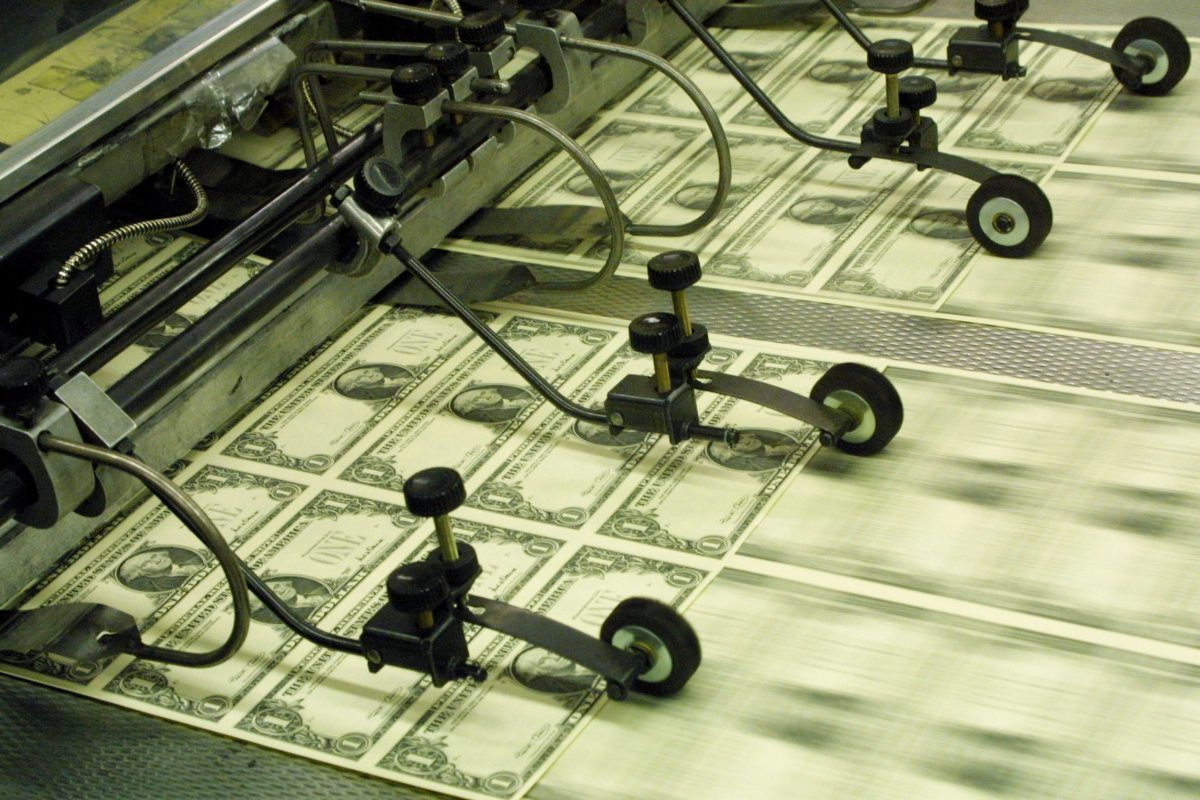
Ever since the financial crisis, investors have been conditioned to expect every major shock to be met by policymakers engineering easier financial conditions. Higher bond yields therefore trigger an almost Pavlovian fear that asset prices cannot withstand a higher cost of money.
Fed Chair Kevin Warsh nodded to this instinct when he presided over an interest-rate increase this month. “I would be hard-pressed to describe broad financial conditions as restrictive,” he said at the press conference. “So we removed a dose of accommodation.” In other words, he wanted to signal that the Fed was not slamming on the brakes; it was merely easing off the accelerator. There is an important difference.
The central bank is not there simply to provide a risk-free rate low enough to sustain ever-rising asset prices. That was an emergency setting which, over time, came to be treated as normal. Part of its actual mandate is price stability, something the Fed spectacularly failed to deliver after Russia’s invasion of Ukraine.
The message now being sent by policymakers is that investors need to adjust. We are no longer living in the post-financial crisis world of chronically weak demand, persistent disinflation and negligible interest rates. Governments carry heavier debt burdens, geopolitical shocks threaten supply more frequently and enormous sums must be raised to finance defence, energy infrastructure and the AI revolution.
At the same time, technology may be raising the economy’s productive potential. This is not simply a return to the inflationary 1970s. It may instead be the emergence of a more capital-intensive, faster-growing economy in which the equilibrium price of money is structurally higher.
Switching regimes is rarely smooth. The MOVE index, which measures bond-market volatility, jumped 19 per cent last week, its biggest weekly increase since the “Liberation Day” episode of April 2025. Higher interest-rate volatility itself tightens financial conditions: dealers require more compensation for holding inventory, hedging becomes more expensive and liquidity becomes scarcer.
That can expose weaknesses which were easy to ignore when money was cheap. The issue is not only whether companies, governments and households can cope with today’s interest rates, but whether they can cope with rates moving much higher, much faster.
Higher rates can co-exist with growth
Credit markets are already beginning to differentiate more sharply between borrowers. Spreads, which had become exceptionally narrow, have started to widen. Investors have focused in particular on Oracle, whose borrowing spree to finance data centre construction has pushed the cost of insuring its debt through credit default swaps to record highs. A ratings downgrade would push some of its debt into junk territory.
That does not mean the AI boom is necessarily a house of cards. It means that even transformative technologies still have to be financed, and in a higher-rate world that financing comes at a meaningful cost.
Markets have spent 15 years learning that every bout of higher yields would eventually be reversed. They may now have to learn something different: higher rates can coexist with stronger growth, technological progress and rising asset prices.
The transition will produce accidents. But the greater mistake would be to assume that the old world of permanently cheap money is coming back.
Helen Thomas is CEO of Blonde Money