


London needs a China House. Here are five reasons why
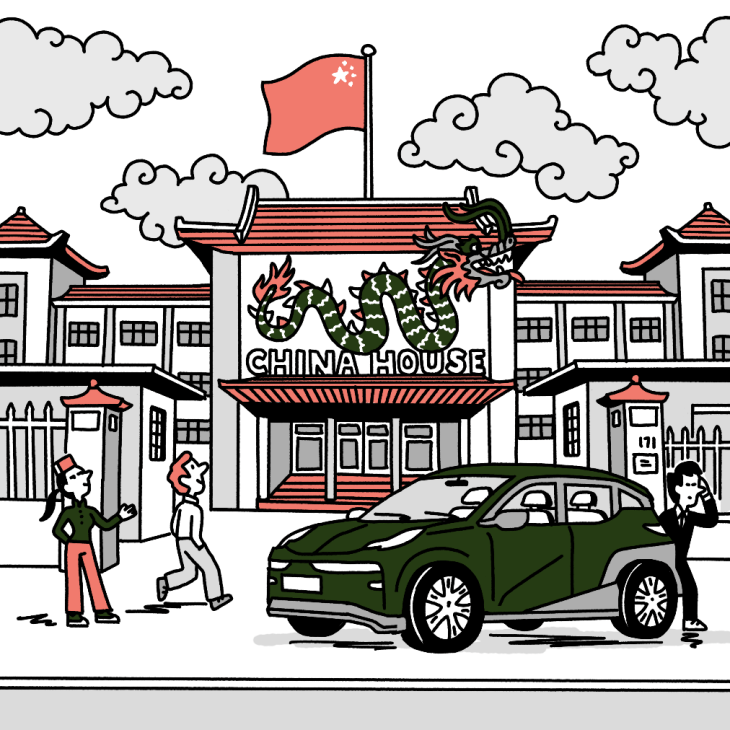
During a recent trip to Shanghai, I called in on the headquarters of tile company Yi Design and had a fascinating chat with founder Caroline Cheng about all things China. Among the many things that we discussed was the need for Chinese brands to represent themselves abroad. Cheng floated the idea of a “China House” in London to represent the best of the country’s culture and commerce, similar to Japan House on Kensington High Street.
It’s a genius idea and it comes at a time when some in London are oddly spooked about Beijing’s new embassy at the former Royal Mint Court near the Tower of London (yes, it will be home to Chinese spies, just like the existing embassy in Marylebone and pretty much every UK and US embassy in China).
Since China House should be a shop window rather than a show of strength, a street-facing address in Covent Garden would do nicely. Xie Ke could design it, Li Xibin could brand it and Yi Design could supply the tiles for the ground-floor café and retail space. Private companies should bankroll it entirely and showcase some real-world companies and products that are not yet household names in Europe.
Here are the five that we would start with, including a tea brand ready to take over Western capitals, an airline’s front-of-house staff, the shoe we should all be wearing and a very good air-con maker.
1.
Midea
As Europe swelters through another scorching summer, it’s time for Midea – one of the world’s largest air-conditioning manufacturers – to make its consumer mark. The white-goods powerhouse from Foshan is a hidden giant of Chinese industry. It already makes much of the behind-the-scenes machinery for other brands and owns a stable of international home-appliance companies, including Toshiba and Teka. Own-brand Midea has been winning multiple awards at European trade fairs for design and its logo will appear on FC Barcelona’s home shirts next season – a sure sign of its ambitions to compete at the top with the likes of Daikin, Samsung and LG. Premium brand Colmo should be showcased at China House and Midea’s founder, He Xiangjian, could cover the construction costs. One of China’s top-10 richest people, Xiangjian is a generous benefactor of science and the arts. He also owns his own vineyard in Ningxia, so that’s the wine list sorted.
2.
Chagee
The birthplace of tea should have a teahouse rather than a café. A high-traffic corner of Covent Garden would be a strong London debut for Chagee, which has already taken Asia by storm. My local in Bangkok replaced a La Cabra from Denmark and it’s only a matter of time before Europeans are walking around the streets of London, Paris and Copenhagen carrying cups of Bo Ya green tea and Da Hong Pao milk tea. The brand’s roots go back to Kunming in Yunnan province. Founder Zhang Junjie spent years working in a second-tier milk-tea business before launching his own brand in 2017. The positioning is similar to Starbucks and its red-and-white logo has the same impact in Asia as the Siren of Seattle. It’s a complete package and this should take Chagee beyond other brands such as Heytea.
3.
Juneyao
Recruiting airline crew to be front-of-house staff would be a smart choice for China House, given their existing roles as de facto country ambassadors. Alas, most of China’s airlines are state-owned and generally drab (except Sichuan Airlines, which leans into its native panda population and famous cuisine). So, we would team up with an under-the-radar rising star of the private sector, Juneyao Airlines. The Shanghai-headquartered airline is known locally as “milk air” because the founders – three brothers from Wenzhou – made their money in the dairy business. The airline targets higher-end travellers and frequent flyers talk highly of the lounge experience. Twenty years after its maiden commercial flight took off from Shanghai, Juneyao is growing its direct flights to European cities. The Wang brothers pioneered private flights in the mainland in the 1990s and, with a new livery, they could be the ones to build the country’s first international aviation brand.
4.
Pane
Uniforms will be another key component of China House’s success. As those who attended Monocle’s The Entrepreneurs conference can attest, China has no shortage of fashion designers. We could go with talents such as Shushu/Tong, Samuel Guì Yang or any number of the up-and-coming graduates being mentored by Tasha and Justin from Labelhood. Staff at China House would look sleek and nimble-footed in a pair Pace Nostalgia 60s by Pane, which was established in Shanghai in 2022. Founder Chen Ning went from finance and fashion to footwear and Pane’s classic styles take cues from the German army trainer. Demand for its shoes is even causing supply issues. I went to buy myself a pair at Pane’s beautiful flagship on Yongyuan Road and watched most groups walk past the neighbouring Onitsuka Tiger shop. Several Europeans walked out with boxes to bring home before Pane’s international expansion gets under way.
5.
Zeekr
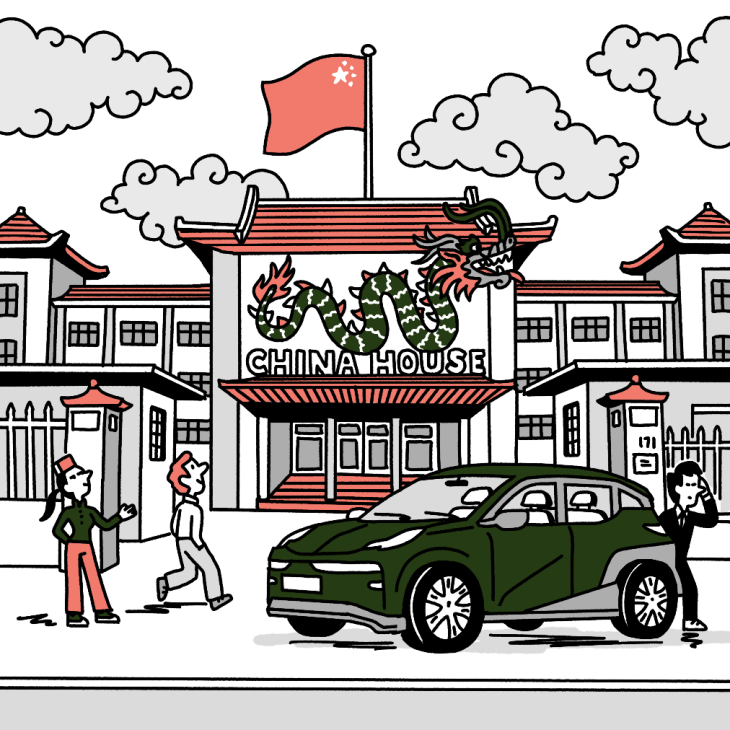
Cars are a pillar of any national brand-building exercise and China’s best chance of following Japan and South Korea’s route from cheap manufacturing threat to genuine competitor and respected leader. BYD has done an admirable, Toyota-style job of establishing a reputation for quality and value for money. Now it is time for rival Geely, based in Hangzhou, to deliver a premium brand that can tempt the Lexus customer. Volvo-owner Geely launched Zeekr in 2021 and put an ex-Audi design veteran behind the wheel. The Zeekr 9X is already the executive ride of choice in Shanghai and the flagship model is expected to hit the UK capital by the end of this year. Parking one outside China House would be a fetching advertisement. But there should also be a fleet in the basement carpark to provide a set of wheels for high spenders at the shop. Geely already makes London’s black cabs and China knows better than most how to chauffeur its VIP guests in style.
The post London needs a China House. Here are five reasons why appeared first on Monocle.