How Varsity Tech Runs a Systematic Fund with Three People
A systematic fund usually spreads its work across data engineers, quant researchers, developers, and execution and risk staff. Varsity Tech, a Singapore investment technology company, runs one with three people and a set of AI agents.

Daniel Tan, its founder, says the agents do the work while the humans keep the judgement, the risk limits and the final say on what goes live.
Varsity Tech’s multi-agent system handles the tasks a traditional quant fund hands to a whole team: cleaning and analysing data, quant research, statistics, writing the code and backtesting. The original ideas, and the market insight behind them, come from people.
“The agents build on each idea, draw parallels across markets, write the code and test it,” Tan said. “What stays human is judgement. We set the guardrails and the validation layers that decide whether a result holds up or is just overfit, and we make the final decision on what goes live.”
Limits the agents cannot touch
Risk is managed in layers so that no single failure can do serious damage. Every strategy has position sizing, a stop loss and a fixed number of attempts built in. Stop losses are enforced through several separate routes, and if a market moves violently the execution system retries the stop automatically until it is filled.
At account level, the daily loss limit is capped at 1 per cent of the whole account and enforced at the broker, so it holds even if something upstream fails. At portfolio level, a strategy is switched off once its losses go beyond its historical maximum drawdown, which Tan reads as the sign that live trading has stopped matching what was validated. “None of these limits can be overridden by an agent,” he said.
Inside a regulated structure
The fund is a Singapore variable capital company under Peak Capital, the partner that holds the capital markets services licence from the Monetary Authority of Singapore, with Varsity Tech as sub-investment manager. That places reporting, risk oversight and compliance processes outside the founding team.
“What surprised me most was how much of the work is documentation and process, not strategy,” Tan said. “The licence is the headline, but day to day it is about clear roles, audit trails and making sure the people who set risk limits are not the same people who generate the ideas.”
Tan has been trading since 2020. MAS rules mean the fund cannot publicly disclose official performance without approval, but the process is clear: every strategy is built and validated through the AI-driven pipeline, and nobody places discretionary trades. The team’s role is to generate ideas, set risk limits and decide whether a strategy that has passed validation goes live.
Mostly saying no
The main failure mode has been overfitting. The agents are very good at finding strategies that look strong on historical data and fall apart on new data, and most of those never get near real money. Some still make it through. Strategies have gone live and stopped behaving the way they did in testing, and the drawdown rule shut them off “before it turned into a real loss”, Tan said.
Fast markets are the other test, because a stop loss does not always fill on the first try when prices are jumping. The retries handle that, and the daily cap at the broker is the last line of defence. “The agents generate far more ideas than we could ever trade, so most of our job is saying no,” he said.
What three people give up
Running on three means losing the challenge that comes from many people with different instincts testing the same idea, along with some redundancy if one of the team is away. Varsity Tech makes up for part of that with adversarial agents whose job is to attack a strategy before it is approved, and with hard rules nobody can override.
The first hires, as it grows, would be on infrastructure and operations: engineers to scale the data and execution systems, and more support on risk and compliance. “We would hire people to strengthen the guardrails around the agents before we would hire more people to come up with ideas,” Tan said.
Varsity Tech also runs as a fintech company and wants to bring its product, Quandora, to more people who want to experience systematic trading. It is training its own in-house models and growing a proprietary data set, which Tan believes “will be the biggest advantage anyone can have in the age of AI”.
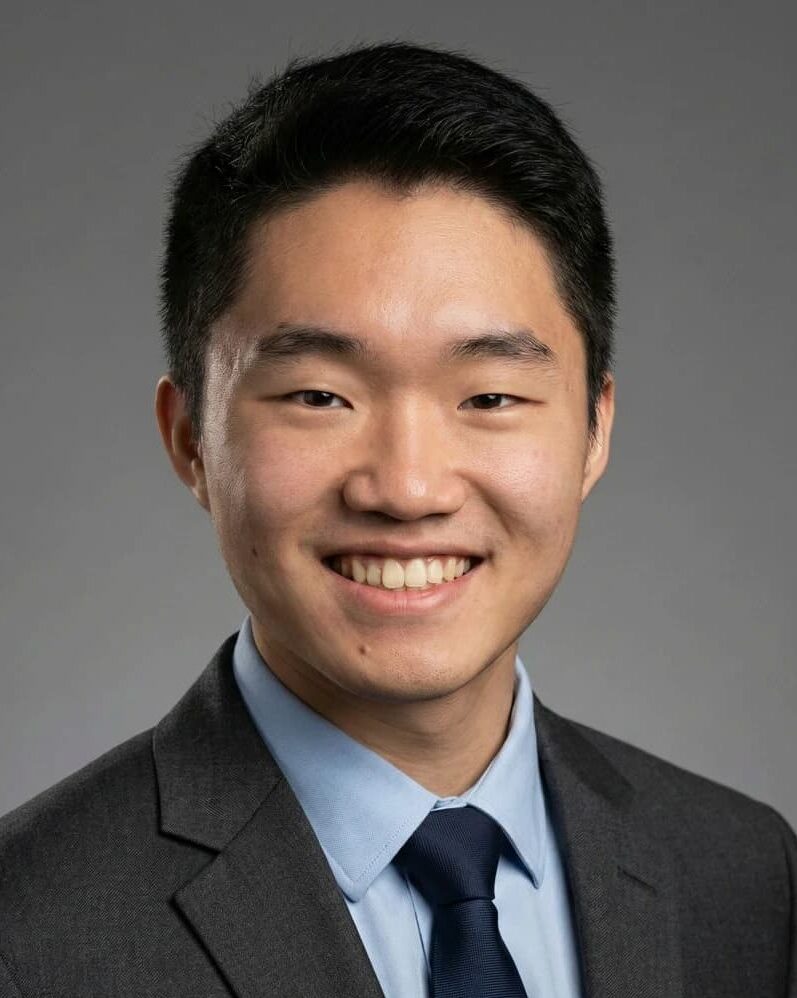
Daniel Tan is the founder of Varsity Tech, a Singapore fintech building AI-driven systematic trading. He was the first employee at Dott, the shared scooter and e-bike operator, and has been trading since 2020.
The post How Varsity Tech Runs a Systematic Fund with Three People appeared first on The Fintech Times.