Goldman Sachs Sees AI Reshaping Institutional Investing

Generative artificial intelligence (AI) could change how institutional investors navigate research, trading-floor commentary, market data and pre-trade analytics, but building tools reliable enough for capital markets requires a different standard than producing an impressive AI demonstration, according to Goldman Sachs.
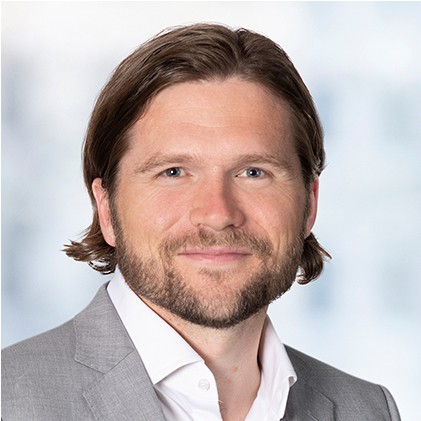
Chris Churchman, Head of Marquee and co-chair of Goldman Sachs’ Global Banking & Markets AI Working Group, discussed how the firm is approaching AI for institutional investment workflows on a recent episode of the Goldman Sachs Exchanges podcast, entitled “Building AI Systems for Capital Markets.”
“You’ve got to start with the problem to be solved, not just, ‘Oh, let’s use AI on that and that and that,’” Churchman said. “Let’s start with the investment process,” he added.
According to Churchman, institutional investors face a large volume of information when making investment decisions, ranging from research on companies, sectors and economic forecasts to trading-floor commentary on flows and trade ideas.
Investors must then navigate market data and analytics before moving into tools such as scenario analysis, backtesting and other pre-trade analytics, he said. “The paradigm shift that we’re seeing in software is that we’ve gone from a world where users learn software to where software learns users,” Churchman said.
He described an internally available Marquee AI capability where a user can ask a question based on what matters to them. The system can identify relevant research topics and retrieve associated research, trading-floor commentary and data analytics before assembling the information into a response.
When calculations are required, the system can access data from an appropriate tool, perform the calculation and return an answer, he said. Churchman said the system is designed so that each sentence can be grounded in something said within the firm or in a calculation that can be audited.
That level of verification is important when applying generative AI within institutional markets, according to Churchman. He said large language models cannot inherently distinguish between facts and extrapolations, creating a challenge when applying them to institutional data and workflows.
“You really have to build the framework to force it to ground itself because it inherently can’t do it itself,” he said.
Churchman said firms should focus on areas that general-purpose models cannot know, including user entitlements and relationships between proprietary datasets. He also emphasized the challenge of moving from an AI demonstration to a product that can be used consistently. “A demo is judged on its best day, whereas a product is judged on its worst day,” Churchman said.
Churchman cautioned against designing systems too closely around the limitations of current AI models, given the speed at which the technology is developing. “Build for the model that you will have at launch, not for the model that you have when you’re starting your development,” he said.
Churchman also discussed using AI to rethink existing processes rather than simply making them faster. He emphasized the importance of trust and transparency when developing these capabilities. “When you think about these gen AI capabilities, you can generate all sorts of answers,” he said. “So the question is how do you generate an answer that someone will stand behind?”
George Lee, co-head of the Goldman Sachs Global Institute, said one of his takeaways was the need to reconsider existing processes rather than simply use AI to make them faster. “A lot of the effort here is breeding faster horses versus building the automobile,” Lee said.
Churchman similarly emphasized starting with the problem that needs to be solved rather than with the technology itself. “If the answer is, ‘I want to use AI,’ you haven’t thought about the problem enough,” he said.
The image for this article was generated using AI.