


Germany tells Trump: Without us, space exploration ‘cannot be done’
PARIS — Germany has a reminder for Washington: The United States needs Europe in order to get to outer space.
“Germany and Europe provide critical key technologies” for U.S. space missions, German Space Minister Dorothee Bär told POLITICO in an interview this week. “That is why we can confidently say: without us, it cannot be done.”
“There are clear mutual dependencies,” she said, pointing to European-built technology used in NASA’s missions as proof that Europe still has leverage in the new space race.
Germany’s message comes as Europe and the U.S. tussle over the control of key technologies like cloud, AI, microchips and more. Washington last week moved to restrict foreigners’ access to Anthropic’s latest AI models. The move galvanized European leaders’ push to wean off U.S. tech and came just a week after the European Commission presented a tech sovereignty package to reduce the bloc’s dependence on the U.S.
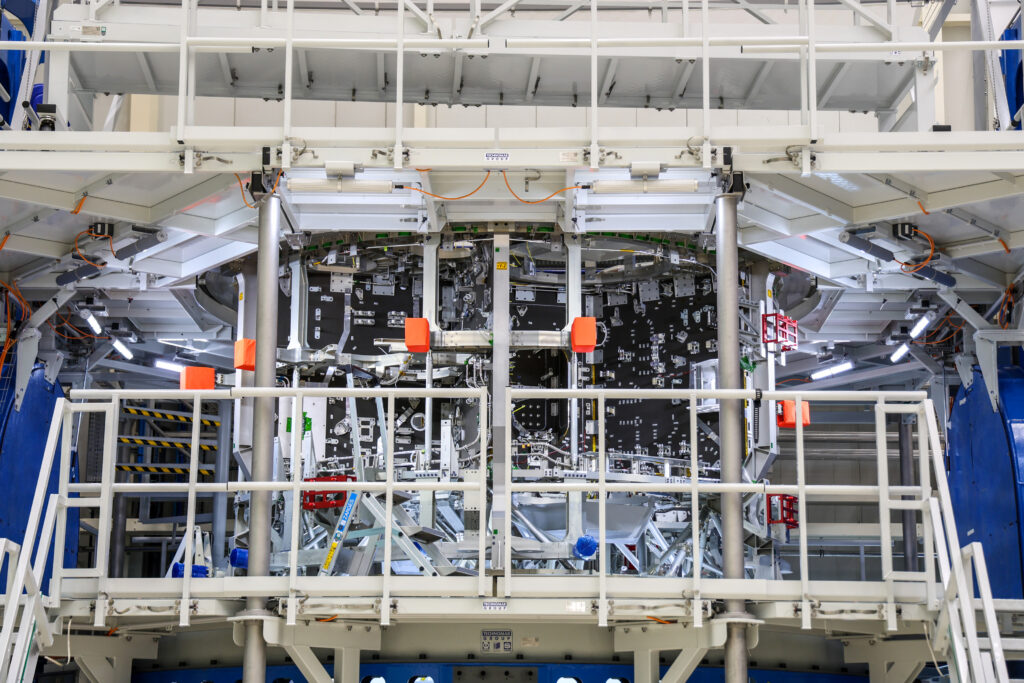
Bär said the dependence cuts both ways. “Without the European Service Module, the United States would not be able to fly to the moon,” the German minister said on the sidelines of the VivaTech trade show in Paris this week.
U.S. space agency NASA describes the European Service Module as the Orion spacecraft’s “powerhouse,” supplying it with electricity, propulsion, thermal control, air and water. The module is assembled in the northwestern German city of Bremen under a European Space Agency program.

German firm Jena-Optronik also makes star trackers to help the Orion spacecraft determine its orientation in space, Bär added.
World powers have revived the global space race in recent years, fighting for control over things like satellite communication, data and space resources. The U.S. is at the forefront of this race, driven in part by private-sector heavyweights such as Elon Musk’s SpaceX, with Jeff Bezos’ Blue Origin also pursuing reusable rockets and lunar systems.
“We talk a great deal about the United States. At the same time, we must not overlook the fact that a strong alliance is forming on the other side, consisting of Russia, China, North Korea, and Iran. I do not want these countries to win the race in space,” Bär said.
Bezos visited Paris’ VivaTech conference on Wednesday, telling attendees: “Demand for launch is insatiable. Right now, we have a tremendous backlog already.”
German minister Bär warned that EU regulation is holding back European champions from competing. “I keep asking the same question: do we really need yet another Act?” she said, in reference to the EU’s proposed Space Act presented in June last year.
Germany has been pushing back against the proposal, and the U.S. administration threatened retaliation against the rules if they were to unfairly target American firms.
“We want to reduce bureaucracy. Yet at the same time we continue creating new requirements,” Bär said. The German government is working on a new national space law aimed at helping companies roll out technologies quicker, Bär said.