Germany fears France’s Palantir rival risks creating a new dependency
BERLIN — France and Germany want to avoid relying on American military AI technology, but Berlin is wary that a European alternative could simply replace one foreign dependency with another.
Militaries increasingly need AI on the battlefield to coordinate a flood of information gathered from satellites, sensors, radars, and even individual soldiers. Palantir’s Maven Smart System, acquired by NATO in 2025, is the top choice, but many European countries worry about giving such power to an American company.
Paris is promoting Arcadia, a French-built system that also uses artificial intelligence to pull together battlefield data, enabling commanders to make quick decisions. It is already being tested by the French military and is pitched as an alternative to Maven.
Germany sees promise in the French approach, but internal German government notes seen by POLITICO show Berlin is wary of replacing dependence on an American company with reliance on French technology.
“Engagement with Arcadia must not undermine national efforts to build a sovereign data-integration platform,” the German assessment says, while adding that information-sharing with Arcadia is necessary to ensure interoperability with any future German system.
The assessment notes that the data and technology powering Arcadia come exclusively from French defense companies — including Mistral AI, Safran.AI, Thales and Airbus.
Arcadia is among a range of defense issues due to be discussed next week by Chancellor Friedrich Merz and Defense Minister Boris Pistorius, according to a separate note seen by POLITICO.
The rush to develop homegrown military technology — seen in France, Germany, Ukraine and the U.K. — comes as European countries grow increasingly uncertain about the U.S. commitment to the continent’s security under Donald Trump’s administration.
Germany’s reservations about Arcadia reflect a recurring tension in European defense: Germany is often seen as prioritizing its own national industry, while France’s push for European sovereignty is sometimes viewed in Berlin as a vehicle for French technology.
That tension is familiar. Earlier this year, the fighter-jet pillar of the Franco-German-Spanish Future Combat Air System collapsed after years of bitter disputes between Paris and Berlin and their respective industrial champions, Dassault Aviation and Airbus Defence and Space.
Europe’s Palantir
Despite that often turbulent history, Merz and French President Emmanuel Macron agreed in July to explore a European military digital backbone that uses AI and cloud technology to combine information from satellites, drones, radars, electronic sensors and signals intelligence to generate a common operational picture for commanders.
Their declaration specifically mentioned Arcadia “as well as comparable German solutions,” which are supposed to “foster data sovereignty.”

Palantir’s Maven software uses AI to fuse battlefield information and support targeting, situational awareness and operational planning.
Paris, however, wants a European alternative.
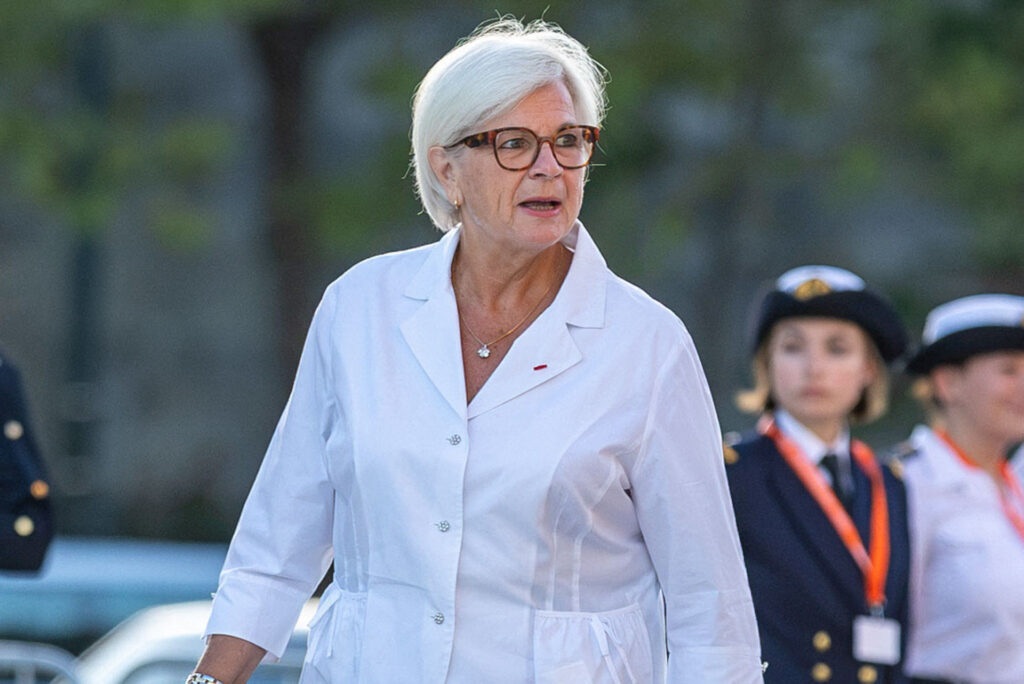
“The armed forces ministry is fully committed to the Arcadia project to develop a sovereign command-and-control system that will comply with NATO standards and serve as an interoperable alternative to Maven,” French Armed Forces Minister Catherine Vautrin told the French Senate in June.
The French military has already started pitching the system to allies.
The German way
Germany also aims to develop its own technology, although little is publicly known about the experimental project, which the internal notes refer to as the Bundeswehr’s data-integration platform.
France wants Arcadia to be adopted by other allies who are also wary of relying on Palantir, but the system has run into hurdles to its acceptance as a pan-European project by the European Commission.
France unsuccessfully pushed for Arcadia to receive EU financial support, the German notes show, despite being initially slated to receive €3.3 million in EU grants. The Commission said Arcadia did not meet the criteria to be treated as a European Defence Project of Common Interest.
“The Commission’s assessment and decision were, as expected, criticized in particular by France,” the notes say.
The Commission left the door open for Arcadia to return once it had matured.
The German defense ministry declined to comment on the matter. The French armed forces ministry did not respond to a request for comment.
Although the Brussels decision does not block the Franco-German effort, it underlines that Arcadia’s future role remains unsettled. It could be part of a broader European system, a French contribution alongside German technology, or a national technology designed to work with others.
Europe’s growing discomfort with its reliance on U.S. technology is driving the hunt for an alternative to Palantir, but France and Germany still have to decide whether they can depend on each other.
This article has been updated.