


From EMSs to EVs: Dave Conner 2.0 Kicks into Gear
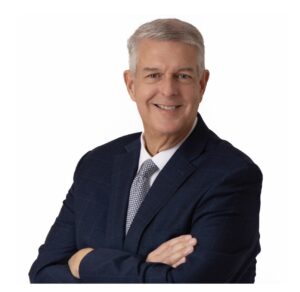
Last month, Dave Conner retired from a 40-year Wall Street career.
It’s fair to say Conner has seen a lot — he started at Sanford C. Bernstein (now AllianceBernstein) in 1985, when Ronald Reagan was US President, Back to the Future was in the theaters and The Golden Girls was on TV. Over the subsequent three decades he worked at big brokerage firms such as PaineWebber, Lehman Brothers, JP Morgan, and Citi, before a final five years at BestEx Research.
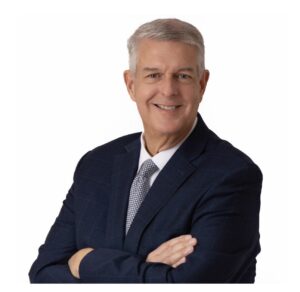
Traders Magazine caught up with Conner to learn more.
How did you get your start in the investment industry?
I graduated from Ithaca College with a finance degree and a minor in economics. My uncle worked as a pension consultant, and he encouraged me to focus on institutional money management rather than brokerage. During my senior year, I sent resumes to about 100 firms and got exactly one interview with Sanford C. Bernstein on the buy side. Fortunately, I got the job.
I started as a portfolio management assistant at a time when everything was done on paper. We manually tracked portfolio positions and calculated trades by hand. A few weeks into the job, I saw that automation was going to soon replace my role with what ended up becoming one of the first portfolio accounting systems. I also realized one of the accounts I was managing belonged to Ithaca College. It struck me that Bernstein had hired one of their clients students to help manage their account. That was a memorable moment.
Your career didn’t follow a straight path. What was your first setback?
After about a year at Bernstein, I saw automation kicking in quickly, and convinced myself I was ready for a pivot. I moved to Atlanta without a job and tried selling life and health insurance. It was a complete disaster. I couldn’t sell anything. After a short time, I headed back to New York and moved in with my parents.
Looking back, that failure was one of the best things that ever happened to me. It taught me humility and resilience. Sometimes the experiences that don’t work out become the most valuable lessons.
How did you land in electronic trading?
I joined PaineWebber as a consultant and eventually met Bill Keena, who ran the firm’s soft-dollar business. He was an innovator with an idea for electronically routing institutional orders to the New York Stock Exchange.
In the early 1990s, electronic trading was still in its infancy. Together with Bill, we built one of the industry’s first electronic order-routing systems (EMS) and called it E-Trade. It allowed institutional clients to submit orders electronically instead of relying entirely on phone calls and manual processes. About a year and a half into that role, I got a phone call from a small brokerage firm who said that we had to stop using the name E-Trade unless we paid them $300K. We declined and called our system ElecTrade. In hindsight, we should have written that check!
From there, everything evolved quickly. We connected up to our clients using the FIX protocol to more trading systems, expanded electronically, and helped move the industry toward the automated workflows that investors take for granted today.
You were involved in the early development of the Financial Information eXchange (FIX). What was that like?
In 1993, I was invited to join the original FIX Committee alongside representatives from 6 major buy-side and 6 sell-side firms. At the time, I honestly wasn’t sure I belonged. There were some incredibly talented technologists in the room. However, I embraced the challenge I remember writing a white paper/spec for GTC and GTD orders since PaineWebber was the only sell-side retail firm with those types of orders.
Looking back, it was an extraordinary opportunity. The FIX protocol ultimately became the industry’s standard for electronic communication between trading firms. Being part of those early discussions gave me a front-row seat to one of the most important technological changes in the capital markets.
Your career included leadership roles at Lehman Brothers and JPMorgan. What stands out from those years?
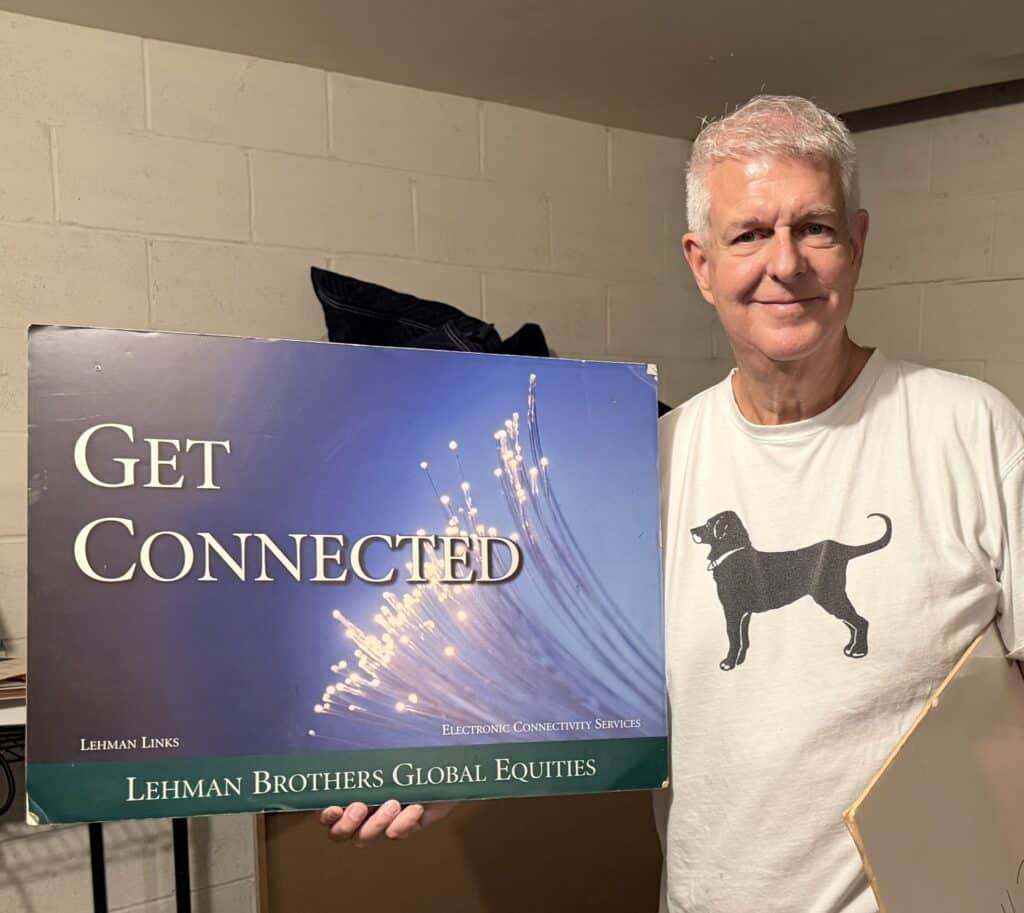
I joined Lehman Brothers in 2000 to help build its electronic trading business after spending years doing exactly that at PaineWebber.
One event I’ll never forget is September 11, 2001. While at Lehman, we had just finished building a new trading floor and used it for the first time on September 10. The very next day, we evacuated and never returned. Like everyone else in the industry, we had to adapt quickly and find ways to keep serving clients under extraordinary circumstances.
Later, I moved to JP Morgan to expand its electronic trading business. During my time there, JP Morgan acquired Bear Stearns, and I helped integrate the two electronic trading operations. It was another example of how quickly this industry can change and how important it is to stay adaptable.
What changed the most in the trading business?
The technology has changed dramatically, but so have the economics. When I started, institutional commissions were measured in multiple pennies per share. Today they’re measured in fractions of a penny.
Competition is far more intense, and firms have to demonstrate measurable value every day. Performance, technology, and client service have become more important than ever.
It’s been fascinating to watch that evolution over the last four decades. Spending my last five years in electronic trading with BestEx Research was an extremely rewarding experience, working on a small, dedicated, agency-only team and competing with the big banks (my old stomping grounds!).
What prompted you to retire?
It wasn’t really about leaving the industry. It was about beginning the next chapter.
My wife has been a high school orchestra teacher for 40 years in the public school system. This spring, she decided it was time to retire and move full time to Marco Island, Florida where we have had a part-time residence for the past eight years. Once she made that decision, it became clear that it was also time for me to begin a new chapter in my own life; so we synchronized our retirements. Truth be told, if she hadn’t retired, I would have stayed on with BestEx Research for another few years to help take them to the next level and beyond.
You’re hardly slowing down. What’s your new career?
Several years ago my son Kyle, who’s an automotive journalist running Out of Spec Studios, invited me to start making occasional YouTube videos about electric vehicles. What began as a hobby eventually turned into something much bigger.
Today I run the YouTube channel Out of Spec Dave, where I review electric vehicles and help consumers understand them from an everyday driver’s perspective. My son handles much of the highly technical analysis on multiple channels within the Out of Spec umbrella including OOS Reviews and OOS Motoring while I focus on practical ownership experiences and advice for buyers.
As I move forward in my next chapter, I am launching Out of Spec Deals, a business that helps consumers negotiate vehicle purchases. Buying a car is often the second-largest financial decision people make, yet many buyers aren’t confident they’re getting a fair deal. Our goal is to make that process easier and more transparent.
So while I’m retiring from Wall Street, I’m certainly not retiring from work. I like to think of it as ‘Dave 2.0 kicking into high gear’!
What advice would you give young professionals entering financial services today, especially with artificial intelligence reshaping the employment landscape?
Don’t be afraid of AI — embrace it.
But before you rely on technology, learn the fundamentals of the business. Understand how markets work, how operations function, and why things are done the way they are. Build a strong foundation first.
Once you truly understand the business, AI becomes an incredibly powerful tool. It can help you become more productive, more creative, and more valuable. The people who succeed won’t be the ones competing against AI, they’ll be the ones who know how to use it effectively.