



Competition tribe decamps from Washington to Brussels
BRUSSELS — It all started with a WhatsApp group. A bunch of lawyers, consultants and officials from the EU’s competition department checking on each other’s flight plans to the U.S. to attend the antitrust community’s annual jamboree, the spring meeting of the American Bar Association in Washington, D.C.
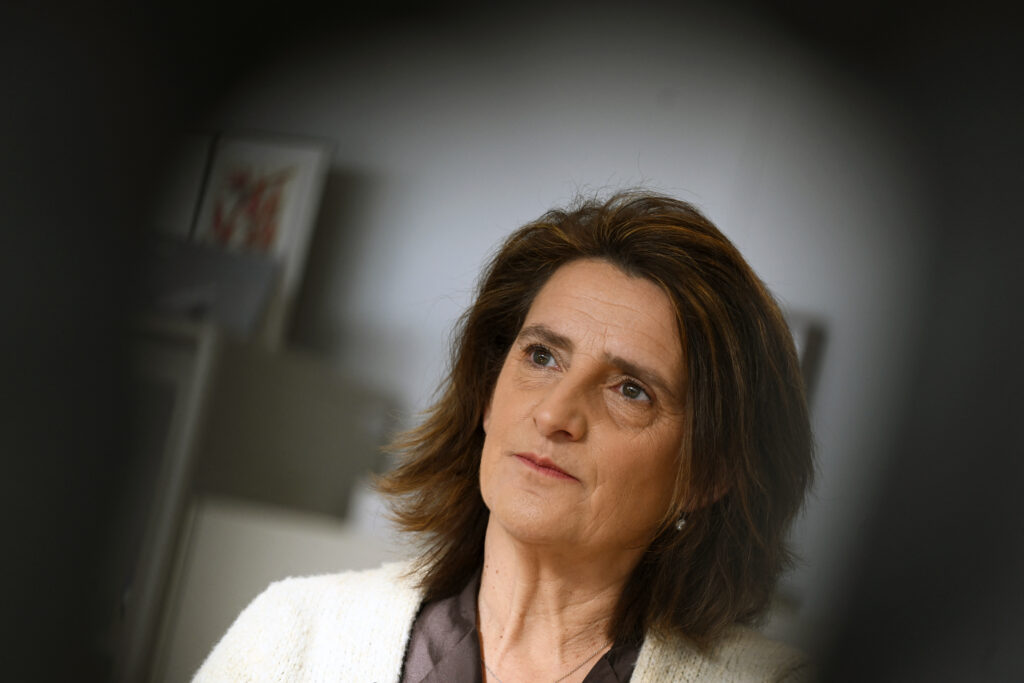
Fast forward a year, and that group has mushroomed into a three-day Brussels festival featuring everyone who is anyone in the antitrust world on this side of the Atlantic: EU competition chief Teresa Ribera, leaders of European national antitrust authorities, top brass at the European Commission’s competition department, even veteran advocates like former Italian Prime Minister and two-time EU commissioner Mario Monti.
The European Competition Forum, which debuts June 16, claims to be “the largest independent competition event in Europe.” What it is, in reality, is a bid by the competition community to move the core of the global antitrust conversation from Washington to Brussels following the Trump administration’s 2025 boycott of the ABA spring meeting.
“When I saw a message [last year] in the group of European colleagues asking who would be attending the Spring Meeting in the U.S., my immediate reaction was: ‘Shouldn’t the real question be why we aren’t meeting in Europe?’” recalled Evelina Kurgonaite, a Lithuanian lawyer, lobbyist and entrepreneur who is steering the Brussels forum’s executive committee.
For two decades, the ABA’s spring event in Washington had been the top gathering for global antitrust leaders and professionals, a chance to debate and mingle with their peers. Timed to take place in the U.S. capital when the cherry trees blossom, the event drew up to 3,000 participants to hear the latest from celebrities in their field, from EU antitrust chiefs to members of the U.S. Federal Trade Commission to Department of Justice notables.
But when Ribera attended the event for the first time last year, many American officials went missing in action, with President Donald Trump announcing his “Liberation Day” tariffs on the rest of the world and freezing millions of dollars of USAID and State Department funding for the ABA. A Trump spokesperson derided the association as “snooty”.
Trump’s appointee at the FTC, Andrew Ferguson, even banned agency staff from attending the ABA spring meeting, which he said “advances radical left-wing causes and promotes the business interests of Big Tech.” A similar ban was imposed at the U.S. Department of Justice, whose antitrust chief Gail Slater was later ousted.
‘Let’s do it’
Back then, as she watched her contacts in the WhatsApp group discuss their U.S. travel plans, Kurgonaite wondered whether Washington was still the right place for the community to debate its future — particularly as the global disruptions fuelled in part by the Trump administration’s policies forced a debate on the role of antitrust.
“I could sense there was room for something bigger,” she said in an interview with POLITICO. “After all, the European competition community is huge. Why don’t we have a flagship gathering of our own on this scale?”
The response of the group, Kurgonaite said, was unanimous: “Let’s do it.”
The EU’s competition crowd responded to the call, spearheaded by a seven-member group including Kurgonaite, DG Competition cartels director Maria Jaspers, and BEUC consumer group chief Agustín Reyna.
They were supported by an academic taskforce that included Fiona Scott Morton, the U.S. academic who was briefly former Commissioner Margrethe Vestager’s controversial pick to lead the economic work of the competition department.

The Brussels event has drawn over 1,000 registrations from attendees from across Europe along with Brazil, South Africa, Korea, Japan, China and the Middle East — all willing to pay up to €650 to attend.
The ECF is designed as a European forum for high-level debate on where competition is headed. As such, it has the blessing of competition chief Ribera, who told POLITICO that she welcomed the opportunity to engage with the wider competition community “at a moment when Europe is facing major economic, technological and geopolitical transformations.”
‘Transatlantic bridges’
While there’s no shortage of conferences where lawyers get to mingle with EU officials, its supporters say the ECF is different.
“It’s very timely to launch this in Europe,” said Stefan Sagebro, a competition and industrial policy expert at the Confederation of Swedish Enterprise. “It’s good to have this big yearly summit in this area, because competition rules are so relevant in many areas and have a very high political relevance as well.”
While unofficially pitching itself as a “European ABA,” the door isn’t shut to America or to the conversation between the continents. Former DoJ antitrust chief Slater will be onstage in Brussels to discuss “transatlantic bridges” after her grim departure earlier this year amid a lobbying scandal involving a Trump ally.
Renata Hesse, who chairs the American Bar Association’s antitrust section, will also attend. The ABA has defended its values vigorously since Trump returned to office in Jan. 2025, emphasizing diversity and inclusion; the group ended up suing the Trump administration for intimidating lawyers through targeted executive orders.
Ribera said the forum won’t need to borrow a brand as it will rapidly establish its own identity. “The value of a forum like this is not that it mirrors any existing model,” she said, but that it helps maintain a dialogue between the world’s two largest economies.
“Keeping the conversation open does not mean that we will always agree,” said Ribera. “But dialogue helps build understanding, reduces uncertainty and strengthens cooperation where our objectives align.”
Ultimately, lawyers won’t be abandoning the original ABA meeting: With the lion’s share of business still coming from across the Atlantic, most antitrust shops in Brussels are either American or have integrated with their U.S. peers.
But in a world where agencies in the U.S., the EU and the U.K. can coordinate on major transactions in real time, law firms need to offer “a single transatlantic platform,” said Stephen Whitfield, a partner at Winston Taylor — a law firm itself born of a transatlantic merger this month.