China’s New ‘AutoDNA’ AI Lab Needs Humans For Just Two Chores
China’s New ‘AutoDNA’ AI Lab Needs Humans For Just Two Chores
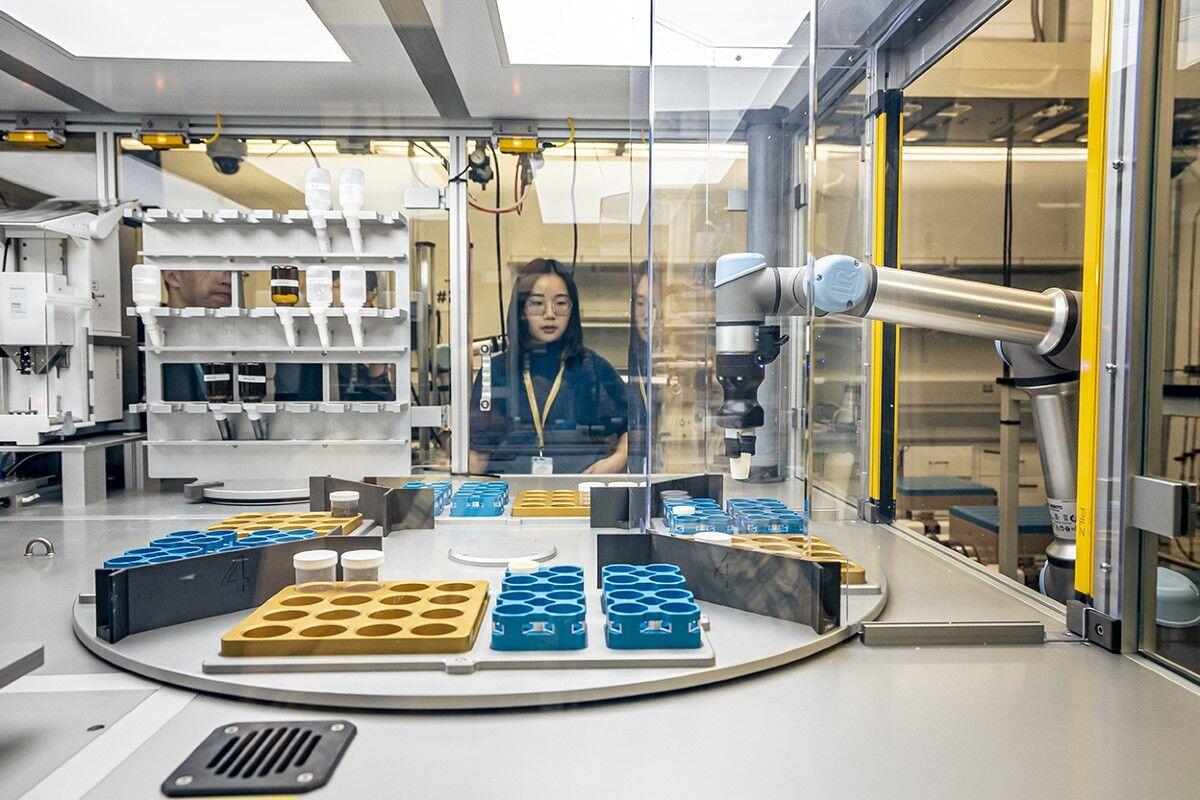
Researchers at Shanghai Jiao Tong University have built a laboratory in which a team of AI agents designs and runs DNA experiments from a single typed prompt, with people stepping in only to restock reagents and service the hardware, according to a paper published this week in Nature.
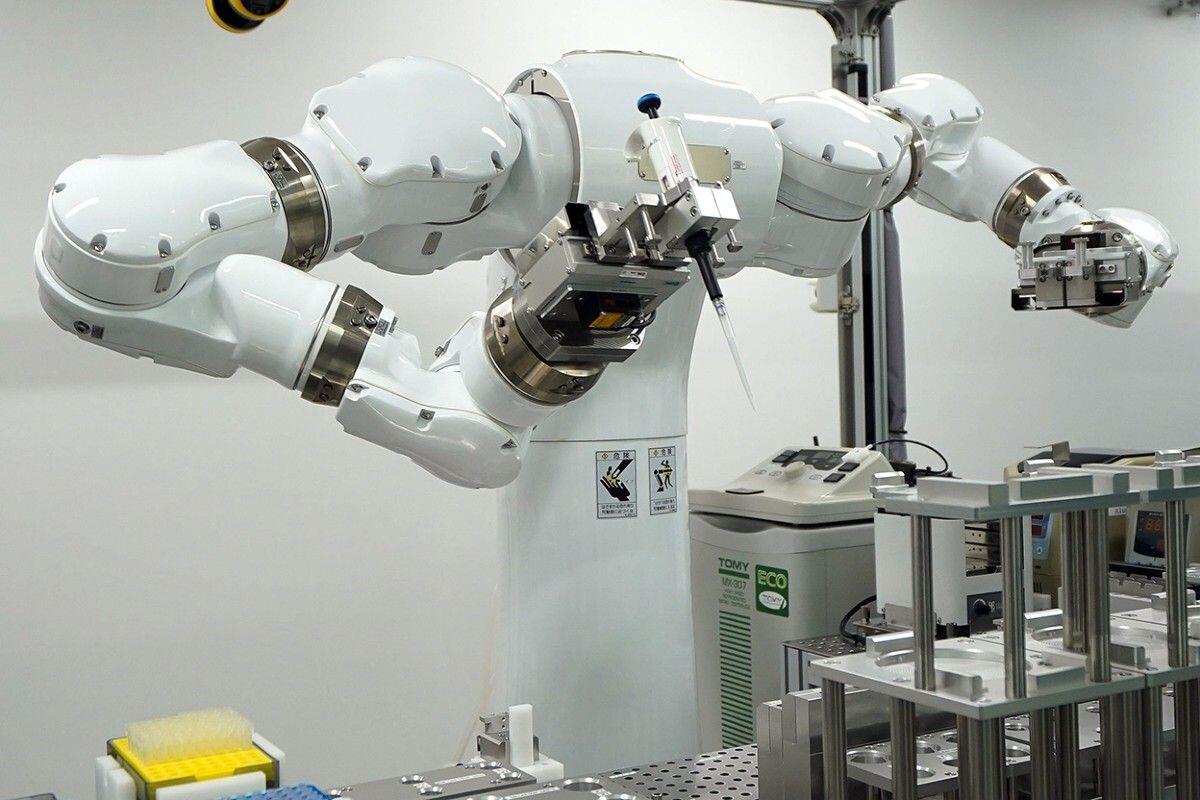
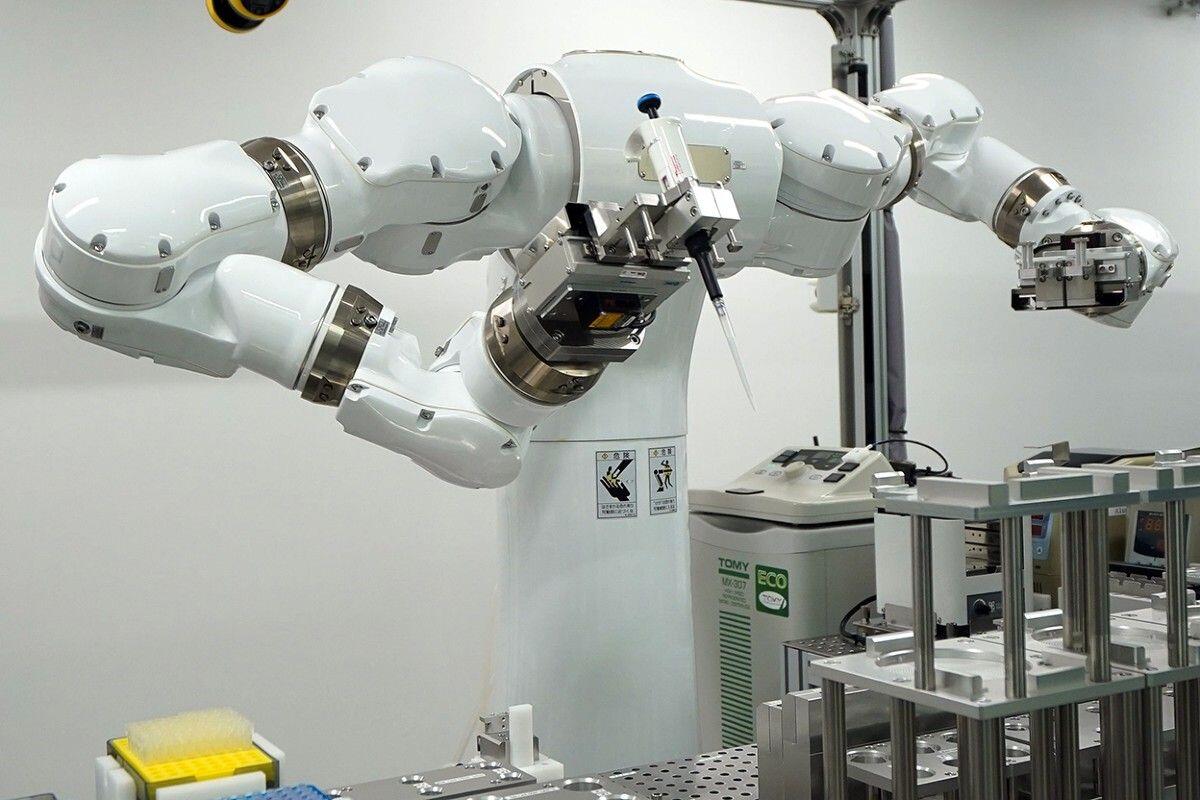
The system, called AutoDNA, moves samples between instruments with robotic arms and can operate more than 20 types of equipment. A single project can involve thousands of operations, including synthesizing and sequencing DNA, Nature’s news report said. “An experiment is designed and executed from start to finish by a team of AI agents, following a simple prompt from a human operator,” it added.
The Nature paper reports four test applications. The system matched expert-optimized yields in enzymatic DNA synthesis, ran concurrent protocols 3.2 times faster, completed a full DNA data-storage cycle with exact recovery of the original digital content, and identified and validated a clinically detected KRAS G13D cancer mutation. In one demonstration, the researchers had it encode a quote often misattributed to Stephen Hawking, “Intelligence is the ability to adapt to change,” into DNA’s four letters: A, C, G and T.
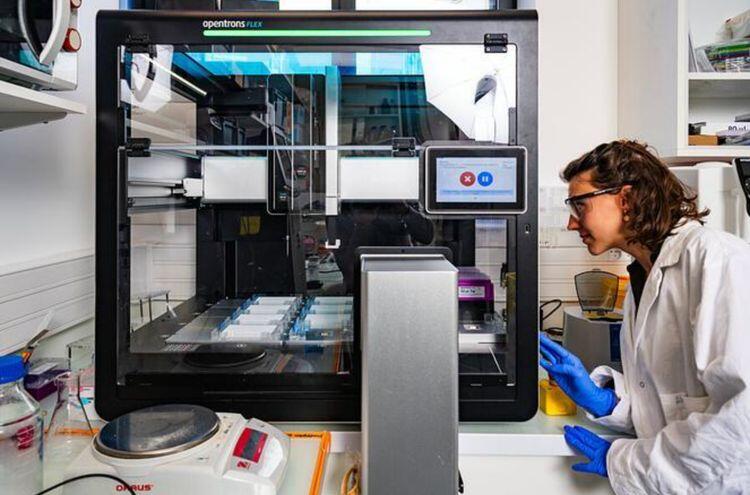
Labs have used automation for years, but usually for a single step such as mixing or heating. AutoDNA was designed around AI from the start rather than adding AI to an existing lab, said Haibo Chen, a computer scientist at Shanghai Jiao Tong and a co-author. “In many existing systems, human experts are still required to configure the instruments,” he said. “AI is mostly added to handle just one part of the process.”
Outside researchers were impressed. Milad Abolhasani, a chemical engineer at North Carolina State University, called the system remarkable for its autonomy and for how readily it takes in different lab equipment. “The future of science is going to involve a lot of autonomous labs,” he said.
The work is one of several recent efforts to hand experimental biology to AI agents. Nature’s news report lists a robot chemist that designs reactions and makes drugs on its own and an AI biolab at Anthropic among its related coverage. The AutoDNA code is on GitHub, and the sequencing data and agent outputs are on Zenodo, according to the paper’s page.