BofA flips the script with bombshell Fed interest-rate outlook
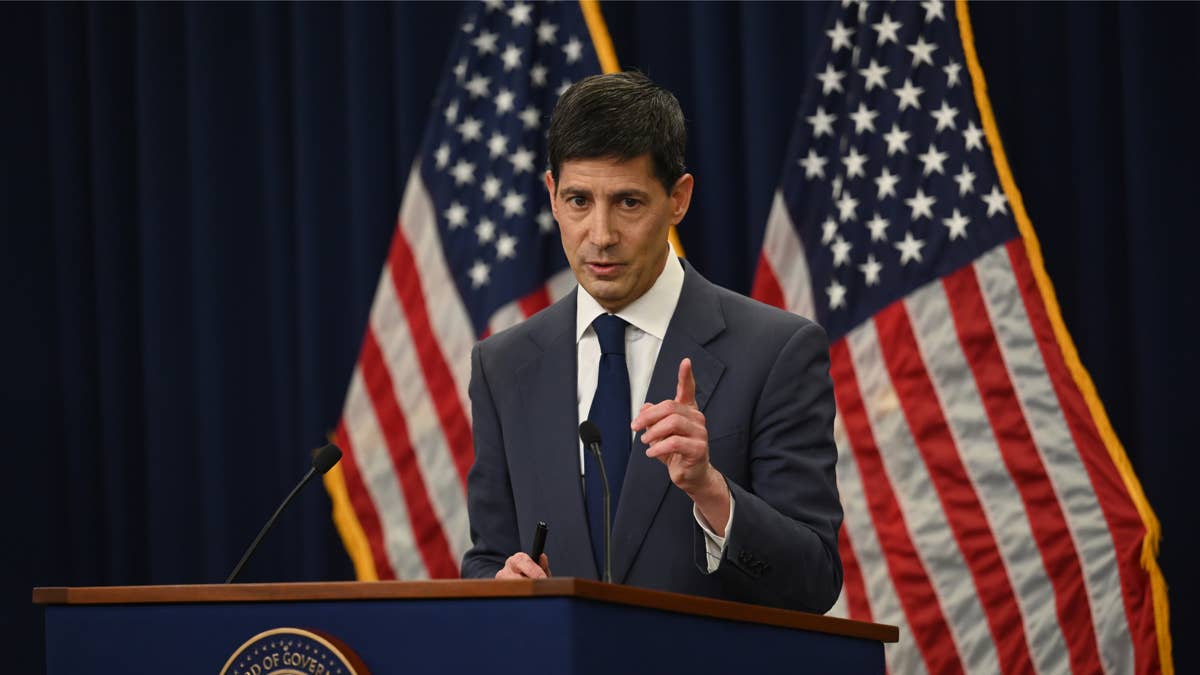
Bank of America Global Research economists expect the Federal Reserveto raise interest rates three times this year due to Chair Kevin Warsh’s more hawkish stance and the nation’s overall economic resilience despite the Iran War.
BofA revised its forecast after the Fed left the benchmark federal funds rate unchanged June 17 as almost half of central bank’s policymakers indicated that they expect rates to rise before the end of the year.
The BofA note is yet another sign that Wall Street expects Warsh to become more aggressive to lower inflation closer to the Fed’s 2% target, a metric the central bank has missed for the last five years.
“(The) June Summary of Projections and Warsh’s comments indicate that the Fed’s reaction function is much more hawkish than we thought,” BofA analysts said in a note emailed to TheStreet.
Previously, BofA analysts expected the Fed to hold rates steady this year.
Fed keeps rates steady thus far this year
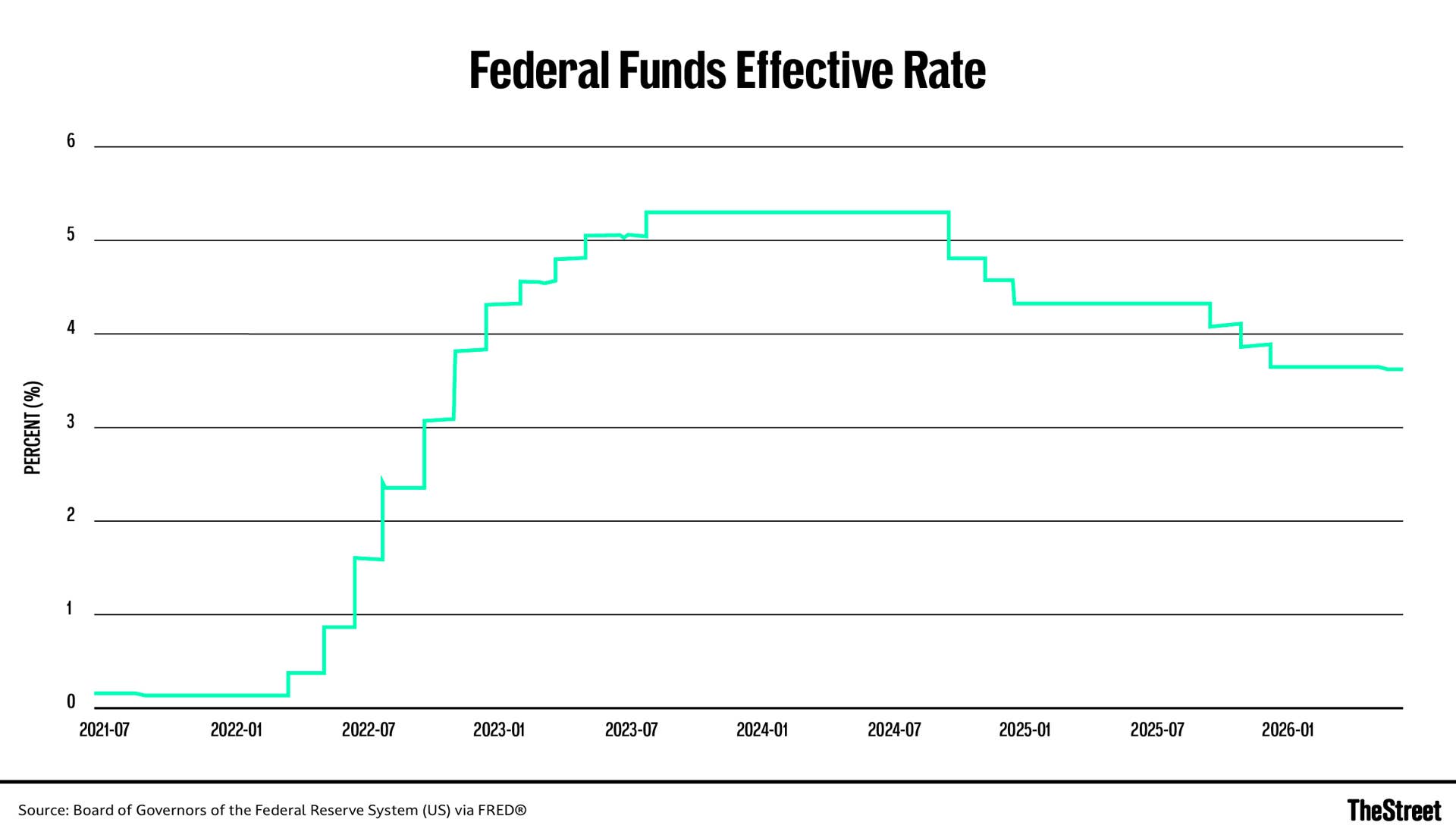
June 17, the Federal Open Market Committee voted 12-0 to hold the benchmark federal funds rate steady at 3.50%-3.75%.
Policymakers had cut rates by 25 basis points at its last three meetings of 2025 to shore up the softening labor market.
More Federal Reserve:
- Alan Greenspan quotes Fed Chair Warsh should remember
- Fed’s Warsh leaves markets guessing on rate hikes
- Mortgage rate outlook shifts after Fed decision
These “insurance” cuts stopped after the majority of policymakers decided the risk from higher prices was outweighing signs that the jobs market was stabilizing.
The funds rate is the interest rate at which depository institutions lend balances at the Federal Reserve to other depository institutions overnight.
Changes in the funds rate trigger a chain of events that affect:
- Other short-term interest rates
- Foreign-exchange rates
- Long-term interest rates
- The amount of money and credit in the economy
- And ultimately, a range of economic variables, including employment, output, and prices of goods and services
Fed’s dual mandate requires a tricky dance
The Fed’s dual mandate from Congress requires maximum employment and stable prices.
- Lower interest rates support hiring but can fuel inflation. This risks fueling further inflation, potentially leading to an inflationary spiral.
- Higher rates cool prices but can weaken the job market. This increases the cost of borrowing and further stifles economic activity.
Historically, the U.S. central bank has favored stable jobs over higher prices.
But not now.
A hawkish Warsh pledges to lower inflation
Warsh, leading his first FOMC meeting, repeatedly referred to “price stability” during his post-meeting comments, and highlighted how the central bank’s policies have missed its 2% inflation target for the last five years.
“Persistently high prices are a burden for the American people. But the recent past need not be prologue.’’ Warsh said. “I am pleased to report that members of the FOMC are unambiguous and unanimous: This Committee will deliver price stability.”
Related: Alan Greenspan quotes Fed Chair Warsh should remember
Warsh declined to say whether that commitment to lower inflation would lead to an interest-rate hike.
“The good news is we’ll be meeting in six weeks,” Warsh said.
May PCE report annual estimates run hot
The May Personal Consumption Expenditures, the Fed’s current preferred inflation gauge, is due June 25.
- Market consensus for the core PCE Index (year-over-year) sits around 3.3%, matching the April reading.
- But the Federal Reserve Bank of Cleveland models project as of June 22 that Headline PCE (year-over-year) will come in at 3.97%, up from April’s 3.8%.
BofA cites inflation in interest-rate hike call
BofA’s three 25 basis-point rate increases this year are outliers: Only 19% of investors expect three increases, though that has climbed from 3% a week ago. Investors see two increases this year as the most likely outcome, The Wall Street Journal reported.
“Our U.S. economists now see the Fed hiking by 75 basis points this year. The revision reflects more than supply-driven inflationary pressures and the more limited market pricing suggests the U.S. curve can continue to flatten,’’ the BofA note said.
The BofA note also forecast that the Fed would hold rates steady through 2027.
Deutsche Bank, BNP Paribas and Macquarie are also among the minority of Wall Street analysts expecting the Fed to start hiking interest rates in the next six months.
The widely-watched CME Group FedWatch tool currently points to the December FOMC meeting as the most likely venue for the central bank’s first rate hike of the year. Futures traders are penciling in an approximately 60% probability that the 12-member FOMC will hike rates by at least 25 basis points before year-end.
Related: Fed’s Warsh leaves markets guessing on rate hikes