



AI Shock and Wage Asymmetry Define Entry-Level Job Market
New graduates entering the class of 2026 are facing a labor market reshaped by artificial intelligence and shrinking entry-level opportunities, according to Tom Sosnoff, Co-CEO and Co-Founder of Lossdog.
“The issue is not just artificial intelligence reshaping jobs, but the imbalance of information that determines how those jobs are priced,” Sosnoff told Traders Magazine.
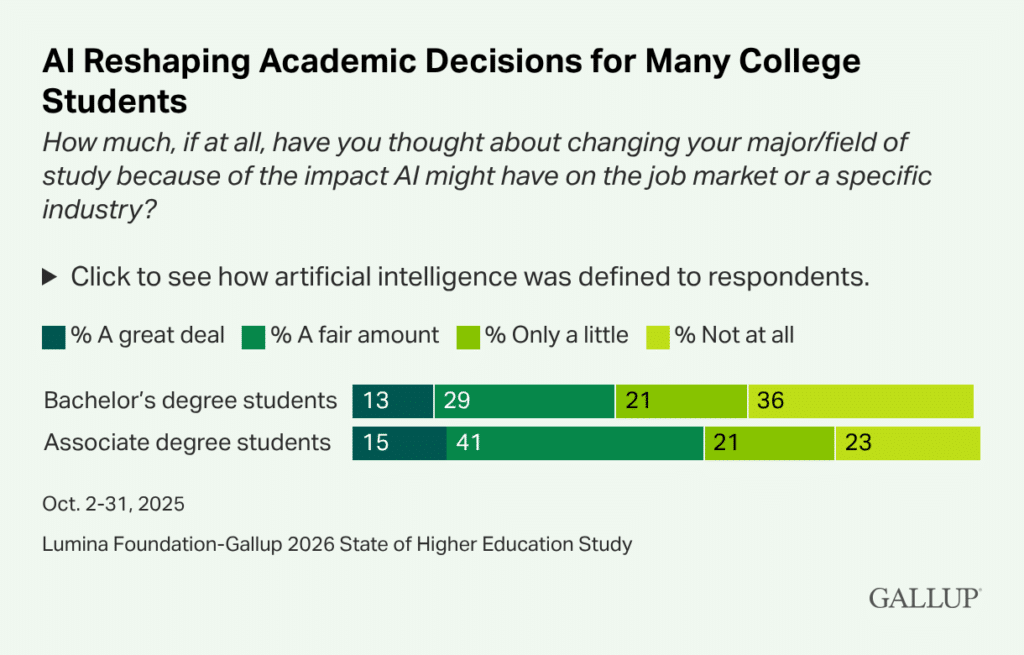
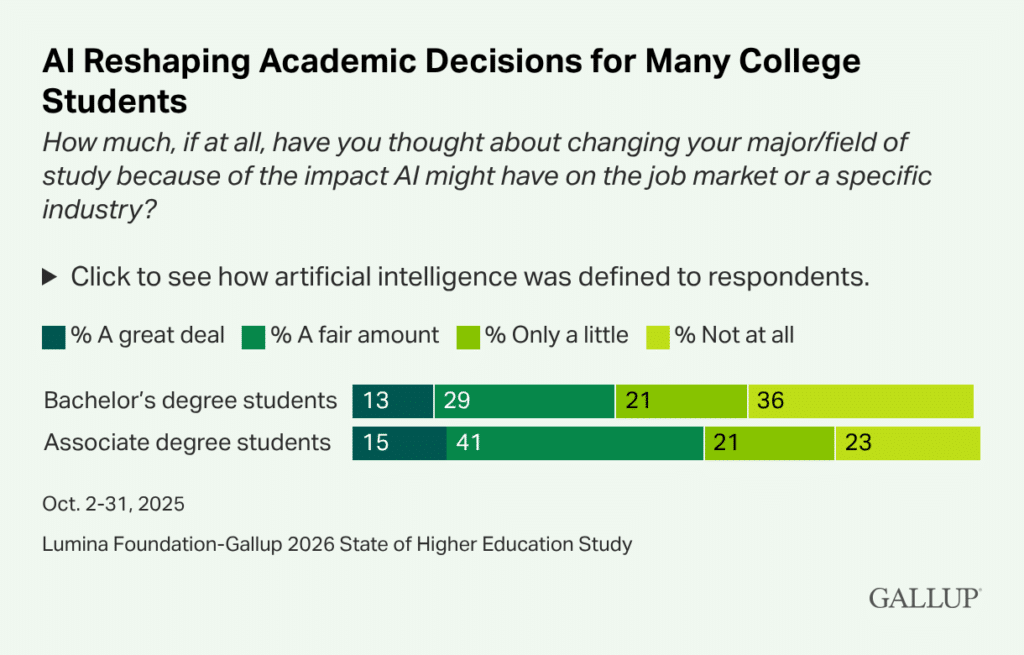
According to recent Lumina Foundation-Gallup research, 42% of bachelor’s degree students have reconsidered their major because of AI. Among community college students, the figure rises to 56%, with one in six students already changing majors, certifications, or career paths entirely.
At the same time, entry-level hiring has sharply contracted. Since January 2023, entry-level job postings have fallen approximately 35% with some tech and data roles down as much as 67%, according to data from Revelio Labs.
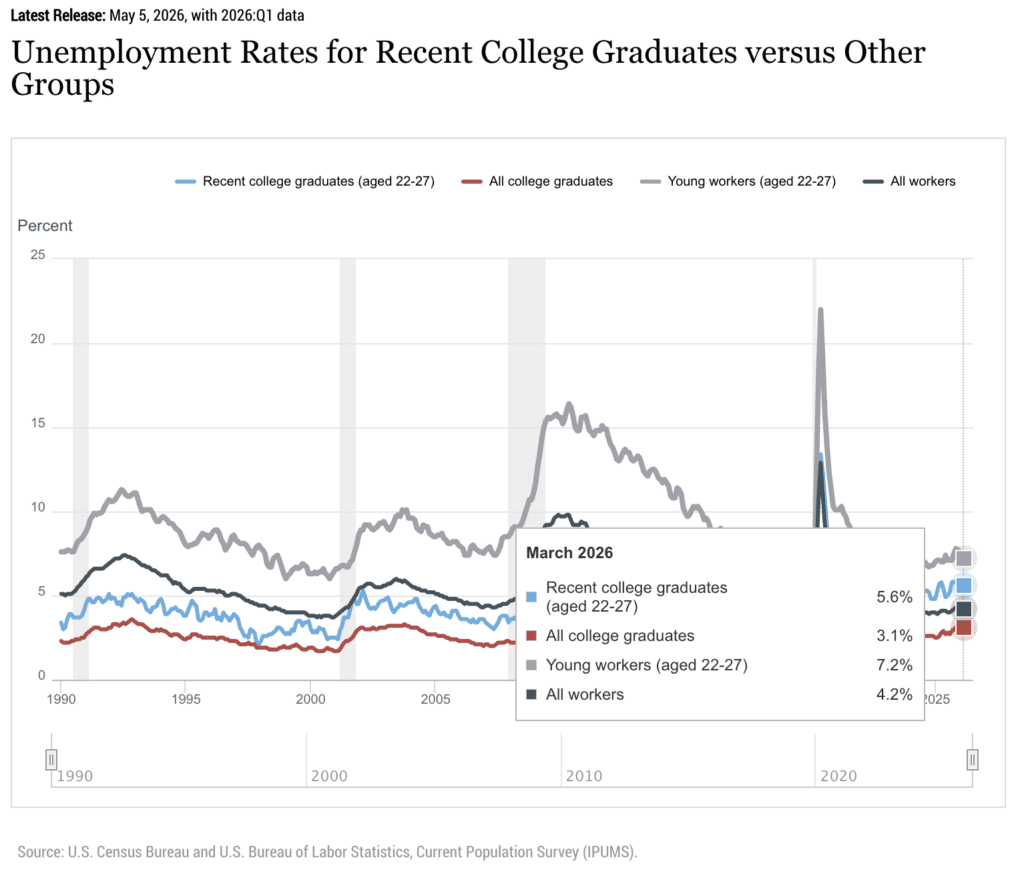
Meanwhile, the Federal Reserve Bank of New York reports unemployment among recent college graduates at 5.6%, nearly double the rate for all college-educated workers.
Sosnoff said the labor market is being hit by multiple forces at once, with artificial intelligence accelerating structural changes already underway in hiring.

“The occupations students spent four years training for — software, finance, analysis — turned out to be exactly the ones most exposed,” he said.
At the same time, he noted that AI is also creating a clearer divide between workers who adapt quickly and those who do not.
“The irony is that AI is simultaneously the threat and the fast pass out,” Sosnoff said, adding that workers with demonstrated AI skills are already seeing stronger labor-market outcomes.
He also pointed to broader employment data showing contraction in entry-level roles and increased competition for fewer openings, particularly in white-collar fields.
Sosnoff focused heavily on what he sees as a long-standing structural imbalance in compensation knowledge between employers and job seekers.
“HR departments benchmark compensation, analyze labor-market data, and model salary bands in real time,” he said.
“Most graduates are still negotiating the most financially important conversations of their early careers with little more than Google searches and guesswork,” he added.
He argued that this imbalance is not new but embedded in how labor markets function.
“Employers have been running this exact calculation on candidates for decades,” Sosnoff said.
“Compensation benchmarking is a mature, well-funded discipline on the employer side,” he added.
By contrast, he said, candidates often rely on informal signals: “You know what your roommate told you she made, but the employer knows the floor, the ceiling, and where they plan to land you.”
Sosnoff also pointed to longer-term economic trends that predate AI, including the persistent divergence between productivity growth and wage growth.
He argued that these dynamics have left early-career workers particularly exposed at the moment they enter the workforce.
“The students who succeed in this market won’t necessarily be the ones who guessed the right major. They’ll be the ones who understand how the market prices their skills, credentials, geography, and experience and who can negotiate with data instead of uncertainty,” he stressed.
To address this imbalance, Lossdog has recently developed a platform that calculates individualized labor-market value using real-time Bureau of Labor Statistics data adjusted for metro area, education, certifications, skills, and experience.
According to Sosnoff, it is designed to translate a user’s resume into a data-driven estimate of market compensation and identify which skills or credentials most strongly influence earning potential.
Later this year, Lossdog plans to release new proprietary research analyzing nearly two million resumes from 2018 through 2025 to identify: the most common entry-level career paths for recent graduates, which skills became most economically valuable during the AI transition, which credentials appear most resistant to automation, and where graduates may be overestimating or underestimating their long-term career “moats.”
Sosnoff said the goal is to reduce the information gap between employers, who already use detailed benchmarking systems, and candidates who typically rely on fragmented salary data when negotiating offers.
“The least we can do is give them access to the same market intelligence employers already have,” Sosnoff said.