


22 countries back call to keep AI ‘under human control’
NEW YORK — Several European countries were among a group of 22 nations that adopted a declaration Monday saying that artificial intelligence “must remain under human direction, oversight and control” and suggesting to create a global supervisory regime.
The declaration, adopted on the sidelines of the United Nations General Assembly this week, acknowledged AI’s “potential to improve lives, advance science and strengthen our economies” but warned that “the rapid development of frontier AI models poses serious risks to safety and security if not appropriately managed.”
The push comes ahead of the meeting of U.S. President Donald Trump and Chinese President Xi Jinping, the leaders of the world’s leading AI-developing nations, in Washington Thursday.
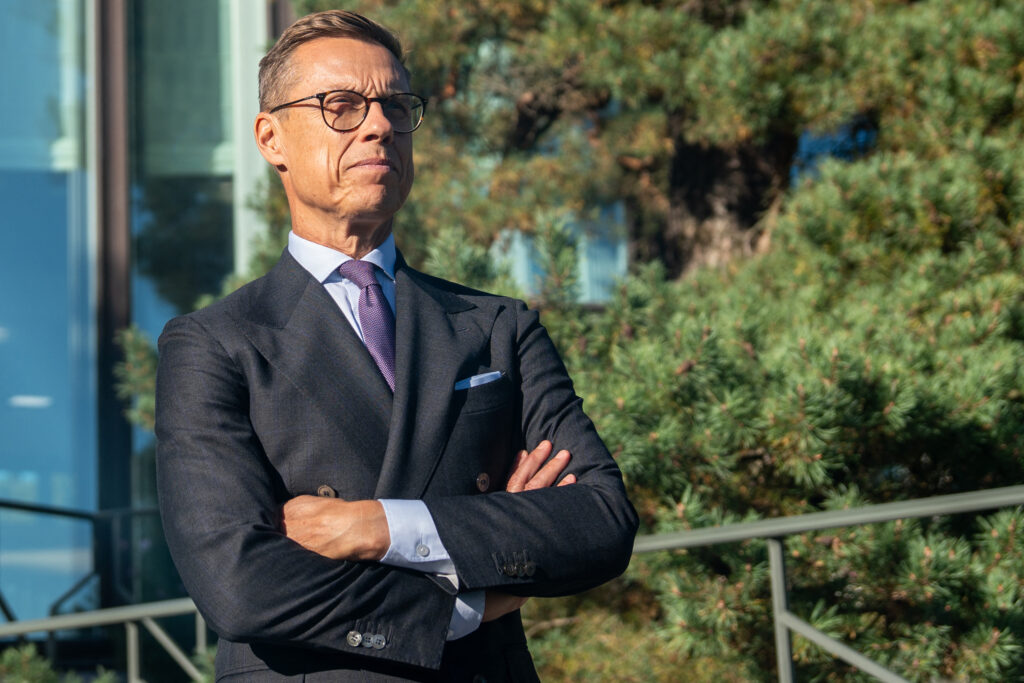
Neither the U.S. nor China are part of the new declaration. But Finnish President Alexander Stubb, one of the main organizers of the document, told POLITICO that he hopes to create “momentum” and get more actors on board: “I think it will be in the interest of both China and the United States to have some kind of guardrails. And our message here is that we need human intervention, so humans need to be in charge,” he said in an interview.
Referring to the recent cyberattack by rogue AI agents on the Hugging Face platform, the declaration urges to “address these risks” by obliging AI companies “to develop transparent safety protocols, including mandatory pre-deployment testing and independent evaluation, with qualified evaluators granted sufficient access to assess risks.”
Yet the document falls short of calling for slowing down or pausing AI development, with organizers saying they want to focus on managing risks instead.

To do that, countries should “further develop and coordinate common standards” and strengthen transparency, “including shared reporting of serious safety incidents.” Moreover, UN member countries should “build on existing international mechanisms and explore creating an international institution” to oversee AI.
Stubb, who spoke to POLITICO at Finland’s consular office in New York, said that “our preference personally” would be to create a new institution similar to the International Atomic Energy Agency “within the U.N. framework.” Yet he added, with a nod to Trump’s skepticism of the United Nations, “we have to leave it open-ended so that people don’t reject it just because it would be within the U.N. framework.”
Norway’s Prime Minister Jonas Gahr Støre, who initiated the declaration together with Stubb and who joined the interview via video, said that, “we would be very encouraged to see both G7 and the upcoming G20 presidency of the United Kingdom take on this … The U.N. is big, but the G7, G20 is a bit more focused.”
However, the U.K. has not signed up to the declaration yet. Among the big European countries, German Chancellor Friedrich Merz supports the initiative, while signatures from France, Italy and Poland are notably absent.
Stubb added that neither he nor Støre were “doomsdayers” about artificial intelligence but named three reasons why the lack of effective oversight is threatening: AI-created bioweapons, cyberattacks by AI agents and killer robots using AI for lethal attacks.
Stubb stressed that the upside of AI can be “much higher” — if the tech is used correctly — ranging from “the eradication of diseases, productivity, information and many other things.”