2026 BMW i7 review: is it worth £109,320?
BMW’s facelifted i7 now goes up to 452 miles between charges and rides with all the calm you’d hope for at £109,320. Tim Barnes-Clay took it to Epsom Downs and calls it a heart-over-head choice, though the company car tax bill gives the head a surprisingly strong argument too.
The BMW i7 is a seriously luxurious electric saloon, but with the i7 50 xDrive M Sport costing £109,320, it needs to be more than a comfortable way to travel. The 2026 facelift brings a bigger battery, faster charging and a redesigned digital cockpit, lifting the range to as much as 452 miles (up from 388), while the ride remains exceptionally refined.
For me it’s worth the money because it makes you feel special behind the wheel, and as a BMW lover I’d call it a heart-over-head choice that says you’ve made it. The head gets a say too, though, because at 4% benefit-in-kind a higher-rate taxpayer pays about £1,750 a year to run one as a company car.
BMW i7 price and specs
The 2026 facelift is what BMW calls its most extensive model update ever, with new battery cells, faster charging, a new face and the iDrive X dashboard.
The fully electric i7 is the one to have if you want limousine comfort without a petrol or diesel engine. Prices start at £104,230 for the i7 50 xDrive, rising to £109,320 for the M Sport version I tested. The i7 60 xDrive (from £120,335) and the range-topping M70 xDrive (£164,420) sit higher in the line-up, with the M70 aimed at buyers who want a lot more performance.
Even the entry-level car comes generously equipped. Standard features include a 17.9-inch central touchscreen, a 14.6-inch screen for the front passenger, Apple CarPlay, Android Auto, satellite navigation, heated seats, adaptive air suspension and four-zone climate control.
M Sport adds a more assertive body kit, darker exterior trim, an M steering wheel, upgraded brakes and 20-inch alloy wheels. Move further up the range and the equipment can include doors that open and close automatically, rear window blinds, a panoramic glass roof with illuminated details and rear-seat entertainment.
The options list can get expensive very quickly. My test car didn’t have any options fitted, but I can see the temptation, because once you’ve spent north of £100,000 another couple of thousand pounds doesn’t feel like much. Personally I think less is more, so I wouldn’t add anything.
BMW i7 design and dashboard
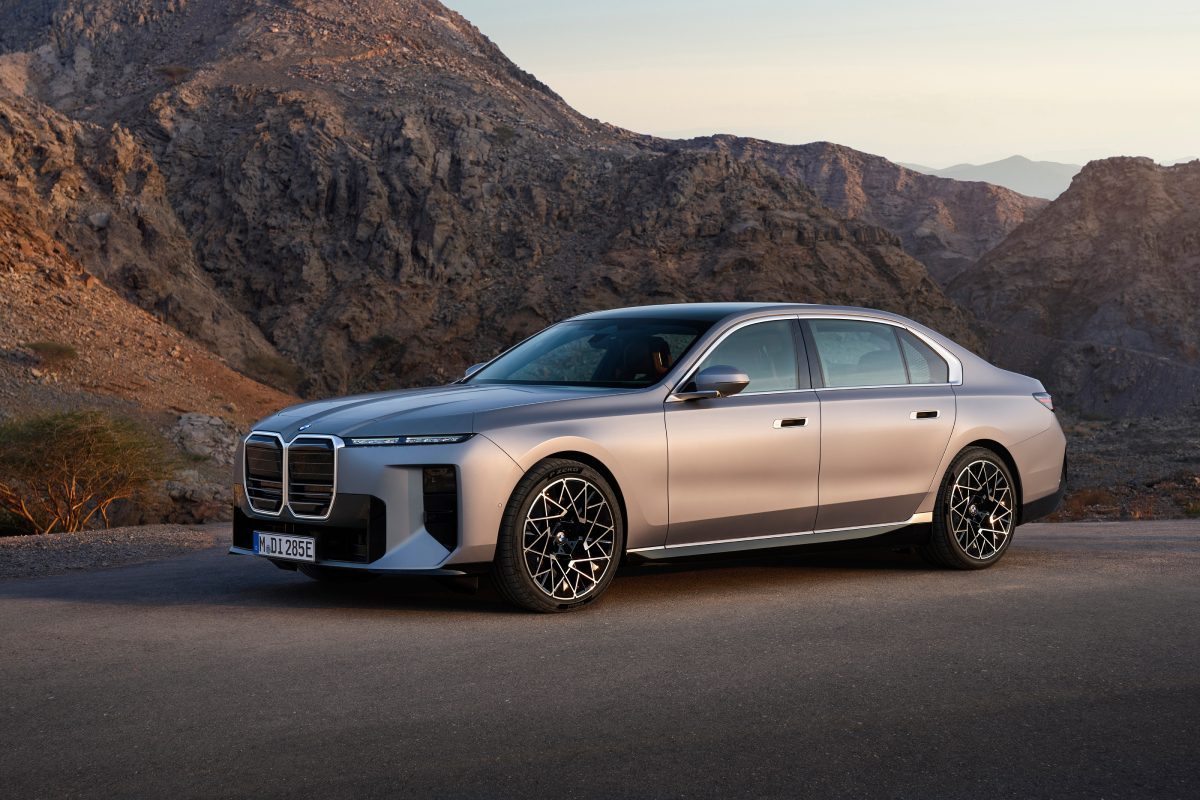
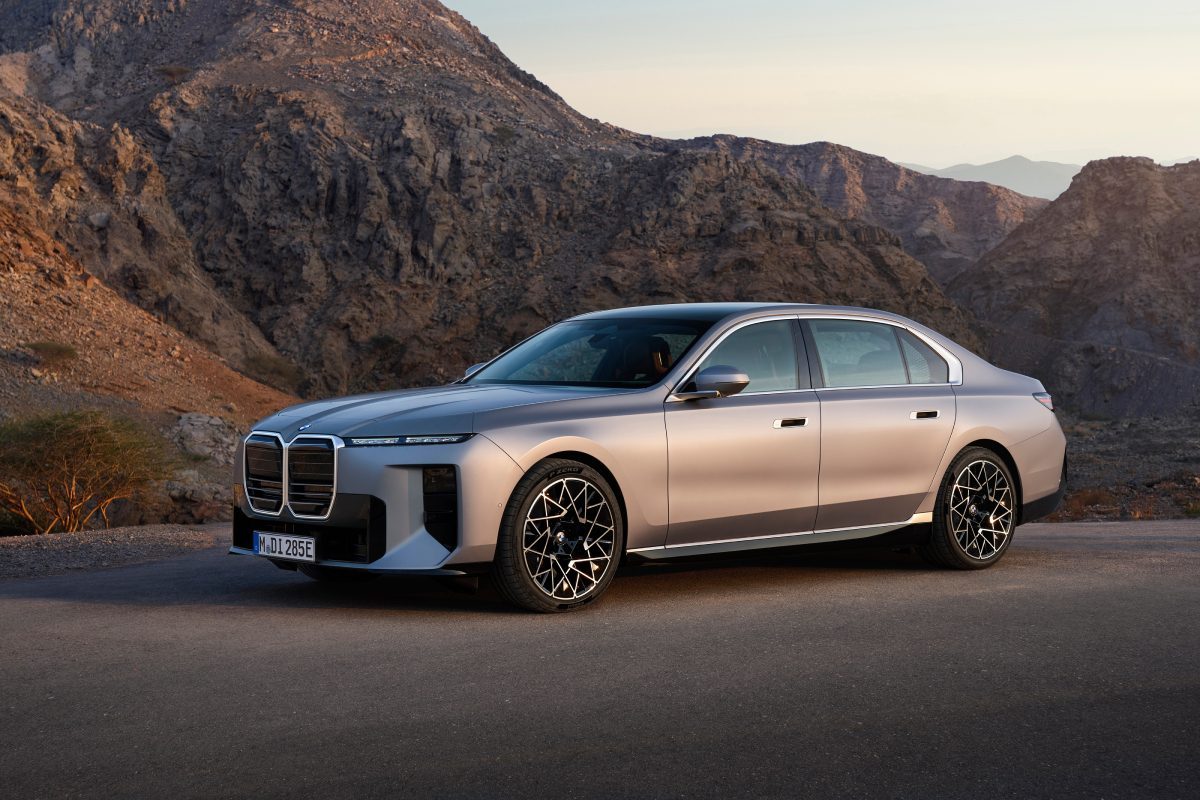
The i7 is enormous, and it looks it. The facelift brings a slimmer, more upright kidney grille, new vertical headlight units, a reshaped bonnet and longer tail-lights. I love the way it looks and think it’s an improvement on the last model, and if you want to make an impression in the company car park, its dignified presence will do the job.
The rear is more restrained, with longer tail-lights and a clean tailgate, but the overall effect is still imposing, which is part of the appeal if you want your luxury saloon to stand apart from more conventional executive cars.
Inside, BMW has created a cabin that feels suitably special. The materials and build quality impress, the seats give the sort of comfort you’d expect from a flagship, and there’s plenty of adjustment in the driving position, so longer journeys feel less demanding.
The updated infotainment system is responsive, with sharp graphics and a more modern interface. BMW’s Panoramic Vision display runs along the base of the windscreen from pillar to pillar, alongside a 3D head-up display, so you don’t have to rely on the central touchscreen for everything.
BMW’s decision to remove the iDrive rotary controller, which the 7 Series had until this facelift, is disappointing, though. The touchscreen is capable, but a physical controller is easier to use when you’re concentrating on the road. My hand reached for it briefly out of muscle memory, but I’d adapted within five minutes behind the wheel.
The optional rear theatre screen is one of the i7’s most extravagant features. At 31.3 inches, it folds down from the ceiling to entertain rear passengers, and other options include touch-sensitive controls in the rear doors, a Bowers & Wilkins sound system and lounge-style seating with a footrest. They’re impressive, but they only make sense if you regularly carry passengers who’ll use them.

BMW i7 performance and driving experience
The i7 has the sort of performance that makes a car weighing the best part of three tonnes feel surprisingly effortless.
The i7 50 xDrive produces 455hp and accelerates from 0 to 62mph in 5.5 seconds. The i7 60 xDrive raises output to 544hp and cuts that time to 4.8 seconds, while the 680hp M70 xDrive does the sprint in just 3.8 seconds.
The way it delivers that performance matters just as much as the figures. Acceleration is smooth and instant, with none of the gear changes you get with a combustion engine, and the i7 gathers speed without making a fuss, which suits its luxurious character.
Its size and weight mean it will never feel like a small sports saloon through tight corners, but the handling is more composed than you might expect. There’s plenty of grip, the body stays controlled and the steering gains useful weight as the road gets more demanding.
The real highlight, though, is the ride. Adaptive air suspension helps the i7 glide over uneven surfaces, and the cabin stays impressively quiet at motorway speeds. I drove it around Epsom Downs and the racecourse in Surrey, where it looked perfectly at home, and it wafted along beautifully, though like the horses up the road it could break into a gallop whenever I asked.
Optional active roll stabilisation improves body control further, but it’s frustrating that such a desirable feature isn’t standard across the range.
BMW has also worked on the smoothness of braking and energy recuperation. In a large electric car, the transition from regenerative braking to coming to a halt makes a noticeable difference to passenger comfort, and the i7’s refined behaviour helps keep the feeling that everything happens with minimal effort.
Driver assistance does a lot of the heavy lifting on long trips. Driving Assistant Plus is standard, and I particularly liked the way it keeps the car centred in its lane, which could make a real difference if your concentration dips for a second or two.
BMW i7 interior and boot space
Space is one of the i7’s strongest selling points. There’s loads of room in the front, rear passengers get generous legroom and headroom, and the electrically adjustable driving position makes it easy to get comfortable.
Rear-seat comfort is particularly impressive. Depending on the specification, the back can have reclining seats, a footrest and entertainment that turn it into a very relaxing place to spend time.
Visibility is reasonable for a car of this size, although the thick rear pillars restrict the view behind. Parking sensors and a 360-degree camera help when manoeuvring, but the i7’s sheer size still demands attention in multi-storey car parks and narrow streets.
The boot holds 500 litres, with extra storage under the floor. A ski hatch lets longer items through to the cabin, but the rear seats don’t fold, so if you regularly carry bulky things you’ll find that limiting.
Cabin storage is useful, with door bins, cupholders and a central storage compartment. A powered glovebox adds to the sense of occasion, and there’s an optional fridge if you want to take the luxury theme further.
BMW i7 range and charging
The 2026 i7 has a new battery built from BMW’s Gen6 round cells, with 112.5kWh of usable capacity. BMW quotes up to 452 miles of WLTP range for the i7 50 xDrive, up to 451 miles for the i7 60 xDrive and up to 426 miles for the M70 xDrive, against up to 388 miles before the facelift.
My drive was on a warm day on A and B roads, and although I didn’t go far, I was averaging 3.3 miles per kWh, which points to a more realistic 370 miles or so. That’s still a very usable range for a car of this size.
DC charging is rated at up to 250kW, up from 195kW before the facelift, and BMW quotes 28 minutes for a 10 to 80 per cent charge under the right conditions. That makes a big difference when you’re using a high-power public charger on a long trip.
At home, overnight charging is the most convenient option if you have off-street parking and can fit a wallbox. On a typical 7kW home charger, filling the battery from empty takes around 16 to 17 hours, so an overnight top-up is easy but a full charge from flat isn’t. The i7 can take up to 22kW on AC, which helps at faster workplace and destination chargers.
Home charging is generally much cheaper than relying on public rapid chargers, but tariffs vary, and a car of this size and weight uses a lot of energy over long distances.
BMW i7 as a company car
This is where the i7 makes most sense. Because it produces no tailpipe CO2, it sits in the 4% benefit-in-kind band for 2026/27, rising to 5% in 2027/28. On the £109,320 M Sport before options, that’s a taxable benefit of about £4,370, so a basic-rate taxpayer pays around £875 a year and a higher-rate taxpayer around £1,750. A petrol or diesel limousine at the same price would sit in the top 37% band, which would mean a bill of more than £16,000 a year for a higher-rate taxpayer.
That said, a BMW is a driver’s car, and I’d argue there’s little point having one as your company car if you only ever sit in the back. That would be like buying a mansion and never living in it, and anyone chauffeured around in an i7 would soon be jealous enough to want the wheel for themselves.
Private buyers have a different sum to do. Electric cars pay vehicle tax now, at £10 in the first year and £200 after that, and because the i7 costs more than £50,000 it also pays the £440 Expensive Car Supplement from its second year to its sixth, which makes £640 a year.
BMW’s warranty runs for three years with unlimited mileage, and the battery is covered separately for eight years or 100,000 miles.

What we like
1. Excellent ride comfort. The i7 feels calm and refined over long distances, with impressive isolation from road and wind noise.
2. A luxurious interior. Spacious seating, high-quality materials and clever technology make the cabin a lovely place to spend time.
3. Strong performance. Even the i7 50 xDrive has ample acceleration, and the more powerful versions are exceptionally quick.
4. Improved electric range. Up to 452 miles, up from 388 before the facelift, with 28-minute rapid charging.
5. Low company car tax. At 4% BIK it costs a higher-rate taxpayer about £1,750 a year.
What worries us
1. The price. The i7 costs more than £100,000 before you add any of the more extravagant options.
2. The missing rotary controller. The touchscreen works well, but losing a familiar physical control is a step backwards for some tasks.
3. Its size. The spacious cabin comes with considerable exterior dimensions, which make parking and manoeuvring harder work.
4. Real-world range. I was seeing about 370 miles on a warm day, well short of the official 452.
The i7’s six-figure price means it pays the Expensive Car Supplement for five years, and if you’d like to know what your own car costs to tax, Regit’s free car tax checker will tell you.
Is the BMW i7 worth it?
The BMW i7 is an exceptionally accomplished luxury electric saloon. It combines a refined ride, strong performance, generous passenger space and an interior packed with technology, and the 2026 facelift brings real improvements to its range and charging.
Its price is the biggest obstacle, especially when the options list can add so much to the bill. The loss of the iDrive rotary controller is another disappointment, and its imposing size won’t suit every driver.
If you want a luxurious electric car that covers long distances in comfort and looks after its passengers, the i7 deserves serious consideration, and the i7 50 xDrive M Sport is the one I’d buy, because it’s quick enough that you don’t need the much more expensive M70.
It’s best for the company car driver who wants a limousine but still wants to drive it, and for them it’s hard to think of a better place to spend £109,320, especially with a 4% tax bill to help justify it.