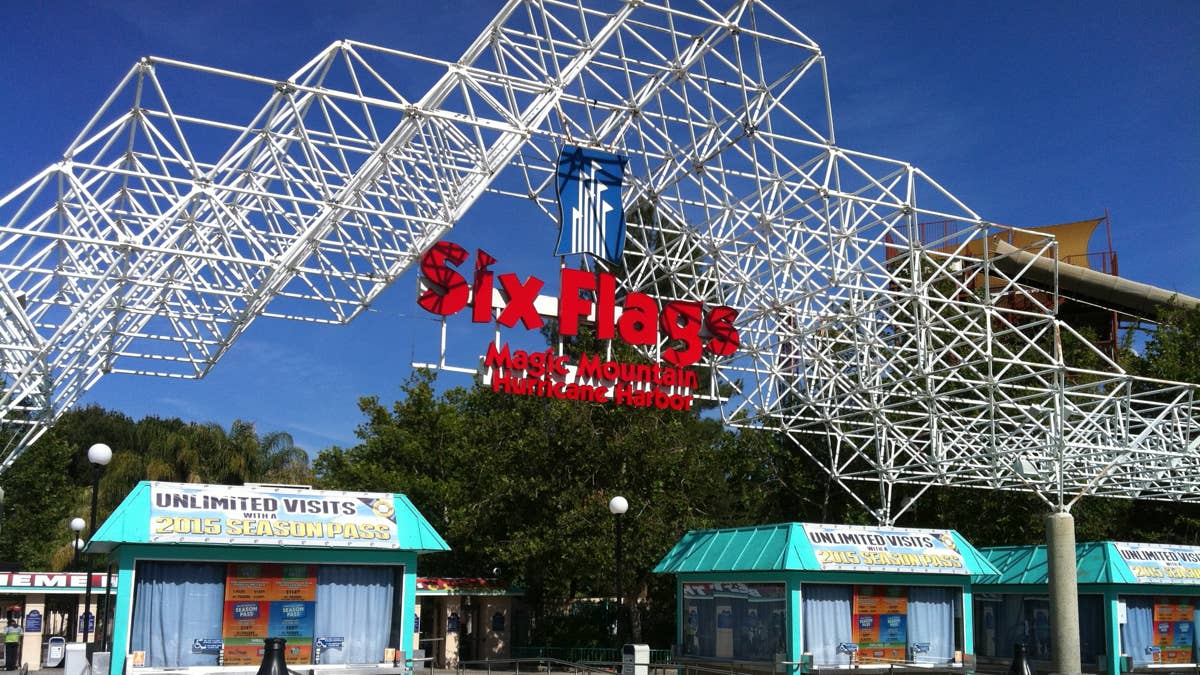
Six Flags permanently closes iconic ride after scary allegations
It starts small. First, your child bumps their head when they first start to walk, and you barely survive it. Fast forward a few years, and they are practicing balancing their bike on one wheel as you hold your breath.
You can’t say “no” to everything; you need to let them grow. You hope they won’t be riding motorcycles or jumping out of airplanes one day, though it is not your call.
But what about visiting a place that has been considered safe for more than a century, a fun and friendly theme park? Amusement parks have been a staple of American culture for more than 180 years, originating in the mid-19th century.
Many parents operate under the assumption that federal authorities rigorously inspect every roller coaster. In reality, the Consumer Product Safety Commission (CPSC) has very limited regulatory authority over fixed-site theme parks, leaving oversight to a patchwork of state laws or internal park self-inspections, according to CPSC.
“So we want parents to learn in their state how rides are being inspected, by whom, and how often, so they can make the decision for themselves whether or not they want to take that risk before they go on the ride,” said Tracy Mehan, director of research translation at Nationwide Children’s Hospital, as reported by CNN.
When parents hand over tickets to a major theme park they expect thrills, not traumatic injury.
Six Flags permanently closes iconic X2 roller coaster
Six Flags’ X2 roller coaster first opened on Jan. 12, 2002, at its Magic Mountain park in Valencia, Calif., as the world’s first fourth-dimension roller coaster.
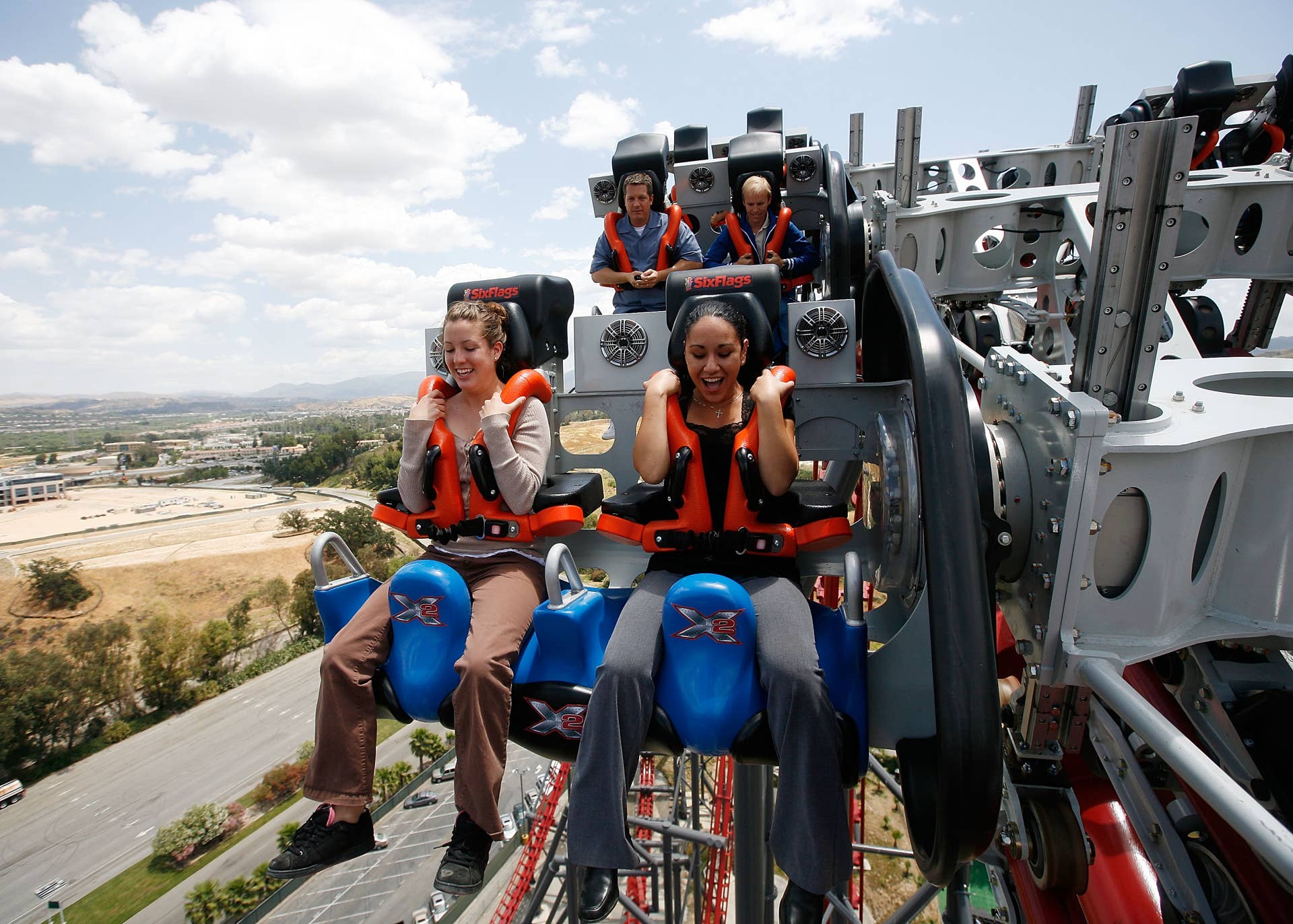
Back then, it was simply called X. It featured seats that rotated 360 degrees forward and backward independently of the train’s main chassis.
The ride underwent a $10 million makeover in 2007–2008 that turned it into X2, adding lighter trains, a new restraint system, and onboard audio.
On Sept. 29, Six Flags confirmed the ride had closed for good amid a series of lawsuits alleging traumatic injuries caused by the ride.
Magic Mountain President Brian Oerding announced the decision to permanently retire X2, even though the ride “consistently passed a multitude of safety tests,” because “we believe it’s the right thing to do.
“Ride safety is a cornerstone of our business, and when we see guest confidence affected, we take it seriously,” Oerding stated.
Oerding said more than 16 million guests have ridden X2 since it reopened in 2008.
Six Flags has argued in court that X2 was inspected daily and that a rider following the rules would not suffer a traumatic brain injury, according to a KCBS report.
Six Flags’ X2 coaster had a history of severe brain injury allegations
In late September, three lawsuits were filed, alleging that riders suffered brain injuries after riding X2.
More than 100 riders alleged these types of injuries from the Six Flags roller coaster, following a CNN investigation.
In July 2026, two women reportedly suffered life-threatening brain hemorrhages (subdural hematomas requiring emergency brain surgery) within six days of each other after riding X2.
California’s Division of Occupational Safety and Health (Cal/OSHA) opened an inspection into a reported July 5 incident on X2 and said it could not share further details while the inspection was ongoing, the Los Angeles Times reported.
Six Flags closed the ride on July 12.
In August, CNN published an investigation, reporting on the ride’s long history of incidents and at least two deaths.
X2 was a rare 4th-dimensional roller coaster featuring 360-degree rotating seats that reached speeds of 76 mph. Only two other coasters like it exist in the world, located in China and Japan, which closed temporarily last year after a fatal injury involving a park worker inspecting the ride, CNN reported.
“In our professional opinion, the severe brain injuries requiring emergent neurosurgical attention were the result of a traumatic rapid acceleration-deceleration event experienced while on the X2 ride,” the surgeons wrote in an email obtained by CNN.
Experts also told TIME that sudden acceleration, twisting, and shifting can stretch brain tissue and pressure blood vessels, potentially increasing the risk of concussions and bleeding.
A 2014 life-threatening injury after X2 ride drew little public attention
In September 2014, Selena O’Neill, then 17, stumbled as she stepped off X2. She had trouble walking straight and seeing clearly. Then she started shaking, and her leg pointed in a strange position.
The next day she went to the doctor, had a seizure during the appointment, and learned she had a subdural hematoma.
Also called subdural hemorrhage, a subdural hematoma happens when a blood vessel near the surface of the brain bursts and blood builds up between the brain and its tough outer lining, according to Harvard Health Publishing. It is a life-threatening problem because it can compress the brain.
Related: Southwest Airlines’ new points giveaway rewards this phone habit
Doctors directly attributed O’Neill’s condition to the ride, according to CNN.
In a 2019 medical journal article, without naming X2, doctors wrote about her case and cautioned that “advances of roller-coaster technology and industry competition for thrill-seeking patrons may ultimately improve acceleration and performance beyond the passenger’s physical ability to tolerate them.”
O’Neill sued the theme park in 2015 and the case was closed in 2017, after O’Neill settled with the maker of X2’s vehicles.
According to court filings as reported by CNN, Six Flags argued that she should have been aware of potential risks before taking the ride.
Brain-trauma death followed X2 ride in 2022
In June 2022, 22-year-old Christopher Hawley died from severe brain trauma less than 10 hours after riding X2, according to CNN.
Court records show Hawley’s head slammed violently against his seat during the ride, causing massive brain bleeding. Doctors compared his fatal injuries to shaken baby syndrome. CNN also noted this was the second death linked to the coaster, following another fatal brain injury in 2010.
Doctors in the 2010 case believed an existing brain abnormality ruptured because of the ride’s intensity.
Six Flags had received at least 70 prior head- and-neck injury complaints regarding X2 in the three years leading up to Hawley’s death, CNN reported.
Despite these warnings, the theme park fought successfully in court to keep its medical incident logs sealed from the public. Other frequent park visitors told CNN they felt management dismissed their reports of concussions.
State officials cleared X2 to reopen days after the fatality, but CNN reported that maintenance workers swapped a train wheel before inspectors arrived.
Safety experts noted that state oversight relies heavily on industry-written guidelines that fail to measure real-world head impacts.
Hawley’s parents sued Six Flags over the tragedy, and court records show the lawsuit ended in a settlement.
Related: Airbnb CEO says travelers are about to see big changes