AI’s $10 trillion buildout runs into major issue
You don’t have to follow the news to see the increase in artificial intelligence infrastructure spending.
If you are in a state such as Texas or Virginia, chances are you don’t have to go far to see the new reality for yourself. Those states are handing out billions in tax incentives to companies building the data centers that will power the next generation of the internet.
Still, it helps to put a dollar figure on just how much money is being spent on this undertaking. According to a new analysis from the Brookings Institution, America will spend far more on AI infrastructure than it did on other infrastructure projects that helped shape the country in the last century.
AI spending to outpace railroad, highway, electrification
According to analysts at Brookings, AI buildout projects that include data center buildings, power systems, networking infrastructure, specialized chips, and other equipment will cost $10.3 trillion from 2025 to 2032.
That total represents an average of 3.63% of U.S. GDP per year.
“The projected buildout would be larger relative to the economy than the major U.S. canal, railroad, electrification, highway, and telecommunications investment booms,” said study author Stijn Van Nieuwerburgh of Columbia University.
But with so much money committed to the industry, there are bound to be hiccups along the way, and the paper suggests that those issues are migrating.
AI investment risk is becoming more opaque
The Brookings paper warns that the risks inherent in the AI investment race are “migrating from transparent on-balance-sheet financing by major corporations to opaque off-balance-sheet financing.”
Those off-balance-sheet options include joint ventures, private credit, securitization, special-purpose vehicles, lease commitments, and loan guarantees, among other structures.
One reason those funding vehicles are so dangerous is that they depend on AI companies’ cash flows and collateral values, which are subject to “uncertain AI demand, rapid technological change, timely access to power and hardware, and the continued credit quality of a small number [data center] tenants,” Nieuwerburgh said.
While he said “it would be premature to conclude that AI infrastructure already poses systemic risk comparable to earlier credit booms,” he warned that “off-balance sheet structures matter… because they may make correlated exposures hard to observe before a downturn.
“The most important policy contribution at this stage may therefore be to improve measurement and transparency while the capital structure of the industry is still evolving.”
States with the biggest tax breaks for data centers
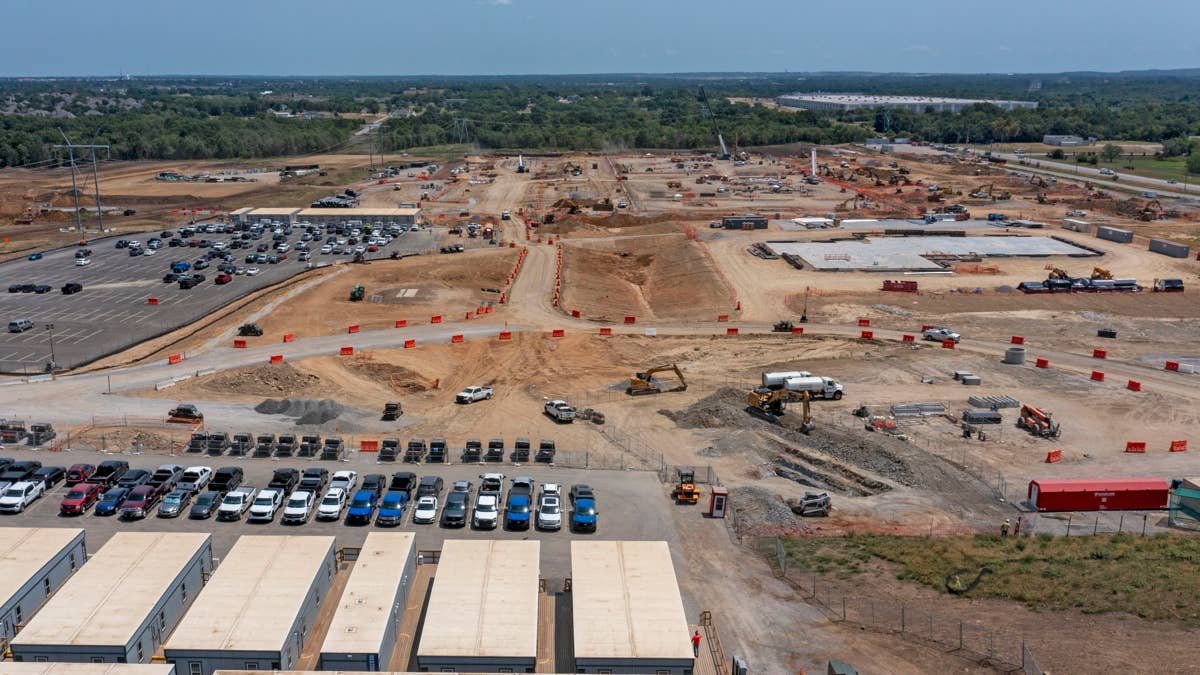
Minority-party Democrats will likely have a field day hammering Republicans over data centers leading into Election Day. The states with the biggest giveaways to data centers are all either Republican-leaning or swing-voting.
According to The Wall Street Journal, the largest reported sales-tax exemptions for data centers last year included:
- Virginia: $1.94 billion
- Georgia: $1.9 billion
- Ohio: $1.57 billion
- Texas: $1.02 billion
Ohio Democratic Representative Tristan Rader wants to repeal his state’s data center sales-tax exemption and renegotiate past deals with the likes of Amazon, Meta, and Alphabet.
“They seem to have more money than God, and they’re able to build without the need for these types of incentives,” said Rader, according to the Journal. He is also proposing new data center taxes and requirements that developers pay more for power and electrical infrastructure.
Amazon says it has invested nearly $40 billion in Ohio data centers since 2015, creating thousands of jobs and paying nearly $11 million in state property taxes and fees last year.
Meta said it has invested more than $2.3 billion in Ohio data centers since 2018 and paid more than $40 million in property taxes and fees during that time.
Amazon, Google, Microsoft cancel data centers over opposition
Companies including Amazon, Alphabet, Meta, and Oracle are known as AI hyperscalers due to the hundreds of billions they’ve committed to building out AI and AI infrastructure.
“The existence of OpenAI justified an era of mania and opulence. Hyperscalers, bereft of new hypergrowth ideas, were able to point at the fact that ChatGPT had ‘the fastest-growing user base of all time‘ and the Microsoft ‘supercomputer’ that built it and tell their investors that if they didn’t invest, they’d be left behind, with Amazon, Meta, and Google announcing their own nebulous ‘supercomputers’ in 2023,” AI critic Ed Zitron recently stated.
“This is the underlying greed that has driven this wasteful, reckless and destructive era — the belief that there will be another OpenAI and, as I’ve said, the chance to become the next OpenAI’s landlord,” Zitron added.
“And like any great investment bubble, the more money that piled in, the greater the fear of missing out, the more dollars that can be justified in turn, and the more complex and deranged the mythology becomes.”
But even those hyperscalers, with their seemingly unlimited war chests, have run into opposition that has slowed their plans.
Amazon, Microsoft, and Google have each canceled large-scale projects after seeing sustained pushback in Arizona, Wisconsin, and Indiana, respectively, in the past year.
Residents are worried about data center energy use increasing their own energy bills, noise levels that disrupt their way of life, the environmental impact, and security risks.
Meta’s CFO Susan Li referenced the changing attitudes about data centers during the company’s recent earnings call, describing the AI infrastructure building environment as “dynamic and uncertain.”
Related: AI data center backlash accelerates ahead of elections