Why is Taiwan hiding the backers of its $20B US pledge?
Six months ago, an opposition lawmaker in Taipei asked a blunt question about Taiwan Semiconductor Manufacturing Company’s (TSM) expanding US footprint. If the company keeps building in Arizona, he wanted to know, what happens to the security Taiwan has always drawn from its chip industry.
That anxiety has shadowed nearly every headline about Taiwan’s semiconductor money moving offshore for the past year.
On Wednesday, Taiwan’s government answered with more money, not less.
Taiwan’s Ministry of Economic Affairs said Taiwanese companies are planning another $20 billion in US investment, according to Reuters.
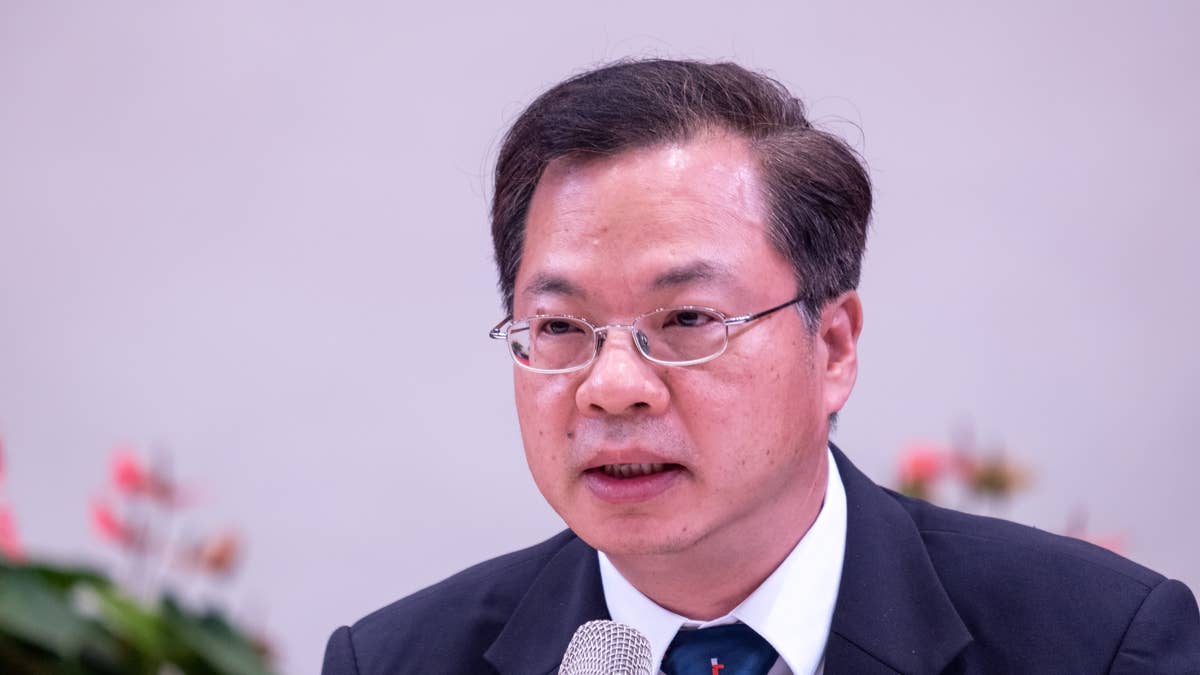
Economy Minister Kung Ming-hsin delivered the figure at the opening of the US pavilion at the SEMICON trade show in Taipei.
Kung did not name a single company behind the estimate. The figure covers firms outside TSMC, drawn from ministry review conducted after Taiwan’s participation in the SelectUSA Investment Summit in May, according to Reuters.
Related: Cathie Wood buys $53 million of popular semiconductor stock
That vagueness matters more than it looks. Investors have grown used to Taiwan’s chip pledges arriving with a named company and a construction timeline attached.
This one arrived as a government estimate, built on AI and chip demand that Kung called “extremely lively,” rather than a signed deal from an identified investor.
TSMC’s own number keeps climbing
TSMC’s Arizona buildout shows how fast these pledges tend to grow once they start. The company began with a $12 billion Arizona plan in 2020, then raised it to $40 billion, $65 billion, and $165 billion in the years that followed, according to a Reuters timeline of its US announcements.
In July, TSMC added another $100 billion, pushing its total planned Arizona investment to $265 billion, according to the Arizona Commerce Authority.
The expansion followed a 77.4% jump in TSMC’s second quarter profit, and the company raised its 2026 capital spending budget to as much as $64 billion.
Strong earnings have consistently preceded a bigger US number, and Wednesday’s estimate suggests that pattern is now spreading beyond TSMC to the rest of Taiwan’s supply chain.
Other Taiwanese firms already have a playbook
TSMC is not the only Taiwanese company already spending in the US. Foxconn, formally Hon Hai Technology Group, added $569 million to its Wisconsin AI server operations in November 2025, and separately put nearly $300 million into a Texas subsidiary that assembles AI hardware, according to Focus Taiwan and the Taipei Times.
Those deals look nothing like TSMC’s fabs. They arrive in smaller increments tied to specific factories rather than headline totals, and most never make front-page news outside Taiwan.
If Wednesday’s $20 billion estimate is built from companies following that pattern, investors may need to track dozens of incremental filings rather than one large announcement to see where the money actually lands.
The pledges no longer add up cleanly
Washington and Taipei struck a trade agreement earlier this year built around a $250 billion pledge for Taiwanese investment in US semiconductors, energy, and AI, with $100 billion of that total already counted as TSMC’s contribution, according to Reuters.
TSMC alone has since committed more than that entire $250 billion figure on its own.
Key investment figures at a glance:
- $250 Billion (Early 2026): Initial total Taiwanese U.S. investment pledged under the Washington-Taipei trade deal.
- $265 Billion (July 2026): TSMC’s total cumulative Arizona commitment after its latest $100B addition.
- $20 Billion (September 2026): Fresh estimated U.S. investments from unnamed non-TSMC Taiwanese firms.
These overlapping figures leave Wednesday’s $20 billion estimate in an odd spot. Kung’s remarks did not clarify whether the new figure sits inside the original pledge or on top of it, according to Reuters.
Investors holding Taiwan-linked funds, including the VanEck Semiconductor ETF and the iShares MSCI Taiwan ETF, have no way to confirm which number applies until individual companies come forward.
More Wall Street:
- Nvidia just demolished one of Wall Street’s biggest AI fears
- Anthropic sends clear message to Wall Street ahead of IPO
- Salesforce just gave Wall Street a reason to believe its AI story
Taiwan’s silicon shield debate resurfaces
The bigger tension sits underneath the dollar figures. Taiwan’s chip dominance has long functioned as a deterrent against Chinese aggression, a concept known as the silicon shield, and opposition lawmakers have warned that shifting production to the US could weaken it, according to NCPR.
TSMC’s Arizona expansion has already drawn comparisons to the company turning into what one Taiwanese lawmaker called “American Semiconductor Manufacturing Company.”
Taiwanese and US officials have pushed back on that framing. Bill Frauenhofer, the Commerce Department official who oversees the CHIPS Act, said Wednesday’s investment plans reflect a shared commitment to a secure and resilient chip supply chain, according to AsiaOne.
Separately, analysts told CNBC the silicon shield remains largely intact for now, since Taiwan keeps its most advanced research and development on the island even as production capacity shifts abroad.
AI demand is rewriting where chips get made
Wednesday’s announcement is less a single data point than a signal of how far AI demand has reshaped global chip investment. A country that spent decades protecting its manufacturing edge is now exporting capital toward the very market pushing it to compete harder.
TSM shares were little changed after the announcement, according to Reuters pricing data, suggesting investors have already priced in a steady drip of these pledges rather than treating each one as new information.
The real test will not be Wednesday’s number. It will be whether Taiwan’s government eventually names the companies behind it, and whether the total ends up strengthening Taiwan’s chip industry or slowly pulling its center of gravity across the Pacific.
Related: The world’s financial watchdog is sounding the alarm on AI