



The Fintech and Wider Digital Landscape of Mexico in 2026
The following is an overview of the fintech ecosystem and its relation to wider economic development of Mexico in 2026.
Few countries occupy as unique a position in the global economy as Mexico.
As the world’s largest Spanish-speaking nation, Latin America’s second-largest economy and the United States’ largest trading partner, Mexico sits at the intersection of global manufacturing, international trade and cross-border finance. Every day, billions of dollars move between factories, suppliers, investors and families on both sides of the US-Mexico border.
It is this constant movement of capital-not simply technological innovation that has shaped Mexico’s fintech sector.
Digital finance has evolved to serve one of the world’s busiest commercial relationships while simultaneously expanding financial inclusion for millions of consumers and small businesses. In doing so, Mexico has become one of the largest and most influential fintech ecosystems in the Spanish-speaking world.
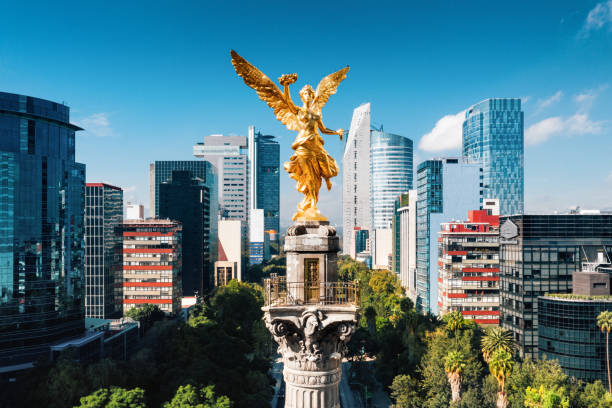
This year, Mexico’s economy is projected to reach $2.15trillion, with gross domestic product (GDP) per capita approaching $16,100. Manufacturing, automotive production, electronics, energy, tourism and financial services remain key drivers of growth, while Mexico City continues to serve as the country’s financial centre. Institutions including BBVA México, Banorte, Santander México and Citibanamex anchor one of Latin America’s largest banking sectors.
Trade is creating new financial infrastructure
Mexico’s fintech story cannot be separated from trade. The United States-Mexico-Canada Agreement (USMCA) has reinforced supply chains that stretch from Monterrey and Guadalajara to Texas, California and Ontario. Thousands of manufacturers, exporters and small and medium enterprises (SMEs) now require faster payments, working capital, foreign exchange services and digital financial tools that operate seamlessly across borders.
Increasingly, fintech companies are helping businesses manage these complex commercial relationships. Embedded finance, invoice financing, cross-border payments and digital treasury solutions are becoming just as important as consumer payment apps.
Nearshoring has accelerated this trend. As manufacturers relocate production closer to North America, demand for digital financial services supporting suppliers, logistics companies and exporters continues to grow.
A fintech market measured by scale

Mexico is no longer simply one of Latin America’s leading fintech markets; it is one of the world’s largest.
Mexico is home to more than 1,000 fintech companies, making it the largest fintech ecosystem in Latin America. Payments and remittances remain the biggest segment, followed by digital lending, enterprise financial management, wealth management, insurtech and open finance.
Companies such as Clip, Konfío, Stori, Belvo, Kueski, Bitso and Conekta have expanded well beyond their original products, demonstrating how rapidly the ecosystem has matured.
Rather than competing solely with traditional banks, many fintech firms now collaborate with financial institutions, retailers and global technology companies to reach millions of customers.
Regulation continues to evolve
Mexico was one of the first countries in the region to introduce dedicated fintech legislation through its landmark Fintech Law.
Since then, the National Banking and Securities Commission (CNBV) and Banco de México (the country’s central bank) have continued refining regulations covering electronic payment institutions, crowdfunding, open finance and digital innovation.
Open finance remains one of the country’s most closely watched reforms. Once fully implemented, it is expected to allow secure customer-permissioned data sharing between financial institutions, encouraging greater competition and more personalised financial products.
Banco de México has also continued expanding the CoDi digital payment platform, which uses QR codes and instant transfers to encourage low-cost electronic payments for consumers and merchants.
Remittances remain one of fintech’s greatest opportunities
While Mexico has developed a sophisticated fintech ecosystem, remittances remain one of its defining financial flows.
Millions of Mexicans living abroad continue sending money home every year, making Mexico one of the world’s largest remittance recipients. According to Banco de México, remittance inflows exceeded $70billion last year, continuing their long-term upward trend and reinforcing the importance of efficient, affordable cross-border payments.
Increasingly, fintech firms are transforming remittances into broader financial relationships by offering digital wallets, savings products, credit, insurance and investment services to recipients. Rather than ending with a money transfer, the customer journey increasingly continues into long-term financial inclusion.
The future
Mexico’s fintech sector reflects the country’s unique place within the global economy. It serves advanced manufacturing supply chains, facilitates one of the world’s largest remittance corridors and supports millions of consumers who are embracing digital finance at remarkable speed.
As nearshoring reshapes North American production, open finance gathers pace and cross-border commerce becomes increasingly digital, Mexico is well positioned to strengthen its role as the financial bridge between the United States and Latin America. For the world’s largest Spanish-speaking country, fintech is no longer simply about modernising financial services. It is becoming an essential component of regional economic integration.
The post The Fintech and Wider Digital Landscape of Mexico in 2026 appeared first on The Fintech Times.