Energy minister says AI must ‘bring down bills’ as data centres squeeze the grid
Power-hungry data centres must help bring down bills rather than place further strain on Britain’s squeezed electricity network, the energy minister has said.
Michael Shanks warned public support could drop for the rapid expansion of AI infrastructure unless households saw a clear economic benefit.
“We need to deliver energy security here at home, but we need to bring down bills,” Shanks said at the UKAI Infrastructure Summit on Wednesday.
“Affordability is the government’s number one mission,” he added, adding that the issue will remain pressing as Andy Burnham becomes prime minister.
The warning comes as AI developers race to secure the large and reliable power supplies needed to run data centres, loading yet more pressure on a grid already struggling to expand capacity.
“We’ve got to really make the case that this is an opportunity for Britain to be at the forefront of the AI revolution, but also an opportunity for bringing down bills and for using the system better,” Shanks said. “If we’re not careful, I think data centres and AI will become a real issue around how they are a drain on resources rather than an opportunity.”
The government’s own estimate of the carbon generated by its AI infrastructure plans has recently been dramatically increased.
Officials now expect AI data centres could produce between 34m and 123m tonnes of carbon dioxide over the next decade, depending on improvements in efficiency and the speed at which the power system is decarbonised.
The upper estimate would account for around 3.4 per cent of Britain’s projected emissions between 2025 and 2035.
Britain’s AI ambitions run into a grid shortage
There is growing evidence that grid capacity could hold back investment in British AI. City AM revealed this week that Nscale is exploring alternative power supplies for its planned £2bn data centre in Essex after delays meant its National Grid connection would not be ready for the site’s expected opening.
The Nvidia-backed British company has secured a 90-megawatt connection, but the supply is expected later than initially planned. More than 100 UK developments are reportedly considering on-site gas generation while waiting for permanent access to the network.
Some projects face connection delays stretching towards a decade, despite data centres being placed at the centre of the government’s plans to build domestic AI capacity.
New research from ISG found British organisations were also demanding more locally controlled infrastructure as they adopted AI/
Data centre providers are now developing facilities capable of supplying more than 50 kilowatts to each rack, compared with between five and 10 kilowatts only a few years ago.
Shanks said the sites could ease some pressure if they were built near renewable generation and used electricity that would otherwise be wasted.
Scotland produces more renewable power than the network can always carry south, forcing wind farms to reduce output when the grid is congested. Consumers ultimately pay for those restrictions through their bills.
“If we were to place a data centre strategically around the country, we can soak up some of that excess energy and actually bring down bills,” Shanks said.
He also said increasing industrial demand would spread the cost of the electricity system beyond domestic customers, who currently bear much of the expense.
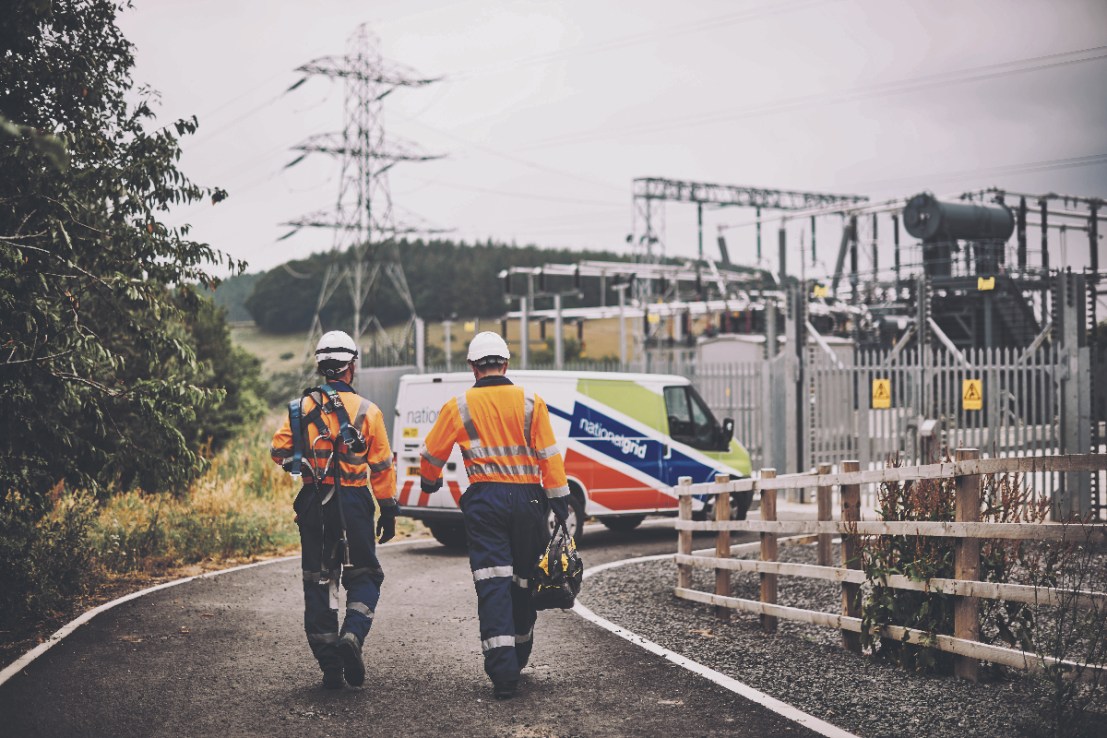
The minister added that AI could help Britain extract more from its existing network, reducing the need to rely entirely on new pylons and substations.
Justin Tilley, retail channel lead at portable power and battery company EcoFlow, said at the Infrastructure Summit: “As households continue to face high energy costs, exploring the role that solar and battery storage can play in the energy mix will be critical”.
He added that the technology could help consumers “take greater control of their energy use, lower their bills and strengthen the UK’s long-term energy resilience”.
Overseas, New York this week became the first US state to halt construction of large new data centres for a year while officials examine their impact on electricity prices and water supplies.
The moratorium applies to facilities using at least 50 megawatts of power, and New York’s governor, Kathy Hochul, said unchecked development risked raising utility bills and depleting natural resources.
Meanwhile, Scottish politicians and campaigners are also examining whether tougher conditions may be needed as data centre demand grows, although no equivalent moratorium has been announced.
Shanks said Britain’s electricity consumption was expected to double by 2050 as data centres, electric cars and heat pumps increased demand, but acknowledged the pace remained uncertain.
Some forecasts suggest AI could bring that rise forward, even as overall UK electricity use has declined in recent years.
“We’re not building an energy system for the sake of it,” Shanks said. “It’s consumers at the end of the day who have to pay for it all.”