The ultimate AI proxy trade isn’t a tech stock—It’s something more humble
You can’t all be Micron, up 329% so far this year.
But Micron can’t be Micron. And Nvidia can’t be Nvidia. And Intel can’t be Intel. And artificial intelligence can’t be artificial intelligence.
Without copper.
There we’ve said it: without copper.
And that’s not going to change any time soon. Wood Mackenzie, the London-based investment house, sees global demand for copper growing from 34 million metric tons a year to 42.7 million tons by 2035.
S&P Global thinks it might take until 2040 to reach that level. But projections are just are projections. The direction, in this case, is what counts. And demand is growing rapidly.
Related: Iran peace deal could push gas prices to $3.50 within weeks
Two years ago, I wrote this story for theStreet: Is copper the new gold? And I came back to see if the story still held.
It sure has.
The price of copper has now shot up 142% between February 2015 to $6.074 a pound as of June 25, according to the CME Group, the biggest U.S. futures market operator.
In the London market, closing prices have jumped from $5,935 per metric ton in February 2015 to $13,193 this week, according to MetalsMarket.com.
And there’s more to come for investors. That’s because of all that copper demand that appears to be ahead from:
- Expansion and modernization of electric grids around the world, especially in the United States and China.
- Increasing use of electric vehicles.
- Solid demand for copper in plumbing for houses, offices and factors.
- Defense industry needs around the world.
- And, of course, artificial intelligence.
AI demand was basically nonexistent 10 years ago. Today, direct use of copper in AI chips accounts for about 3% of all global copper consumption, Goldman Sachs estimates
Throw in all the other things AI needs, like electric power generation, reworking of local, regional and even national power grids, substations, wiring in a data center, and the like, and AI already is using 5% or more of global copper production.
And the expected growth in the grid, in AI, in substations, not to mention toasters and microwaves — more data centers — means more copper demand.
Long a part of human history
Copper has been part of human existence for at least 10,000 years.
The first to use it were people in the Middle East who found its reddish color captivating and used it in decorative settings. In time, people discovered how to make it harder by adding tin as an alloy.
It resists water and salt water. Paul Revere (the Boston silversmith of the Midnight Ride) started a copper rolling mill after the American Revolution. The mill made copper sheets that sheathed the bottoms of wood ships to protect them against salt water, barnacles and other pests.
(Revere’s company still exists in Rome, N.Y.)
Copper’s primary use today is in electrical equipment, wiring and like. A small portion is used to make high-end cookware and other products.
Copper is sometimes called “Dr. Copper” because rising copper prices signal economic strength. If prices are falling, watch out.
You find copper all over the planet
Copper was created in massive stars and is distributed around the earth. The biggest deposits are in Chile, the world’s biggest copper producer, according to Charles Cooper, Research Director and head of Copper Research at Wood MacKenzie.
Chile has about 18% of the world’s prove reserves and is home to the largest copper mine, the Escondida, located the arid north of the country.
The biggest copper producing countries after Chile are Australia, Peru, Congo, Russia, Mexico and the United States.
Most copper mines are open-pit operations, usually in remote locations. The world’s largest mine is the Escondida mine in the Atacama Desert in far-northern Chile
Cooper, trained as a mining engineer, guesses he’s been in more than 120 mines all over the world in his 30-year career.
One he hasn’t seen is the giant Grasberg mine in Indonesia. Operated by Freeport-McMoRan, the mine is located deep in the mountainous jungle in the western portion of New Guinea.
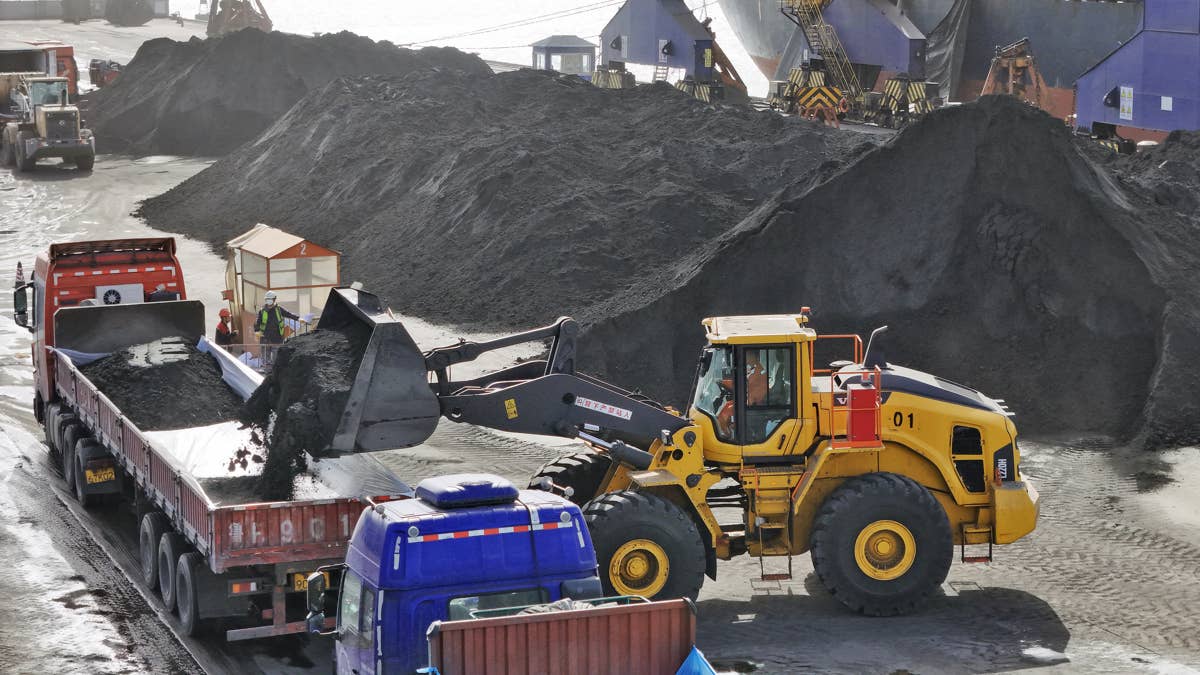
Copper comes out of mines usually as a sulphate, and the ore is crushed and often soaked in sulfuric acid and other chemicals to leach out (separate) the copper from everything else.
A last point: Mining is a messy business, and the risk of environmental problems and fallout are never far away.
Ultimately, the concentrate, which is about 25% copper, is shipped to a smelter and refined to various levels of purity and rolled out. In chips made by Nvidia and others, the copper strands are so thin you can’t see them out a scanning electron microscope.
China has emerged as the world’s biggest smelter of copper, with a 50% share, Cooper said.
CFOTO / Future Publishing / Getty Images
How you invest
Copper is a long-term investment in part because it takes so long to build a mine: about 17 years, S&P Global says. But you can get into copper by buying shares of the producers directly such as BHP Group and Rio Tinto, which own 87% of the Escondida mine project in Chile.
There are two exchange-traded funds to consider:
- The U.S. Copper Index Fund (CPER) which buys copper directly
- The Global X Copper Miners ETC (CPOX), which invests in smaller mining companies.
Artificial intelligence has caused all these shares to rise over the last few years, so has the cost of copper itself. Like other metals, copper is vulnerable to interest-rate swings.
In fact, copper fell, and the companies saw shares slip in the last week or so because of fears the Federal Reserve might raise interest rates this year.
More Tech:
- Apple Gets Hit by ‘100-Year Flood.’ But That’s Missing the Real Story
- When the ‘AI Inflation’ Hits the Fan
- Qualcomm’s massive AI expansion already has 2 Mag 7 giants on board
Yes, there are risks
Markets suddenly go bad. Copper was rallying nicely in 2022. Then, Russia invaded Ukraine and the Federal Reserve started to raise interest rates when the the easing of the Covid-19 pandemic ended. That unleashed a sharp inflation surge. Copper prices slumped.
Demand is so great that copper companies can’t deliver product. There are worries that global demand might outstrip production by some 10 million metric tons by 2040, according to S&P Global. Worse, the quality of the ores is declining.
Mines take time to develop and build. Remember: The average mine requires 17 years from discovery to production. Permits may be withdrawn. The geology proves more complex than expected. In 1980, I visited the site of a proposed cobalt mine in northeast Idaho. The project was shelved. Another try to open the mine failed in 2023.
The concentration of smelters in China. If geopolitics intervenes and smelting capacity is cut off, the producers will get hurt.
Bad accidents happen. Freeport-McMoRan’s big Grasberg mine in remote Indonesia suffered a freak accident in 2025 that killed seven workers. Production is just getting restarted, and Grasburg won’t be back to full production for another year.
But if the world is stable, and the politics of data centers is benign, copper is something you may want to invest in or just plain own.
Related: Morgan Stanley resets Micron stock price target on strong AI demand