
Dallas, Boston, New York New Jersey: Inside England’s Fifa World Cup stadiums

With England travelling around the United States for their Fifa World Cup Group L matches, Matt Hardy asks experts about what makes them so special.
England’s opening victory at this year’s Fifa World Cup came in an incredible indoor stadium in Texas. The AT&T Stadium, known for the next six weeks as the Dallas Stadium, is almost as old as Arsenal’s Emirates Stadium but it is worlds apart. Tonight’s venue couldn’t be further distanced from one of the techiest arenas in the Lone Star State.
Because England’s match tonight against Ghana will take place in Boston’s open-air Gillette Stadium in what are expected to be humid and perhaps even rainy conditions.
With a World Cup being staged over three countries – Canada, the US and Mexico – stretching across latitude lines whose cross-Atlantic equivalent would be Cornwall in the north and Morocco in the south, the area is vast, and the arenas present themselves in stark contrast to one another.
England’s three group games are taking place in Dallas, Boston and New Jersey while potential knockout fixtures for Thomas Tuchel’s side could take the Three Lions to Atlanta, Mexico City and Miami as well.

World Cup stadium adaptability
Engineer Morgan Hays, senior director of construction at Bentley Systems, explains that adaptability is a key element for England’s arenas in Boston and New York.
“From an infrastructure engineering standpoint, what makes both Gillette and MetLife [New Jersey] stadiums stand out for 2026 is their extreme adaptability,” he tells City AM.
“These are not greenfield monuments built exclusively for a singular global event; rather, they are complex, existing assets continuously optimised through advanced engineering.
“MetLife’s structural continuity allows it to seamlessly toggle between multiple identities and configurations, while Gillette has physically integrated its design, like its new 22-storey lighthouse, into the existing topography.
“They stand out because they represent the future of major infrastructure, which is about leveraging data to maximise the lifecycle and flexibility of what we have already built.”

Indoor-outdoor
Some have criticised the 16 mega-arenas hosting this World Cup for lacking character and being surrounded on all sides by car parks. But quite often they were ahead of their time.
Alex Thomas of HKS Architects – the designers of the Dallas Stadium in which England opened their campaign, as well as the world-leading SoFi Stadium in Los Angeles – explains how a two-decade-old venue is still cutting edge.
“The Dallas Stadium opened in 2009 so it’s been around for a while,” he says. “When it opened it was a complete game-changer for the stadium industry – a great exhibit of how the combination of a great client and a really creative design team can can tear up the rule book in terms of design, and it is a great example of what happens when you don’t just look back at what we know stadiums to be, but you look forward.
“At the time, it had by far the biggest video screen and it had an opening roof – it was very iconic architecture that didn’t resemble anything before it. There’s lots of things to do with fan experience built into that stadium that really hadn’t been done before.
“And the other cool thing is that we’ve just done a huge raft of interior renovations to that stadium to bring it right up to the cutting edge of fan expectation in terms of the type of experience you can have at a stadium.”
England realities
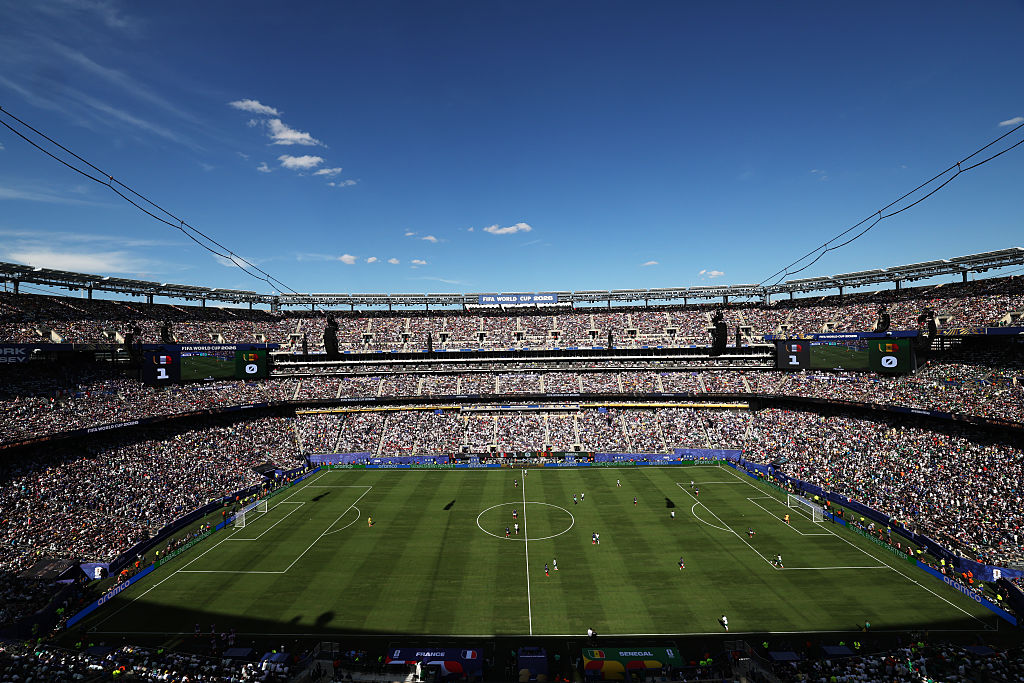
Should England reach the final, it will be played in the same stadium where they face Panama in their third group match – the MetLife Stadium, known as the New York New Jersey Stadium for this tournament.
“In a hyper-dense ecosystem like New York, a mega-stadium is not a standalone structure,” Hays adds.
“It is a massive, temporary demand node plugging into an already stressed urban grid. The core executive challenge is interoperability from both a physical and digital perspective.
“Moving 80,000 global fans through legacy transit bottlenecks like the Meadowlands requires choreography. Construction and operational retrofits face fragile supply chains, stringent security mandates, and zero margin for error.
“Overcoming this requires treating the stadium and its surrounding environment, including transportation arteries, energy grids, and digital networks, as a single, interconnected digital twin.”
This World Cup is the biggest yet, and no one can deny that the stadiums are epic. England have been given a good run of them in the group phase but could battle humidity and altitude during the latter stages of the tournament. How these modern Coliseums help teams adapt could be the difference between winning and losing.