
‘It feels like malware’: This Chrome extension redirects your web searches to monetized results and was promoted by a VPN with 50 million downloads
Planet VPN has 50 million downloads on Android and says that its free VPN has “no limits on traffic, bandwidth, or time.”
However, free VPNs often come with caveats and need to earn money somehow. In the case of Planet VPN, this may be achieved via Planet Search — a Chrome extension that re-routes users’ internet searches through intermediary platforms before they reach monetized Yahoo search results.
Planet Search has 2 million users, according to its Google Web Store page, and its parent company, Free Planet VPN S.R.L., was recently referenced in an investigation by Socket into ‘searchjacking’ apps.
While its role modifying a user’s search engine has previously been documented and is identified in the Chrome Web Store, our investigation reveals that the developer was actively funneling users from its VPN product to its Chrome extension until at least mid-January this year.
Planet search, redirect & monetize
According to Socket’s report, these ‘searchjacking’ apps can “take over the browser’s default search engine, route every query through a suspicious proxy server, and collect partner referral payments from Yahoo or Bing under a syndication partner ID.”
TechRadar has independently analyzed the source code of Planet Search and confirmed that it changes Chrome’s default search engine — using the chrome_settings_overrides.search_provider manifest key — to planet-search[.]com.
Using planet-search[.]com as the default search engine redirects users’ search queries through several intermediary platforms before landing on Yahoo’s syndication endpoint (/yhs/search) configured with commercial syndication parameters and campaign tracking tags.
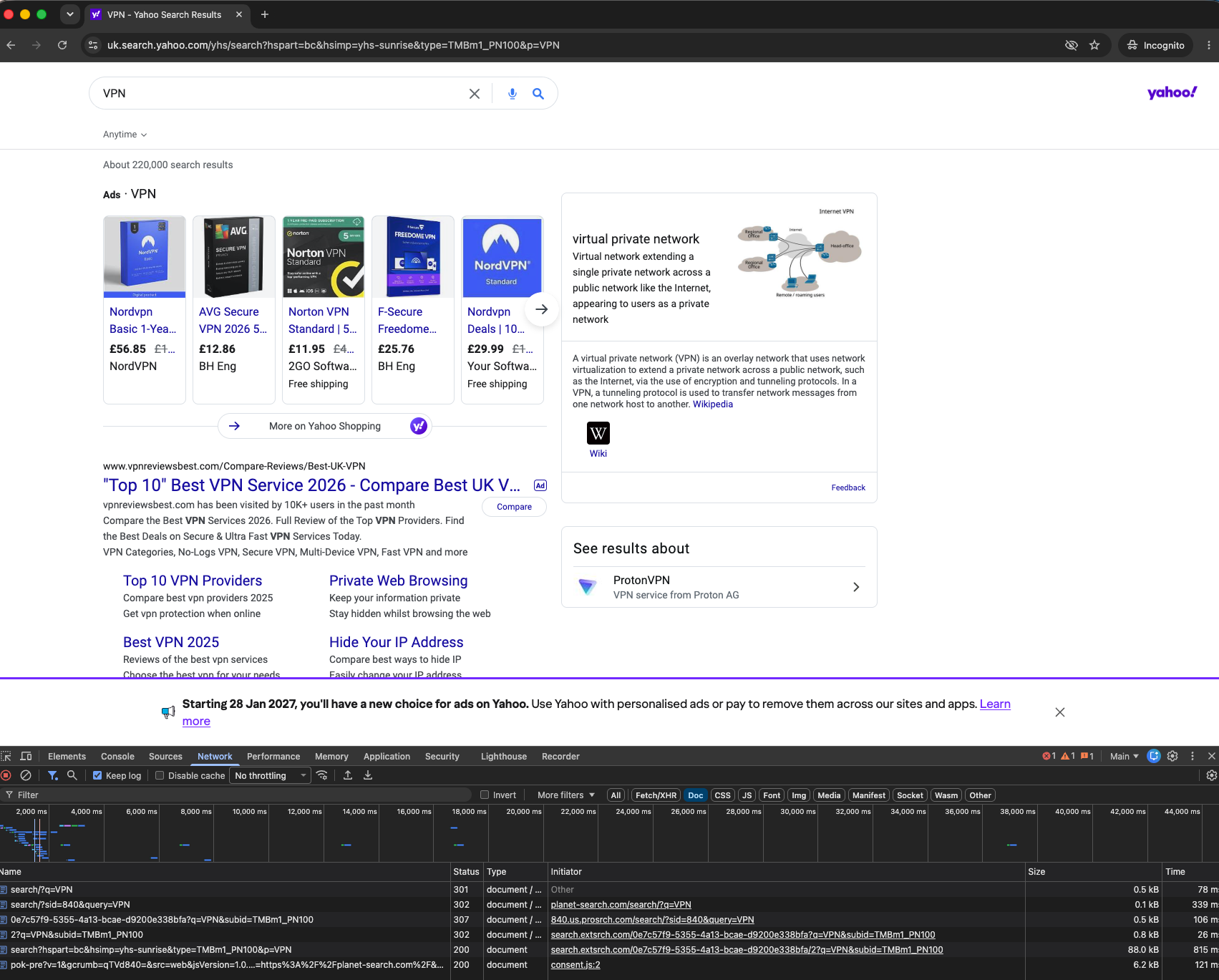
While Planet Search states in the Chrome Web Store that it alters default search settings, the listing explicitly promises that “default search results will be provided by Google.” On another page it says the provider will be switched to Microsoft Bing. However, during our tests we consistently landed on Yahoo search result pages.
While TechRadar’s technical analysis traced the redirect hops to a Yahoo search endpoint, Planet Search’s privacy policy discloses that “certain web search services” are provided through CodeFuel, a search monetization platform. The same document also states the service may “gather data related” to usage, specifically citing “search queries” along with “the time and date of your search queries.”
The Socket.dev report suggests many of the extensions may have obtained users via paid advertising campaigns. However, our research suggests that in the case of Planet Search, some of its users have been funneled from its VPN product.
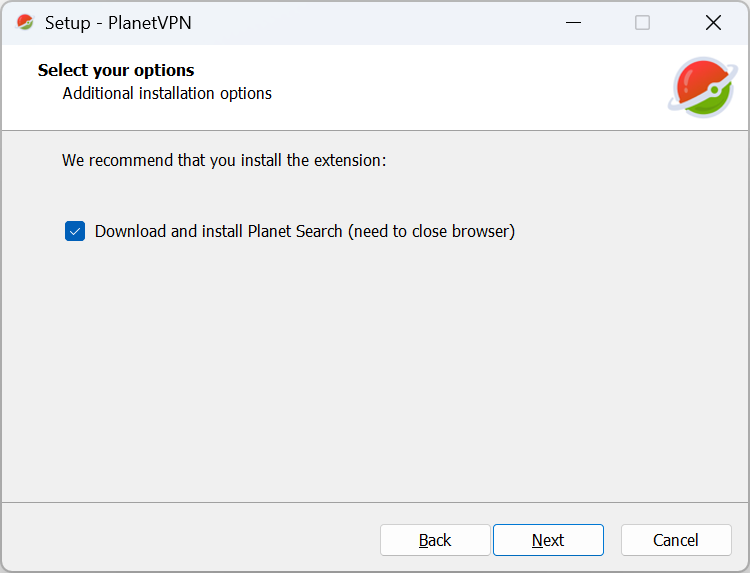
Planet VPN’s installer promoted the extension
TechRadar’s analysis of older Planet VPN desktop clients confirms that in version V.2.10.69.99, released on January 13, 2026, the app prompted users to install the Planet Search extension at setup.
However, frustration over the extension goes back years, with several people highlighting difficulties removing the tool .One user said they had “tried everything like deleting all of the folders on my PC” to get rid of the extension, while another said “it feels like malware.”
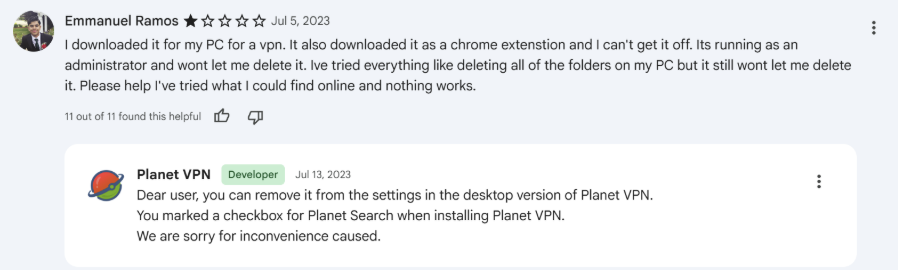
TechRadar has not verified whether the current Planet Search extension still uses methods which make it difficult to remove.
How Planet Search may profit
When you enter a query while using the extension, that query is routed via its planet-search[.]com domain and several intermediary domains. The query is then handed off to major search providers (in our case Yahoo) with partner syndication tags (e.g. hspart or hsimp) at the end of the URL.
In search revenue-sharing arrangements of this kind, a user clicking on sponsored ads may generate a referral commission for the ad network, which may then share revenue with the extension publisher. TechRadar could not confirm whether Planet Free VPN receives any revenue from this arrangement.
While common among ad-tech toolbars, routing searches through redirect hops may expose user search intent to third-party commercial networks and is not something normally associated with the digital privacy protections of a VPN.
The free VPN privacy dilemma
All commercial VPNs exist to make a profit. And when an app is free, more often than not, you are what’s generating that profit.
While there are a few reputable free VPN providers, even the most well-established providers come with caveats — whether data limits, the inability to choose servers, or limited access to international servers.
For this VPN, Planet Search may be one way the provider is able to make money, although TechRadar could not confirm whether it earns revenue through the extension. It also offers paid-for tiers and may be monetizing its products in other ways.
Free Planet VPN S.R.L. did not respond to a request for comment before publication.