France, US clash over G7 effort on AI safety
The U.S. government has scuttled a French push for the G7 to coordinate on advanced AI safety, with a White House official calling it “unnecessary bureaucracy.”
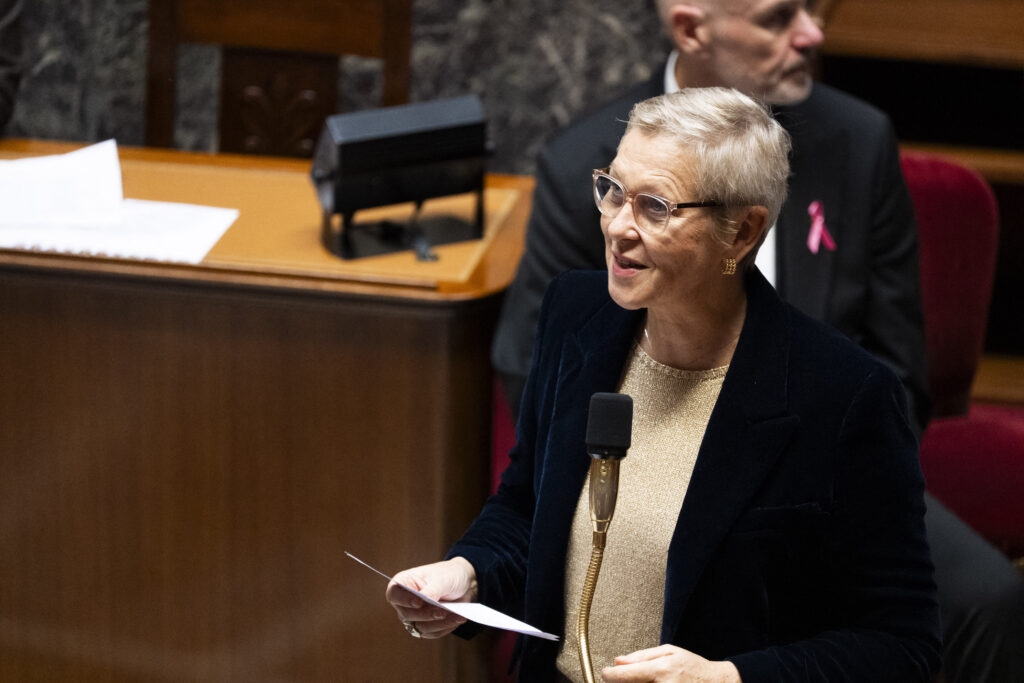
France’s digital minister Anne Le Hénanff told a French Senate hearing on Wednesday that she held two ministerial meetings in September and October to secure G7 commitments to a high-level working group to test frontier AI — the most advanced models — and share information about risks and incidents.
That effort “did not reach a successful conclusion” because the U.S. wanted to pursue its own approach, the French minister said.
“They are not prepared, at this stage, to issue a joint statement with the other six G7 nations, and have asked us to wait for the findings of their own assessment,” said Le Hénanff. “Naturally, we regret this, but we are continuing to move forward as Europeans on this issue.”
A White House official, granted anonymity to speak candidly, said that the French government proposed a “poorly defined body” to cooperate on AI that the administration feared would “create unnecessary bureaucracy.”
The official pointed to U.S. President Donald Trump’s Super Intelligence Force, saying it brings government and industry together to accelerate innovation and ensure the safe deployment of models.

France, which holds the rotating presidency of the G7 for 2026, issued a chair’s summary statement after the Oct. 20 virtual G7 tech ministerial, which noted that ministers considered closer coordination on identifying risks and sharing incident information, as well as a dedicated high-level group. It was not a joint statement endorsed by all G7 members.
Le Hénanff has proposed resuming talks in December.
SI acceleration
Trump began promoting “super intelligence” as a replacement for “artificial intelligence” at the U.N. General Assembly in late September. A week later, he ordered federal agencies to use the new term.
G7 ministers in May agreed to discuss secure AI and risk assessment, which was followed by the G7 leaders meeting the following month in Évian.
But the stakes have risen as advanced AI systems gain unprecedented cyber capabilities that can be used for both attack and defense. In July, Hugging Face disclosed an intrusion driven by an autonomous AI agent. OpenAI later said models used in an internal cybersecurity test had bypassed controls and compromised parts of its own research infrastructure and Hugging Face’s systems.
Le Hénanff said France would keep pushing the issue, citing INESIA, France’s national AI evaluation and safety institute, and Inria, its public research institute for digital science and technology, as resources for the work.
The White House official said: “Under President Trump’s leadership, America will continue to lead the world in SI innovation.”