Inside TAG Heuer’s Next Chapter with Maria Laffont
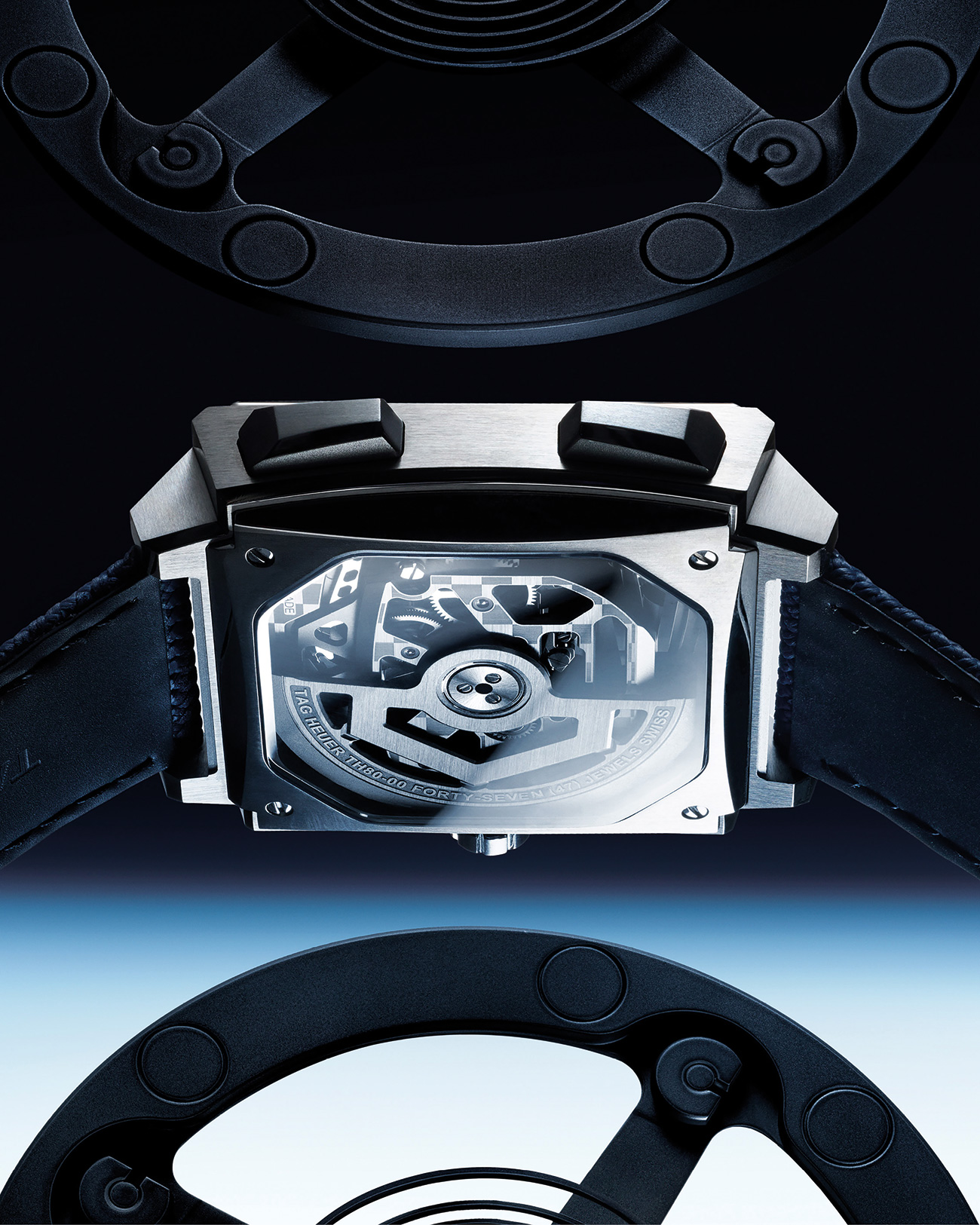
It is hard to overstate just how seismic an impact the Monaco Evergraph created at its launch during Watches and Wonders Geneva this year. Housed in the well-loved and instantly recognisable square Monaco case, the watch might have passed for another nice new Monaco, but its movement is anything but conventional. One could think of it as retaining a classic car’s chassis, though after making some improvements and modifications, while entirely replacing the internal combustion engine with a hydrogen fuel cell – a wholly different method of energy transformation and power generation that is far more fuel-efficient and responsive, free of emissions and pollutants, and almost silent.
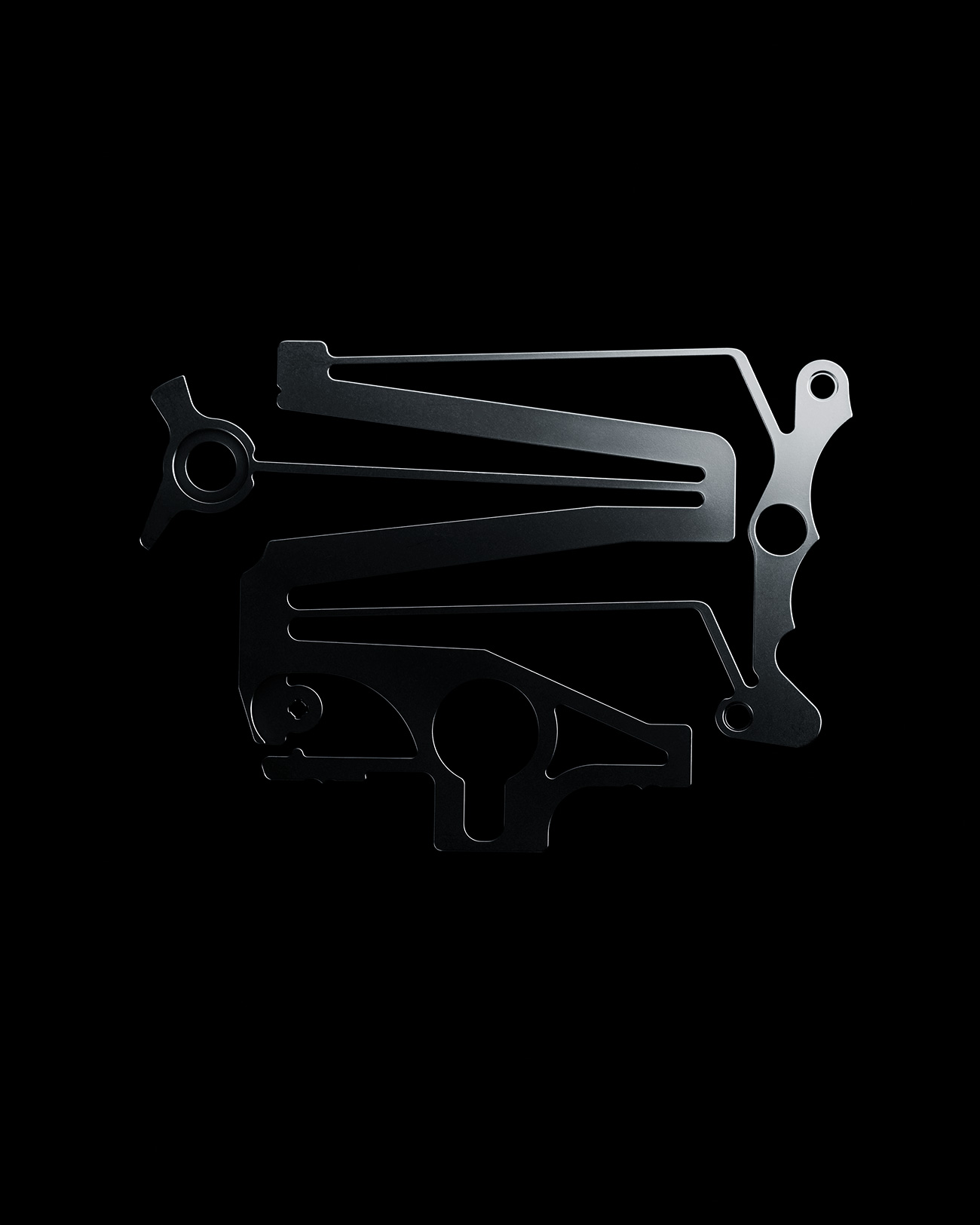
Developed by TAG Heuer Lab, in collaboration with Vaucher, the Calibre TH80-00 automatic movement is that groundbreaking engine swap. Instead of incrementally refining existing chronograph designs, the team took the audacious decision to build a new chronograph from the ground up. The watchmakers overhauled the conventional concept of chronograph construction by foregoing levers and springs in favour of two flexible bistable components, to improve functionality and the tactility of actuating start, stop and reset with fast, crisp transitions and no wear or deviation in performance over time and after repeated use.
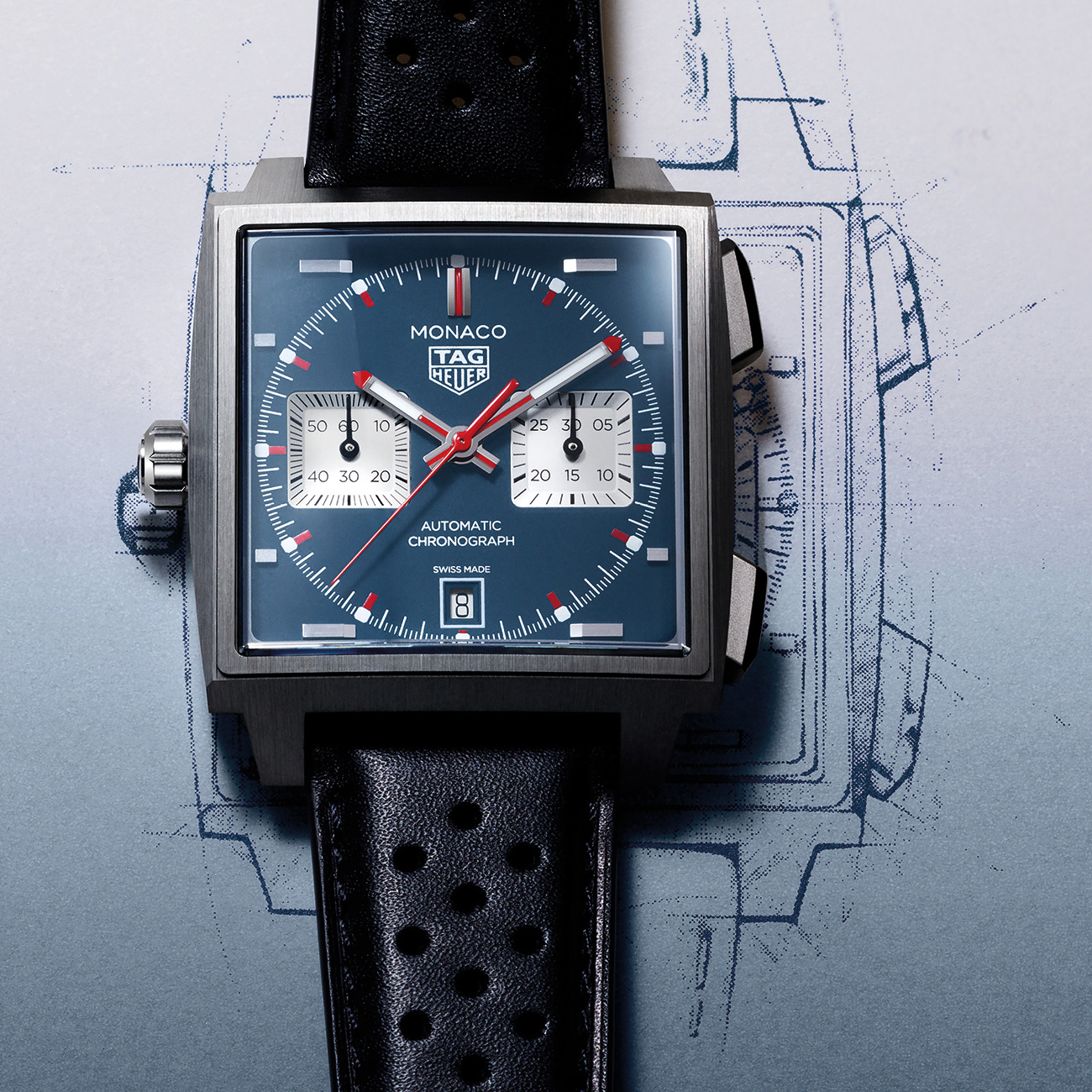
The Calibre TH80-00 is not the only upgrade in the Monaco collection this year. Unveiled concurrently, the new Calibre TH20- 11 automatic in-house movement is derived from the Calibre TH20- 00 automatic chronograph movement after years of development to rework the winding stem and crown to the left, and named in tribute to the Calibre 11 of 1969, with the mechanical throughline being the left-handed winding. However, that progenitor was a composition of a Buren base movement with a Dubois-Depraz chronograph module, whereas the Calibre TH20-11 features a fully integrated construction, with a column-wheel-based mechanism. In a visual callback to the edition of the Monaco made famous by Steve McQueen, the Calibre TH20-11 is housed in a refined titanium Monaco case featuring the same navy, white and red colourway, and also available in variations with a green sunray brushed dial or a black opaline dial.
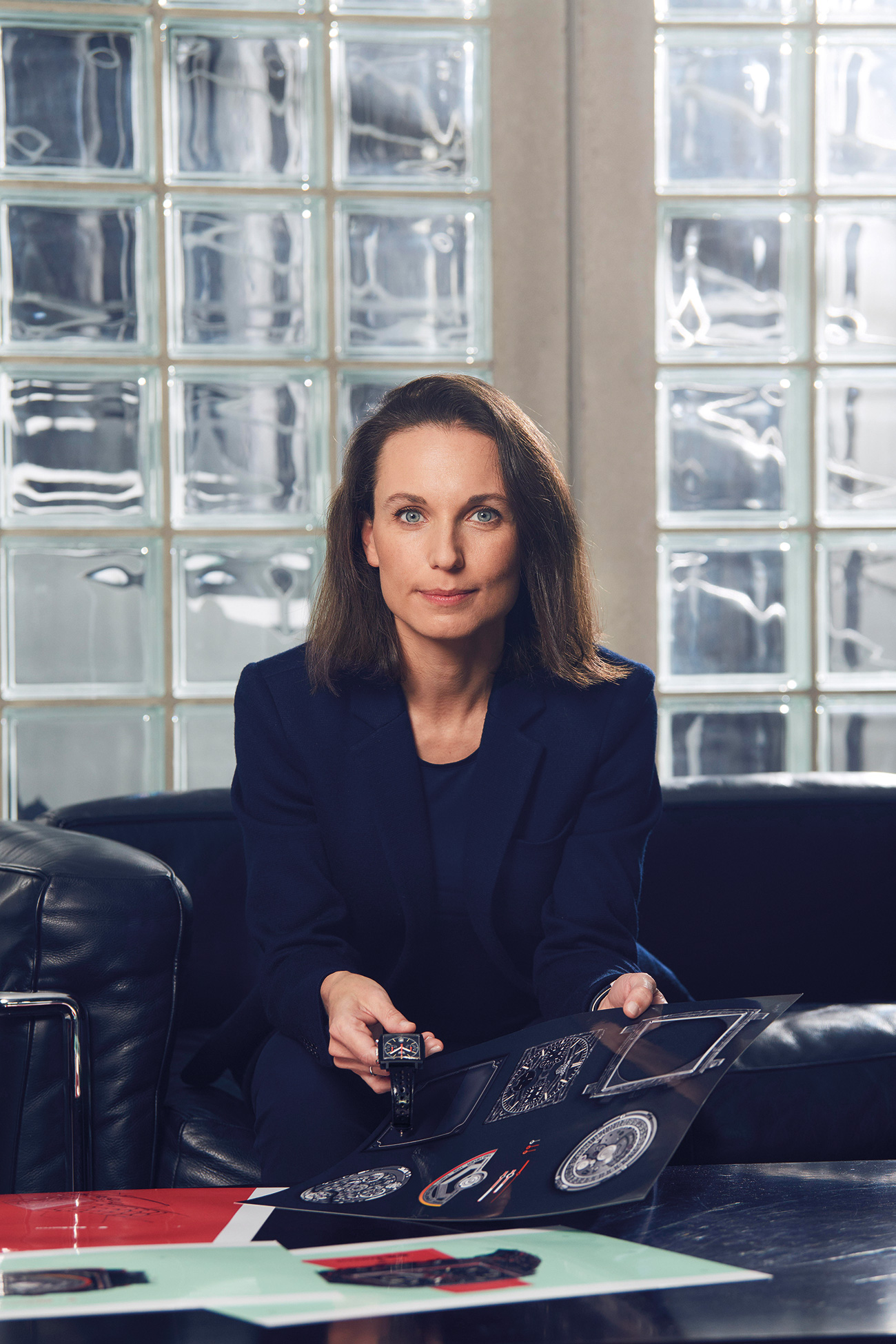
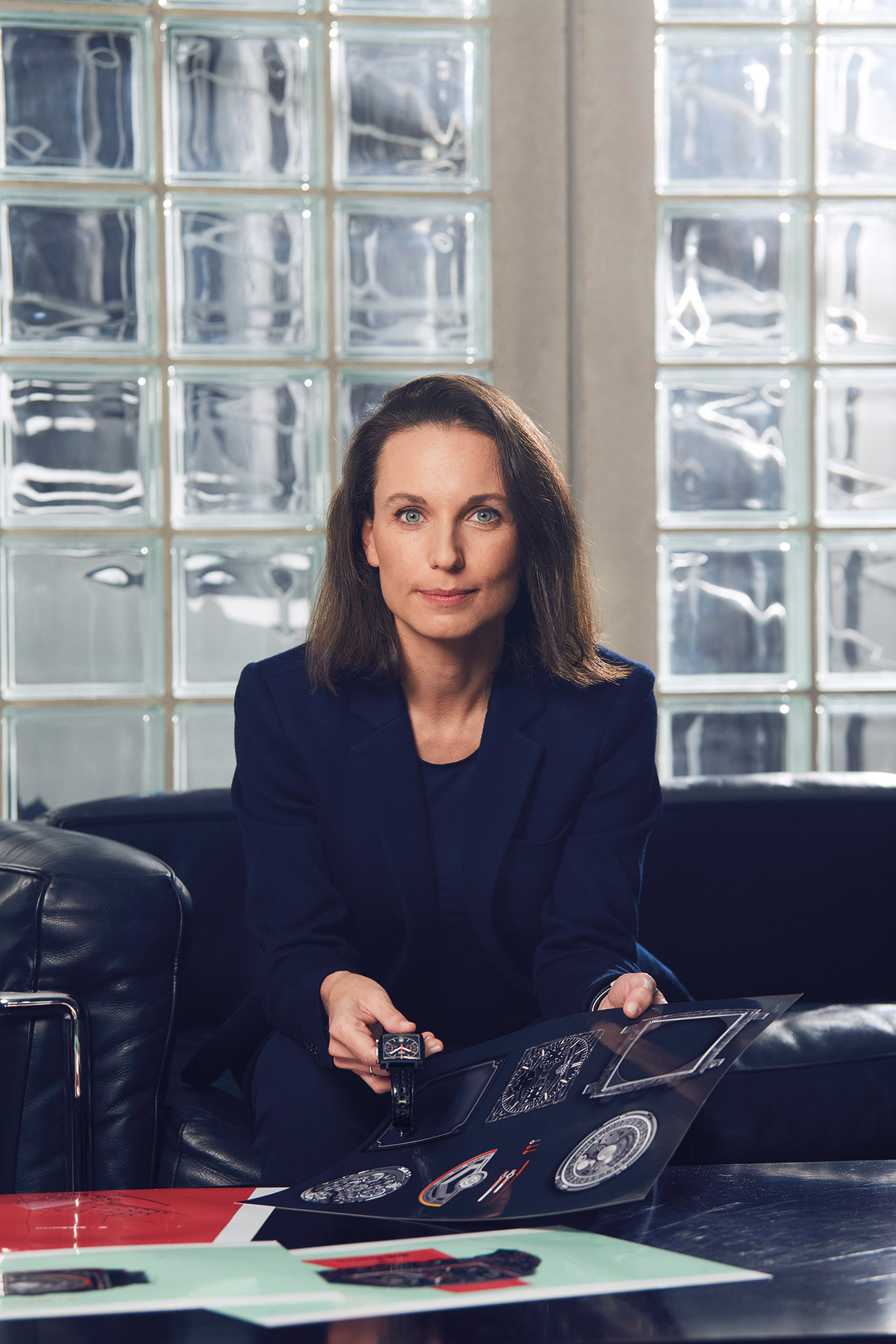
Firmly in the driver’s seat for these momentous releases is TAG Heuer’s Chief Product Officer Maria Laffont, whose tenure at the La Chaux-de-Fonds brand has seen consecutive wins since she joined in March 2021 as Vice President Design & Product: the Carrera Chronograph “Glassbox” 39mm unveiled for the collection’s 60th anniversary in 2023, the Carrera Date Plasma Diamant d’Avant-Garde of 2024 and its coloured lab-grown diamonds, the 2025 introduction of the TH-Carbonspring oscillator (in the Monaco Flyback Chronograph TH-Carbonspring and the Carrera Chronograph Tourbillon Extreme Sport TH-Carbonspring limited editions), plus collaborative editions with Porsche and with Team Ikuzawa and Bamford Watch Department.
We spoke to Laffont during Watches and Wonders this year about the latest Monaco chronograph innovations, as well as setting the course for the seamless fusion of technical and material innovation, adherence to brand heritage, thoughtful functionality, and impeccable aesthetics.
How does focusing on chronographs this year fit into TAG Heuer’s history with this complication, and how does this direction impact TAG Heuer’s future development?
This is a very good start, for sure. The chronograph is our defining complication, because TAG Heuer is about performance, sports and athletes. It is the timekeeper of high-stakes moments, these unique moments when a driver will break his record, these special and almost suspended moments when each and every second counts. That’s why timekeeping is absolutely crucial for us, and timekeeping is synonymous with chronographs. Today, we have different options for chronographs, starting from quartz chronographs, which we will continue to develop, and the automatic chronograph, and now the new Evergraph. And then we have the king of the chronograph, the split-second. We already have these in our range, and we are already working on other stories, because this is our identity.
Specifically for the Monaco Evergraph and the Monaco chronograph launched this year, what do they say about the Monaco collection and the larger TAG Heuer brand?
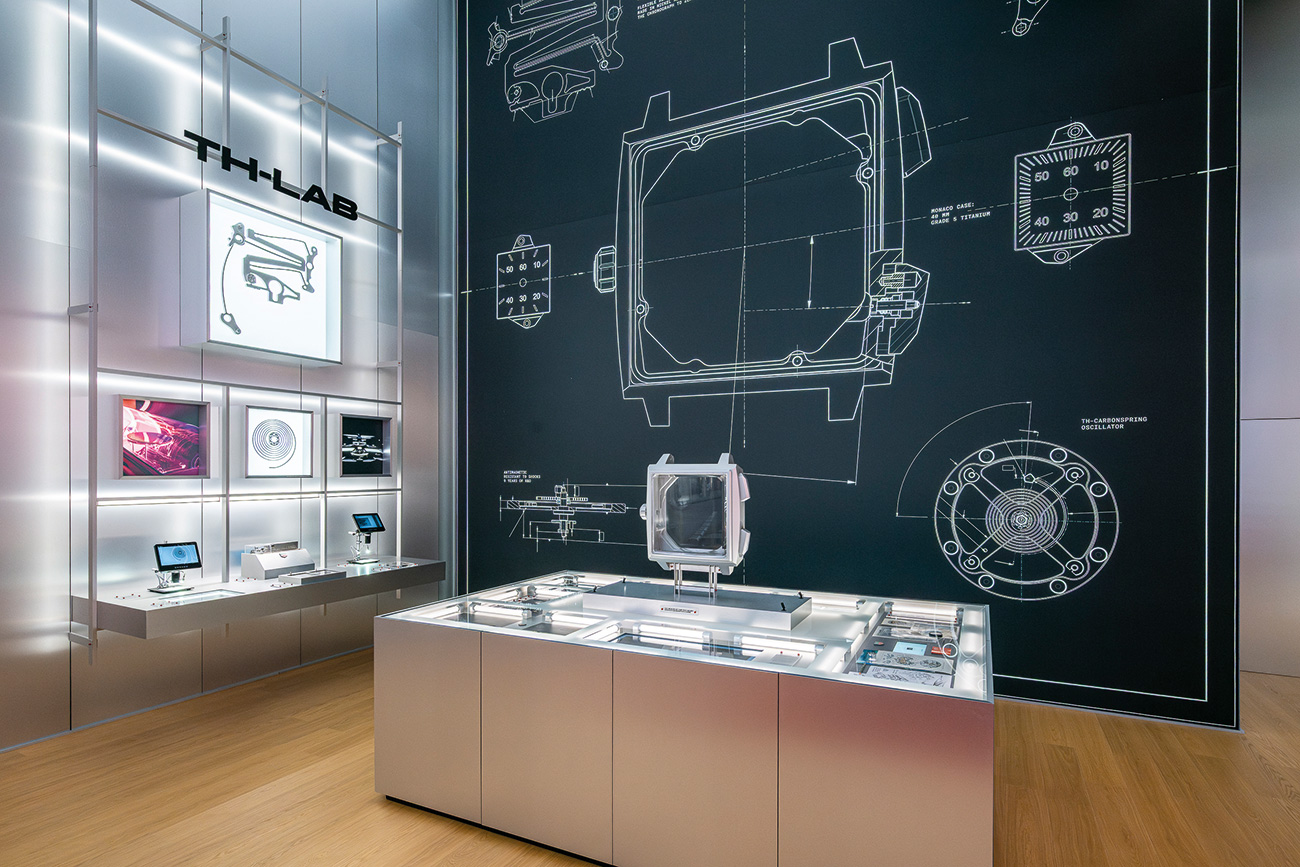
It’s a defining moment, because this Evergraph is the reinvention of the chronograph mechanism itself, and this is for us a huge milestone, not only for the Monaco collection, but for the brand, and I dare to say, for the industry. We all know the traditional mechanism with the vertical (and horizontal) clutches, and today we have a totally new way to build a chronograph. We’re doing that because we are driven by innovation, and what we wanted to achieve is to improve the chronograph in terms of performance, durability and reliability. For that, we are very lucky because we have a TAG Heuer Lab in our manufacture in La Chaux-de-Fonds, and in this TH-Lab, we have great engineers who are in constant dialogue with the creative teams and the designers. This brings to life crazy concepts such as this (bistable compliant) mechanism. We invented this flexible component, which replaces many components that are stiff, so it allows the mechanism to have less friction and be durable. Chronographs are so important to us, but in the past the technologies to produce this kind of very special component didn’t exist. That’s why it’s important to innovate.
In developing the Evergraph and its movement, would you say it’s more of a demonstration of TAG Heuer’s ability, or because the team fundamentally believed that there were flaws in the conventional chronograph movement that you wanted to challenge?
We were convinced that there was a way to improve and, when we are crafting and designing timepieces, we always have athletes in mind. We’re all about the performance, it’s absolutely key, and that’s why we’re always pushing the limits by keeping this in mind. We were convinced that there is a way to improve this chronograph mechanism. So it’s not because the existing one is bad; it’s more because we’re driven by this belief that we can go even further and find a new way. It’s more of a mindset.
And then specifically for the name, Evergraph, what was the story of how you landed on this name?
It was through team brainstorming. “Graph” recalls chronographs, and it’s also our internal language – we have the Mikrograph – and a brand signature. “Ever” conveys the fact that it’s durable and reliable. But we had many different options, and as is often the case at TAG Heuer, we arrived at the solution through teamwork. In the end, it’s true that someone has to decide, and I have that great responsibility, but it’s always done through a team – team debate, teamwork, team spirit – this is the best way to succeed.
Now that TAG Heuer is redefining what a chronograph is and what it can be, what happens to the existing chronographs in the Monaco collection and in the rest of the brand, like in the Carrera collection? Will there be a split between the so-called traditional chronographs and the Evergraph style of chronograph, and will the Evergraph’s TH80-00 movement be the basis of a new line of chronographs within each collection?
For me, it’s just adding a new category, so it will not replace others, because we need others also – the quartz chronograph, the automatic chronograph, the [manual-winding] chronograph, and now you have the Evergraph; it will not change the rest of the assortment. And being a square movement, the TH80-00 needs a square case, so for the moment it stays in the Monaco collection. In the future, let’s see.
OK, I’ll circle back next year. So how will this major internal change impact the image of the Monaco collection and of TAG Heuer’s chronographs, and what are some anticipated expectations of the influence on prices?
We have a specific price for this specific chronograph, and there is no impact on others’ price positioning. But what is true is that the demonstration of this savoir-faire, this innovation, has a halo effect, because, for sure, an avant-garde demonstration shows how far we can go and how we can create and innovate. So I think it reaffirmed that we are avant-garde. This is more about our identity, I would say it reinforces our brand equity, but it has no direct impact on the price positioning.
Moving on to the trio of Monaco chronographs, why were these design choices made with these three references and how do these improve the aesthetics and wearer experience?
First, the Monaco is our icon, and we are driven by performance and the fact that it has to be very easy to wear because it’s meant for athletes. But it’s true that with a square, bold watch, we had some constraints in terms of comfort on the wrist. It was a bit heavy, so sometimes it can shift, and it was not for every wrist, because it’s quite big. We are the watchmaker of performance, so we needed to have for our icon something that is really ergonomic. Obviously, we kept the essential codes of the icon, such as the square shape; we even reinforced the square shape through the bezel, which used to be a bit rounded and now it’s square, so it follows the sapphire glass’s edges, and the top case is sloped and more integrated. And the caseback used to be flatter and not as easy to wear, but now it’s sloped and bevelled, so it’s perfect and smooth on the wrist. As for the weight, now the case is titanium, which is robust and light.
On the dial, we also kept the essential codes, because these are so recognisable, such as the sub counters and the iconic blue as worn by Steve McQueen in Le Mans, these are legendary and collectors love them. The horizontal indices now have a curve at the end, but it used to be the reverse, and now we decided to have it like a pointer closer to the [white dots on the minute track], to be more functional because it captures the light. And [those white dots are] square now, but before, they were rounder. These are all very subtle details, and if you don’t know, maybe you will not notice them.
“We are always passionate about our projects, and I have the great chance to be surrounded by passionate people”
In the design process, how do you find that equilibrium between aesthetics, functionality and emotional impact? Is there always a trade-off in reaching the final result, and how do you decide what to sacrifice?
It’s really this dialogue that we just discussed, which is good because there’s back and forth: The designer may push for something, and the technician may invent something new. It’s a winning recipe. And emotion is key because we are in watchmaking, so we are creators of emotions. It’s about intuition too. It’s something that you don’t have a recipe for. We are always passionate about our projects, and I have the great chance to be surrounded by passionate people. And if we create emotion, from the very beginning we know if it will work, because…I’m convinced by the team spirit. Watchmaking is like an orchestra, because you have all the different components, and for each one you have an expert behind it, plus the designers and more. That’s why this team is so important, because the watch is the creation of a team.
So if watch development is like an orchestra, then that makes you the conductor?
(laughs) Maybe I’m too humble to say that, but yeah, kind of, we could say that.
This story was first seen as part of the WOW #86 Autumn 2026 issue.
For more on the latest in luxury watch reads, click here.
The post Inside TAG Heuer’s Next Chapter with Maria Laffont appeared first on LUXUO.