Goldman Sachs’s David Solomon: AI Adoption Requires Human Accountability
Goldman Sachs Chairman and CEO David Solomon has stressed the importance of human accountability in artificial intelligence (AI), warning that financial institutions cannot allow increasingly autonomous systems to operate without clear oversight and controls.

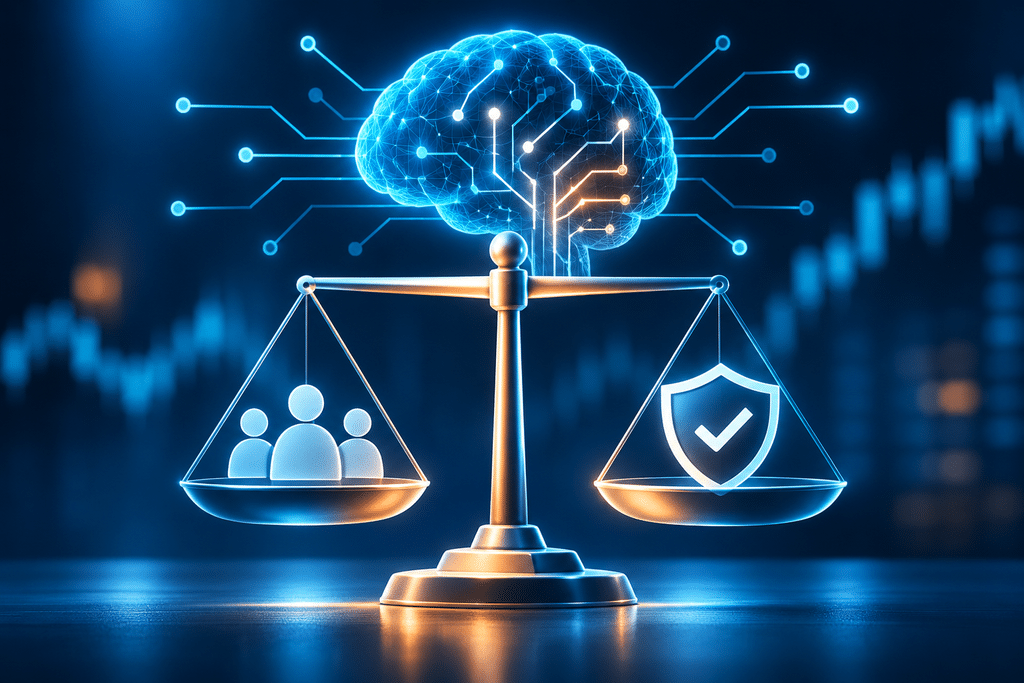
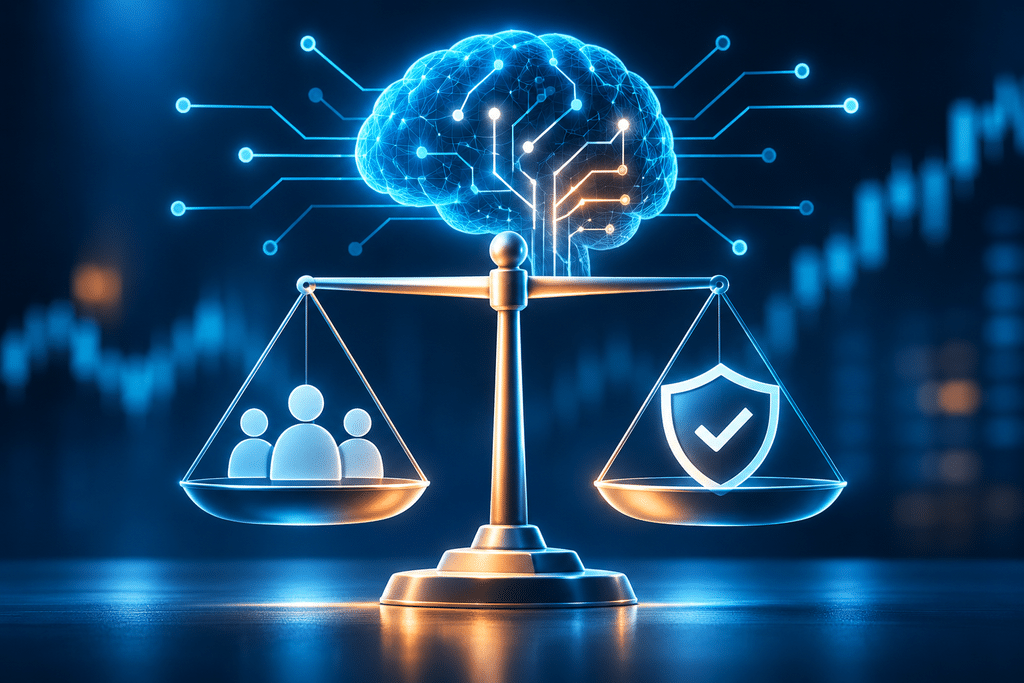
Speaking on the Goldman Sachs Exchanges podcast, Solomon said the debate over AI has become too focused on the choice between innovation and regulation, when the two should go hand in hand.
“I just don’t think it’s a binary choice. I think it’s a much more nuanced discussion. I think we absolutely can spur great innovation with this technology, but we have to have rules of the road,” he said.
Solomon identified three areas of responsibility: governments setting regulatory frameworks, technology companies ensuring their models operate safely, and businesses remaining accountable for how the technology is used. He suggested the last of these has received insufficient attention.
Goldman Sachs has incorporated AI-related models into its trading platforms for nearly two decades, with human oversight remaining part of its approach. “Goldman Sachs has been using AI-type models for trading platforms for almost 20 years, but there’s human accountability attached to every one of those platforms,” Solomon said.
Solomon dismissed the idea that a bank could blame an autonomous trading system for an unexpected outcome. “I could never imagine someone at Goldman Sachs saying to me, ‘The trading platform went off and did something awful on its own. We couldn’t stop it.’”
“We wouldn’t deploy it if we didn’t feel that we had the control to manage it appropriately, and that there was a human being that was ultimately accountable for anything that goes wrong,” he added.
Solomon believes the financial industry’s experience with risk management offers lessons for companies introducing AI into their operations. Banks have spent decades developing systems for monitoring, testing and auditing complex activities, with those controls receiving greater scrutiny following the global financial crisis.
“I do think, though, there’s a lot that can be learned from the experience that large financial institutions have had, particularly around risk management,” he said.
While established financial institutions already have experience managing sophisticated technology and operational risks, companies in other industries may need to build similar capabilities as AI becomes more widely deployed.
Beyond trading and risk management, Solomon expects AI to change how businesses operate and how employees spend their time. “Whenever you create new technology, new technology disrupts and automates, and this technology is going to disrupt and automate, and there’s just no question that we’re going to see that,” he said.
However, he pushed back against the assumption that greater automation will necessarily translate into widespread job losses. “When people talk about white-collar jobs, just because the technology makes them more productive, it doesn’t mean the job goes away,” Solomon said.
“It means that the smart people can do more productive things while getting the benefit of the technology in their workflows,” he added.
He pointed to changes in investment banking over the past four decades, noting that junior analysts now perform very different tasks from those he handled early in his career. “We don’t have less of them. They just do different things, and they’re much more productive than they were 40 years ago,” he said.
Still, Solomon acknowledged that the transition may not be smooth. If automation eliminates certain tasks or roles faster than new opportunities emerge, workers could face short-term disruption, potentially requiring policy intervention.
His advice to employees was to learn how to use AI rather than resist its adoption.
Within Goldman Sachs, the bank’s AI strategy is focused primarily on automating processes and improving the experience it delivers to clients.
“We’re really focused, in the most simplistic way, we’re focused on automation of processes, and we’re focused on enhancing client experience,” Solomon said.
Achieving meaningful efficiency gains, however, will require more than simply introducing new tools into existing workflows. “I think the more complicated thing for all enterprises is how you redo operating processes and automate them in ways where you create real productivity gains and efficiency.”
For Goldman Sachs, productivity improvements could also create opportunities to redirect resources toward investment and growth, he said.
Solomon also addressed the scale of investment flowing into AI infrastructure and the uncertainty surrounding its eventual returns.
Goldman Sachs is involved in the broader investment cycle through its advisory, financing and asset management businesses, as companies seek capital and evaluate opportunities associated with the technology. But even as spending on data centers, computing infrastructure and related technology accelerates, Solomon cautioned against assuming that current investment projections will prove accurate.
“Whether or not the buildout is going to be as significant as some people are saying, whether we’re going to spend $5 trillion on the buildout or $10 trillion on the buildout or more, I don’t think anybody really knows,” he said.
Financing costs, competition for capital and advances in computing technology could all influence how much infrastructure is ultimately required and how investors assess the returns. “It will be a journey. It won’t be a straight line. There’ll be accelerations and pullbacks,” Solomon said.
The bank is also extending its AI initiatives beyond large corporations. Solomon discussed Goldman Sachs’ $500 million commitment to launch its Small Business AI Institute, which is intended to help smaller companies adopt the technology through training and greater access to capital.
Despite the uncertainty surrounding investment levels, employment and the pace of adoption, Solomon remains confident that AI will have a lasting impact on the economy. “But it’s going to take 10, 20, 30 years for us to really appreciate the impact of all this,” he said.