The Opposition of New Power Lines Could Spread Beyond Data Centers
Spending on the transmission system by investor-owned utilities and transmission companies is expected to reach $43.7 billion this year, up about 10 percent from last year’s estimate, according to the Edison Electric Institute. Much of the country’s power infrastructure dates to the decades after World War II and is due for replacement regardless of what the AI buildout does, but the growth in demand has turned a maintenance cycle into a generational expansion. The fights over where those lines go are now showing up in places that have nothing to do with data centers.
Virginia’s Loudoun County tracked 233 data center buildings completed or under construction as of March, and the grid serving them has to be rebuilt to match. Dominion Energy’s annual electricity demand growth across Virginia and North Carolina has jumped to roughly 5.5 percent from the 1 to 2 percent range it sat in before 2022. Greg Mathe, Dominion’s director of electric transmission engagement, permitting and land, attributes most of that to data centers while noting that electrification and manufacturing growth, including pharmaceuticals, are contributing as well.
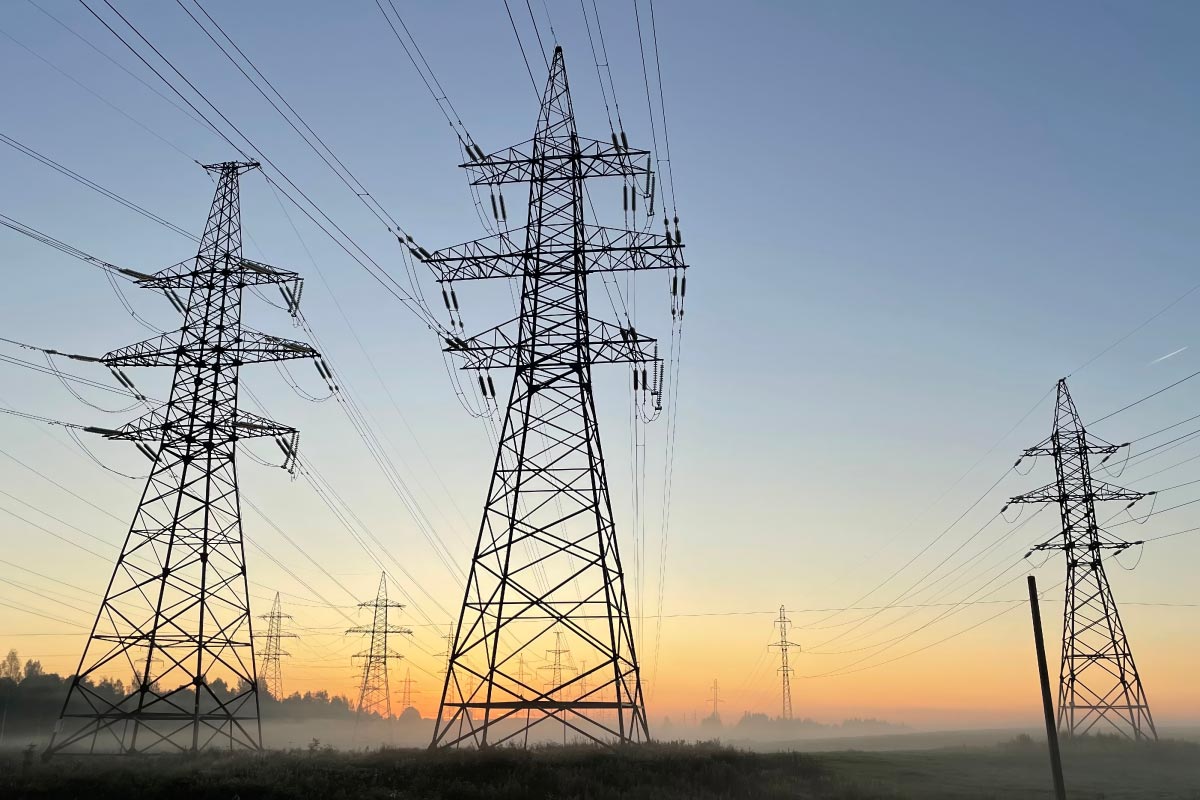
In Ashburn, a 500-kilovolt line the utility classifies as a backbone reliability project is routed through a residential backyard that abuts a wooded conservation easement, requiring a 165-foot monopole and the removal of hundreds of trees. The homeowners association donated land at the rear of the neighborhood to the local school system in an attempt to block the path, since Virginia utilities generally lack standard eminent domain authority over county governments and school boards. The state utility commission approved the route anyway, and the dispute is headed to the Virginia Supreme Court on appeal.
Similar disputes are running in Texas, where high-voltage lines proposed to crisscross the state would bisect ranch land northwest of Austin, and in Georgia, where Southern’s Georgia Power plans to tear down 29 homes along a 35-mile line. Clay Rikard, senior vice president of system planning at Southern, points to a voluntary agreement rate above 99 percent and says condemnation is rare, framing the work as broadly beneficial. “Data centers do represent a lot of the growth, but I think they’re also bringing tremendous benefits to our communities,” he said, adding that new transmission also allows older plants to retire and makes it possible to move power in from other regions.
Utilities have an institutional reason not to tie a given line to a given customer. Alexandra Klass, an energy law professor at the University of Michigan Law School, notes that transmission projects are usually justified on congestion grounds rather than by naming a project, since the congestion is real and the need is broad. That framing is accurate and also politically necessary, and it is exactly what makes the current moment difficult. A line justified by general reliability still lands in a specific backyard, and the homeowner has no particular reason to believe the general justification.
The part that should concern anyone building anything large is that opposition organized around data centers does not stay organized around data centers. Transmission capacity is shared infrastructure. The same 500-kilovolt line that serves a hyperscale campus also serves the industrial park, the hospital expansion, the manufacturing plant, and the thousand-unit residential project that needs an interconnection five years out. Communities that successfully delay or reroute a line are not constraining one development. They are constraining everything downstream of it.
Eminent domain reform is becoming part of the conversation. Property owners who settled with utilities have started arguing publicly that the legal process favors institutions with counsel over individuals without it, and state legislatures are listening in several of the markets where transmission buildout is heaviest. Any procedural changes that result will apply to pipelines, roads, and water infrastructure as readily as to power lines. This might help move projects along in the short term but could result in even more politcal backlash that could
We would expect the political energy currently aimed at data centers to outlast the particular projects that generated it, because the underlying objection is to high-voltage infrastructure crossing residential land rather than to what sits at the end of the wire. Developers in markets with constrained interconnection queues may find that the capacity they are counting on has become harder to build for reasons that have nothing to do with their own project.
The post The Opposition of New Power Lines Could Spread Beyond Data Centers appeared first on Propmodo.