On this day: the birth of Bernie Ecclestone
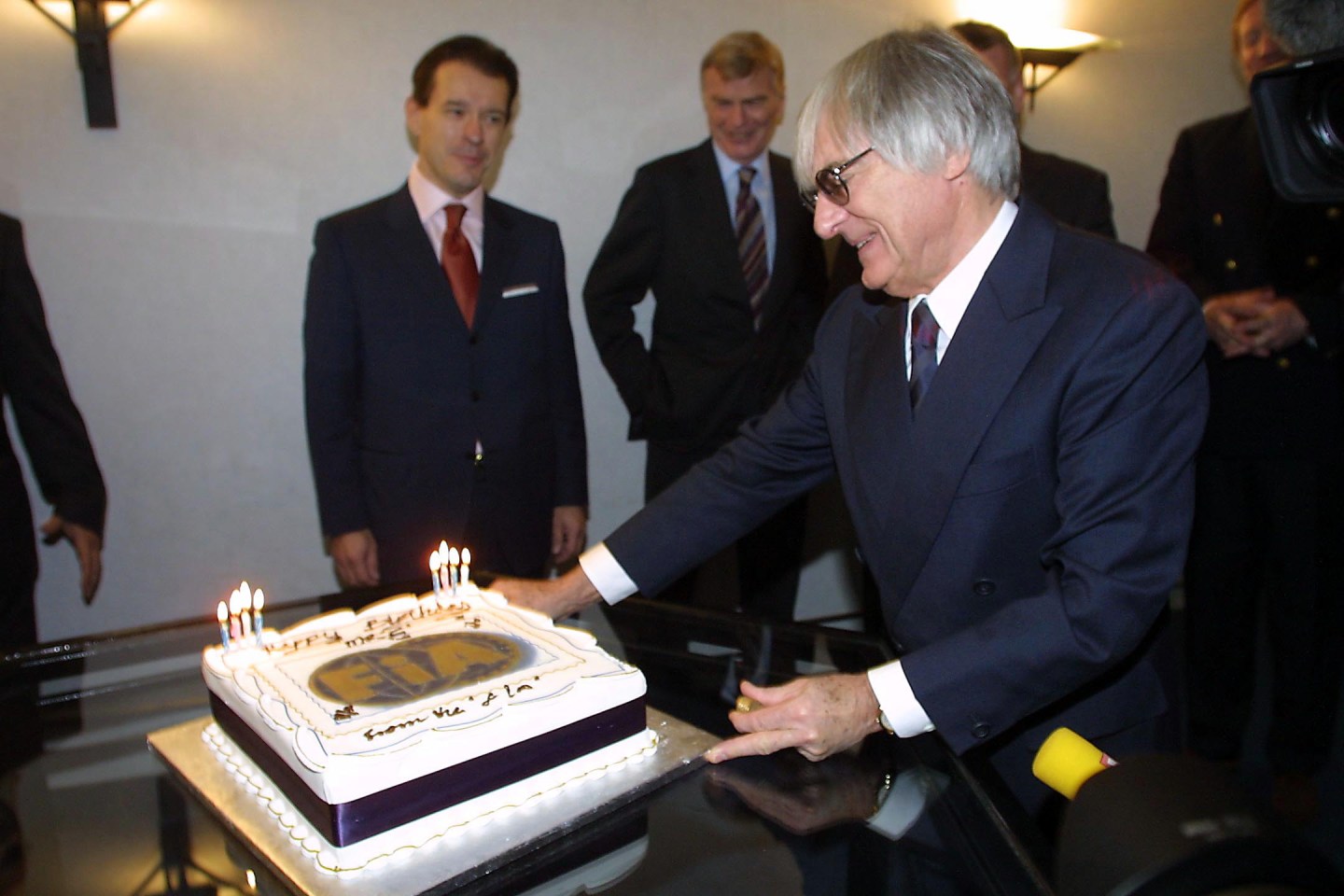
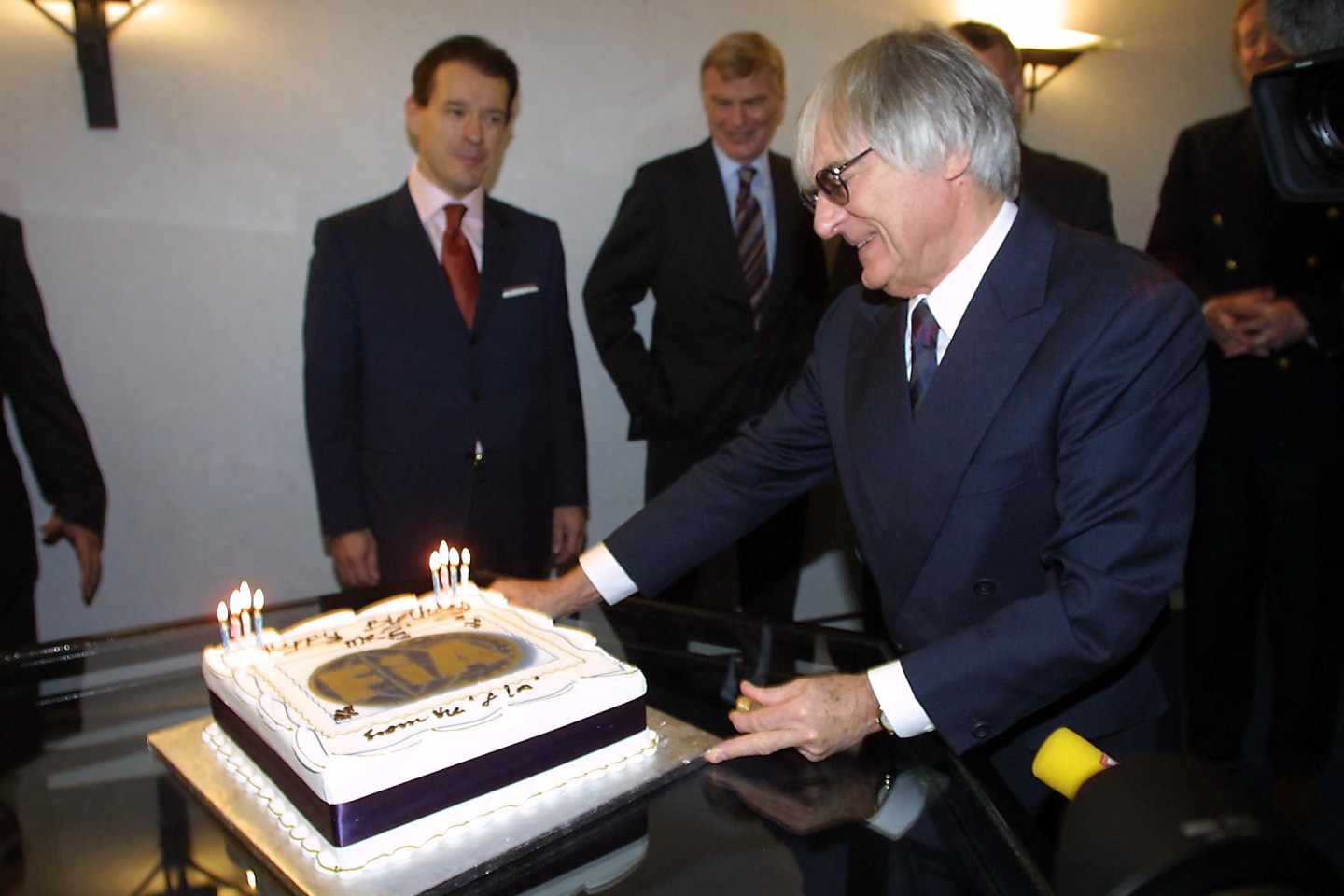
On 28 October 1930, Bernie Ecclestone, the man who would create modern Formula 1 was born, writes Eliot Wilson
It is now reckoned that only four people remain alive who participated in a Formula 1 World Championship weekend before 1960. Formula 1 was in transition: rear-engined cars were beginning to dominate the category and so too were those dismissed by grandee Enzo Ferrari as garagistes, independent teams who often built their own cars but not engines.
Peter Ashdown (92) and Belgian André Milhoux (97) were never famous, while David Piper (95) found more success in sports cars in the 1960s. The fourth found himself in the record books by accident: he bought two ex-factory Connaught Type Bs and entered them for other drivers at Monaco in 1958. When both drivers complained of poor handling in qualifying, he drove a lap himself to confirm their problem.
His name was Bernard Charles Ecclestone, and he celebrates his 96th birthday today.
Bernie Ecclestone created modern Formula 1. Lucrative global television coverage, a revolution in safety which led to the virtual elimination of fatal crashes, giving the teams substantial influence in the management of grands prix. He could sense where motorsport was going and how it could make money. But you need to consider Ecclestone’s early years to understand him fully.
He came to adulthood as motor racing was rebuilding itself after the Second World War. The late 1940s and 1950s were the age of the relentless, methodical, crushingly fast Juan Manuel Fangio; Alberto Ascari, silky smooth and utterly precise; the larky, good-natured, bow tie-wearing Mike Hawthorn; the near-peerless, hyper-professional, preternaturally fast Stirling Moss.
Ecclestone’s career also bore the mark of his roots. Born in Suffolk, he grew up in Bexleyheath in a poor family; his father was a trawlerman while his mother kept the home running during his long absences. Too young for wartime conscription and rejected for National Service because of poor eyesight, Ecclestone left school at 16. He had a passion for motorcycles and began earning money by buying and selling mechanical parts; instinctively, he could see profit where others could not, and he could be irresistibly persuasive: coaxing, cajoling, occasionally intimidating despite topping out at 5’3”.
Bernie was a wide boy, a hustler, a characteristic figure of those first post-War years. And he still is.
Ecclestone’s fleeting appearance at the wheel of a Formula 1 car was unintentional. In 1957 he began managing Stuart Lewis-Evans, the English driver who made his championship debut at that year’s Monaco Grand Prix aged 27, and finished fourth for the works Connaught team. He was then snapped up by Vanwall to race a third car alongside Moss and Tony Brooks, and put it on pole for the final race of the season at Monza.
Driving full time for the team in 1958, Lewis-Evans was fast but the car was fragile and results disappointing. The year closed at the long, dusty Ain-Diab road circuit in Morocco: Moss won the race, Hawthorn the driver’s title, but on lap 41, Lewis-Evans’s engine seized and he crashed heavily, the car ablaze. He extracted himself and was airlifted back to the UK, but died of severe burns six days later.
Ecclestone was shocked and turned his back on motorsport. Lewis-Evans had been the fourth driver to die that season, Ferrari losing Luigo Musso and Peter Collins within four weeks. But death was intrinsic to the sport. As Mario Andretti would say years later, “Unfortunately, motor racing is also this”.
Glamorous and reckless
Yet Ecclestone couldn’t stay away. He became de facto manager for his friend Jochen Rindt when the glamorous, sometimes reckless Austrian joined Lotus at the beginning of 1969. Six retirements and four finishes betrayed Lotus’s reputation for fragility, but 1970 was better – much better. Rindt won five times in nine races before the circus moved to Monza in September for the Italian Grand Prix. In practice, a mechanical failure caused Rindt’s car to spear off the track at high speed, ploughing into and under a crash barrier. Rindt rarely used the crotch straps on his harness; the impact pushed him under them and the central buckle cut his throat. He was dead at 28, the same age as Stuart Lewis-Evans.
Ecclestone stayed. In 1971, he bought the Brabham team and shaped it to his conception modern Formula 1: he stopped selling chassis to customers, hired the absurdly talented South African designer Gordon Murray, and worked on partnerships with major manufacturers, first Alfa Romeo then BMW. Nelson Piquet, described by one journalist as “smarter than a boxful of tuxedos”, was runner-up in 1980 then world champion in 1981 and 1983. After the 1987 season, Ecclestone sold the team; in today’s money, he had bought it for just under $1m, and its new owner paid him $15m.
It was away from the track that Ecclestone’s true genius and survival skills shone out. In 1974, he established the Formula One Constructors’ Association (FOCA) with Frank Williams, Colin Chapman, Teddy Mayer, Ken Tyrrell and Max Mosley. He became chief executive in 1978 with Mosley as his legal adviser. Believing that the Fédération Internationale du Sport Automobile (FISA) had too much power and the teams too little, Ecclestone went to war with FISA’s president Jean-Marie Balestre; a dandyish autocrat, he had served in a French volunteer unit of the Waffen-SS but claimed to have been a double agent for the Résistance. His enemies might have observed that, either way, he had learned attitudinally.
Fascism enthusiast or not, Balestre was no match for Ecclestone’s quicksilver wheeler-dealing and the smooth, steely menace of Mosley (whose mother, Lady Diana Mosley had referred to him as a child as Entschlossener – the determined one). The FISA-FOCA war lasted three seasons, coming to a head in April 1982 when FOCA teams boycotted the San Marino Grand Prix, leaving a field of 14 cars.
FOCA had already won a notable victory in January 1981 when Balestre had signed the first Concorde Agreement. This was a confidential accord which provided stable regulations and granted TV rights to FOCA. The rights would later be “leased” to a company called Formula One Promotions and Administration. It was wholly owned, of course, by Bernard Charles Ecclestone. The current, ninth iteration of the Concorde Agreement was signed in 2025.
Ecclestone had put himself at the heart of Formula 1 and would remain there until 2017, following Liberty Media’s purchase of the commercial side of the sport. He was Chairman Emeritus until 2020, stepping down at the age of 89.
Scandal has attended Ecclestone for decades. In 1997, anticipating that a Labour government might seek to ban tobacco advertising, on which the sport depended heavily, he gave the party a £1m “donation”. For a while the amount was known colloquially as “a Bernie”. Three years ago he had to pay HMRC £650m in back taxes and penalties.
There have been miscalculations and mishaps. But rightly or wrongly, modern Formula 1 is the creation of Bernie Ecclestone: a worldwide, exotic, glamorous, sometimes antiseptic spectacle, at the cutting edge of technology and with safety standards Stuart Lewis-Evans and Jochen Rindt couldn’t have imagined. He played the ringmaster, a diminutive figure in white shirt and black trousers, surrounded by a press pack. He did it for money, but he also did it because it is his lifeblood – negotiating, haggling, bluffing, dealing. I think he loves the sport too, but knows its ravening hunger for cash and attention.
Has he been a success? He’s worth £2bn and is celebrating his 96th birthday. I doubt he’d have it any other way.
Eliot Wilson is a writer and historian