DERIVSOURCE: CFTC’s Michael Selig Outlines Derivatives Priorities

The Commodity Futures Trading Commission (CFTC) is reviewing its regulatory framework as round-the-clock trading, tokenized collateral and new derivatives products reshape derivatives markets.
Speaking with SIFMA President and CEO Kenneth E. Bentsen, Jr. at SIFMA’s 2026 Annual Meeting on Tuesday, October 20, CFTC Chairman Michael S. Selig outlined the Commission’s priorities, including extended trading hours, perpetual futures, artificial intelligence and derivatives market oversight.
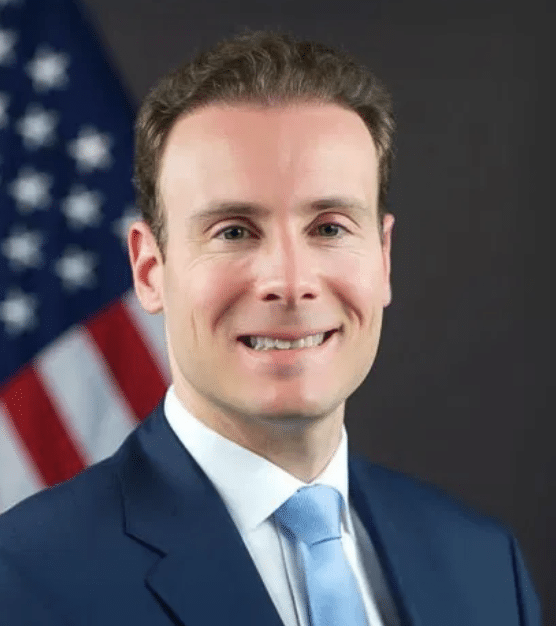
Selig said the Commission is also reviewing elements of the post-financial-crisis regulatory framework, including swap data reporting requirements, to determine whether existing obligations remain necessary. “There was a lot that was really appropriate and has worked very well,” he said, pointing to central clearing, swap data reporting and oversight of over-the-counter derivatives. However, he argued that some requirements may no longer be justified, calling for a “right-sized approach” and the “minimum effective dose of regulation.”
The expansion of trading hours was a key focus of the discussion, with Selig emphasizing that the CFTC is taking different approaches depending on the asset class. “It’s not going to be a one-size-fits-all approach for 24/7 at the CFTC,” he said.
The Commission has allowed continuous trading in certain products, including cryptocurrencies and some prediction markets, while agricultural and energy derivatives have raised different concerns. Selig said commercial market participants have expressed reservations about extending trading hours, and the Commission has been working with exchanges and industry participants to address those issues.
Selig referenced CME’s decision to withdraw a proposed offering involving extended trading hours for energy products, saying the exchange had been cooperative in addressing industry concerns. He also pointed to negative oil prices during the COVID-19 pandemic as an example of the risks associated with extreme market conditions. “If this is coming, I think firms need to start preparing for that,” Selig said, citing operational staffing, systems and additional coverage outside traditional trading hours.
He acknowledged that the Commission may need to consider additional rules or work with Congress before allowing certain products to trade continuously. “We can only hold up these products for so long,” he said.
Tokenized Collateral Could Improve Margin Efficiency
Tokenization was another focus, particularly its potential to facilitate collateral transfers outside traditional banking hours. Selig said tokenized assets could help address the need for additional collateral when trading continues over weekends. “When you’re offering 24/7 markets now, or weekend trading, typically what happens is you’re over-collateralizing,” he said. “With stablecoins and other types of tokenized assets, you can freely move them just like you would during regular trading hours, and I think that is a huge advantage.”
The CFTC is coordinating with the Securities and Exchange Commission (SEC) on the use of tokenized securities as collateral in regulated markets. Selig also highlighted the potential for smart contracts to support programmable collateral movements. The Commission is working with software developers to understand how blockchain-based systems operate and determine whether regulatory relief may be required, he said. “I view this as just a really exciting opportunity to bring more liquidity into our markets and to make capital much more efficient,” he said.
The development of perpetual futures and renewed interest in security futures are also prompting closer coordination between the CFTC and SEC. Selig said existing legislation provides flexibility to accommodate perpetual contracts, which do not have a fixed expiration date. “I don’t think there’s any requirement in the statute to have an expiration date or anything like that,” he said.
Perpetual contracts could be structured as futures or swaps under existing legislation, he explained, although additional regulatory requirements might be appropriate for certain products. Security futures are another area receiving attention, with Selig pointing to activity involving CME and firms seeking to list security futures perpetual products. “We’re of course more harmonized as agencies, I think, than ever before,” he said, referring to cooperation with the SEC.
The agencies are working together on product classification, cross-margining and jurisdictional questions involving new derivatives contracts and prediction markets. Selig described the overlap between securities and derivatives regulation as resembling a Venn diagram, where certain products may fall within either framework depending on their structure.
Crypto Proposals Could Expand Federal Oversight
The CFTC is pursuing a federal registration pathway for eligible cryptocurrency exchanges under its existing statutory authority, following the lack of progress on comprehensive crypto market structure legislation. The proposed framework would allow firms to register as designated contract markets (DCMs) or under a proposed crypto asset market (CAM) category.
Selig said firms already registered as DCMs, futures commission merchants (FCMs) or derivatives clearing organizations (DCOs) could leverage their existing regulatory infrastructure. The proposed framework would permit vertical integration but require separate registrations for brokerage, trading and clearing activities.
However, Selig acknowledged that voluntary federal registration would leave gaps in oversight for exchanges continuing to operate under state money transmitter frameworks. “These regimes really are designed for payment businesses. They’re not designed for markets, for exchanges,” he said. He added that comprehensive legislation would provide a more durable framework for crypto market oversight.
Artificial intelligence is raising additional questions for derivatives market surveillance as trading firms and retail participants adopt increasingly sophisticated technologies. Bentsen asked whether existing safeguards, including circuit breakers, would remain adequate if autonomous AI systems contributed to market disruptions. Selig said the CFTC is monitoring the use of AI in trading and considering whether existing requirements need to be modernized. “We want to come up with a framework that allows for innovation, allows people the freedom to utilize AI and to come up with their own innovative trading strategies,” he said.
The Commission is also developing AI-based tools for enforcement and surveillance, while continuing to rely on exchanges and the National Futures Association for market oversight.
Selig also raised concerns about the impact of bank capital requirements on derivatives market access. He argued that capital rules should reflect actual risk rather than impose excessive costs on intermediaries and commercial hedgers.
The CFTC is engaging with other financial regulators on Basel III capital requirements and their implications for FCMs and commercial hedgers. Selig argued that capital requirements have discouraged some FCMs from serving smaller commercial hedgers, including farmers, ranchers and producers. “I think that’s really been detrimental to our markets because so many commercial firms that are going to use these markets for risk management purposes are now not able to access the markets or have to put up excess money,” he said.
Selig pointed to tokenization, blockchain technology, stablecoins, round-the-clock trading and artificial intelligence as developments reshaping financial markets. “We’re in a completely different world than we were 20 years ago. Our markets have totally changed,” he said.
The image for this article was generated using AI.