Industry leaders call for backing for Our BBC Our Music campaign: “We cannot solely provide goodwill in order to secure the beauty of music”

UK Music has launched the ‘Our BBC: Our Music’ campaign, which works to protect the BBC’s government funding and enable it to continue creating opportunities for emerging talent across the country.
Speaking in Parliament last night (Monday October 19), MPs, industry leaders and artists opened up about the importance of securing the funding, and argued that in “these very challenging times” we “simply can’t lose our creative ambition”.
- READ MORE: UK grassroots venues suffering from “the complete collapse of touring” – here’s how you can help
The campaign comes in response to the two-year Royal Charter Review laid out by the UK Government, which analyses the BBC’s funding model ahead of a new charter being granted in 2027. However, due to ongoing financial pressures – which have so far resulted in a 10 per cent cut in its workforce – key figures from the music industry have come forward to highlight the impact the BBC has on the wider music ecosystem, and push for ministers to invest proportionately.
At the event hosted by the All Party Parliamentary Group on Music in Westminster, Director of Music at the BBC Lorna Clarke, highlighted how the British music sector contributes £8billion into the UK’s economy, and is responsible for 220,000 jobs – and shared that the BBC’s efforts alone account for a good portion of that.
“Our activity across the UK generates income, and contributes millions to the created economy,” she explained, addressing an audience that included Elbow’s Guy Garvey, and BBC radio presenters Nick Grimshaw, Greg James and Jo Whiley. “For example, when Radio 1 bring their [Big Weekend] event to town, it matters. Dundee and Scotland was significant, and when independently measured, stimulated growth of £3.7million.”
Incredible performances in Parliament for the star-studded launch of our ‘Our BBC: Our Music’ campaign. Thank you to @The_Anchoress, @imogen_theknife and @ShekuKM for their phenomenal sets. pic.twitter.com/cD6XGHQzpz
— UK Music (@UK_Music) October 19, 2026
Clarke went on to share that Radio 2’s “number of commissions won and produced by independent companies has doubled from 22 per cent to 42 per cent in less than 10 years” and creates wider recognition for talent outside of London. She also highlighted the efforts of the station to highlight emerging talent, and said that the “number of different pieces of music played across BBC music in seven days. is what our competitors play in 365 days”.
She continued: “We simply can’t lose our creative ambition… Radio 1 still reaches 8million people every week. But with scale comes responsibility. We take our public purpose to offer value to everyone incredibly seriously. So as audiences change the way they choose to listen or watch music, we’ve adapted and evolved too.”
Ahead of performances from Newcastle-born alternative pop star Imogen And The Knife and cellist Sheku Kanneh-Mason, UK Music head Tom Kiehl also spoke about the campaign and the importance of protecting the BBC’s funding.
“This campaign has been launched as an important time for the BBC’s future [and] my message today is a simple one: please do not forget that BBC is vital to music, and that music is vital to BBC,” he explained.
“It’s to save our industry. Without the BBC, we wouldn’t see a fraction of what we currently get to listen to,” he added, also sharing that PRS data shows that there were over 140,000 pieces of music played across all BBC radio stations in 2025 – “77 per cent of which were not played on other commercial radio”.
Some inspirational speeches in Parliament at the star-studded launch of our ‘Our BBC: Our Music’ campaign. Huge thanks to Guy Garvey, UK Music CEO Tom Kiehl, Culture Minister Ian Murray & BBC Director of Music Lorna Clarke for outlining the need to protect music at the BBC. pic.twitter.com/5OctTt0ED3
— UK Music (@UK_Music) October 19, 2026
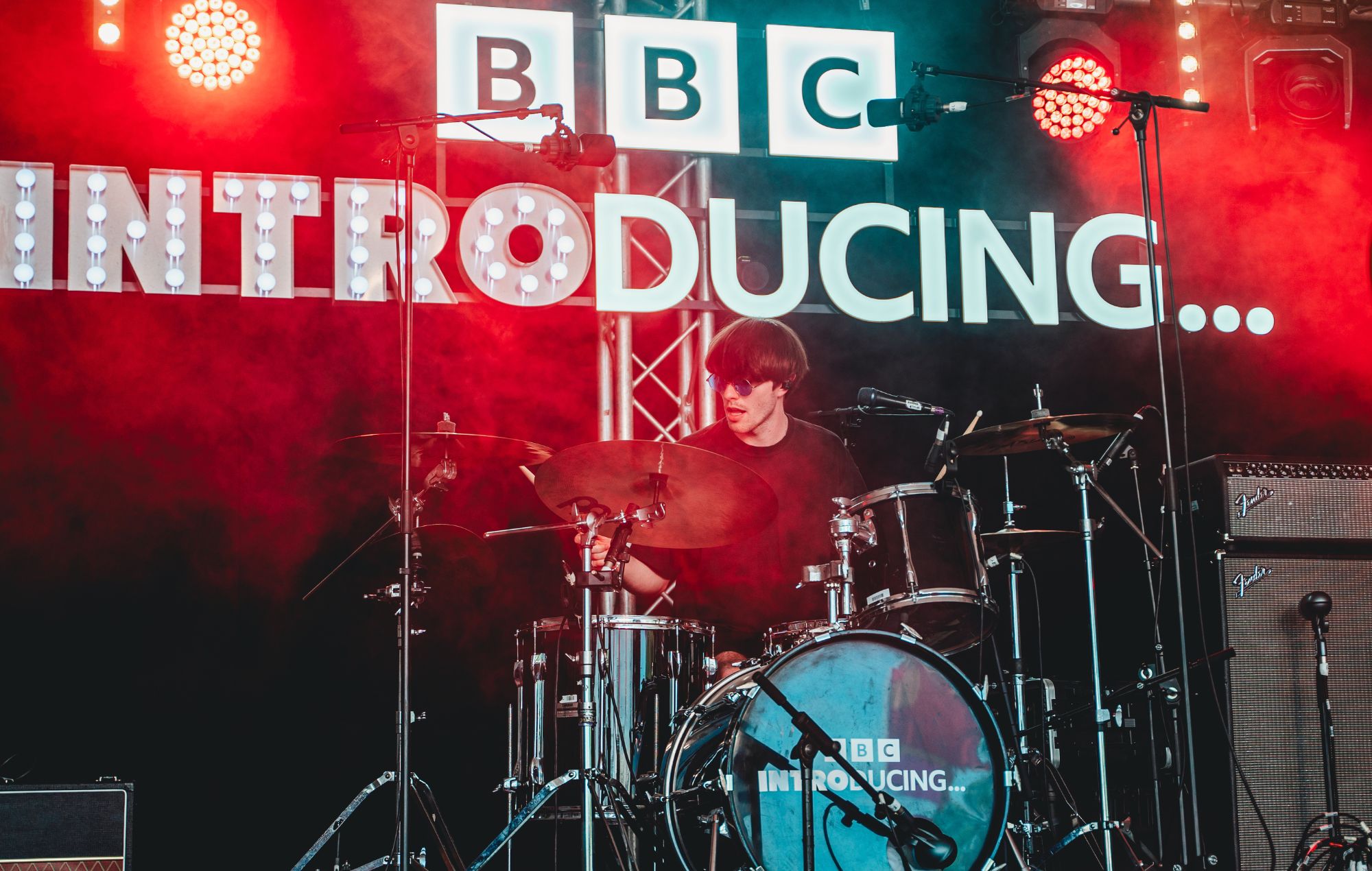
Kiehl explained how that BBC Introducing “creates an environment where experimentation is encouraged, underserved genres are supported, and emergent talent can find and drive their audiences.”
“Next year, we’ll see a crucial decision on the BBC’s next Royal Charter being made. I want to urge everyone here to avoid complacency,” Kiehl went on. “We may have a guitar-playing Prime Minister, who displays records in his office and gives off Radio 6 dad vibes, but in this time of economic uncertainty, we cannot solely provide goodwill in order to secure the beauty of music.
Kiehl added: “Our BBC, Our Music is designed to make sure the government really understands why the sustainable funding of the BBC is important, not just to our economy and to the 220,000 people who make up the UK music industry’s workforce, but also to every single music fan.”

Other performances on the night came from British singer-songwriter The Anchoress, while Guy Garvey also spoke about the impact that backing from the BBC had on the Mercury Prize-winning, arena-filling Elbow, in particular John Peel. Garvey himself now hosts his own show on 6 Music.
“I remember driving into Manchester and our song ‘Powder Blue’ came on the stereo, and I realised it wasn’t the cassette… it was John Peel was playing our song on the radio for the first time,” he recalled, looking back at the time when they changed their band name from Soft to Elbow in 1998.
“It changed our lives. Things started moving for us, and we got our first record deal with Island because of the BBC,” he added, going on to share that while they later got dropped from the label, they got signed again after BBC Radio one played the “full seven-minute prog epic” ‘Newborn’ every day for a week.
- READ MORE: Elbow tell us about Manchester ‘Asleep In The Back’ 25th anniversary gigs and new music plans
“We were nominated for the Mercury Prize award, which was broadcast on the BBC, and then we found our audience. It’s grown every time we’ve done a session for Radio 1, 2 or 6″ Garvey added. “Alongside my career with the band, I’ve had a Sunday broadcast on BBC Radio 6 music since 2007… and it is one of the greatest honours of life to work with BBC.
“If that play from John Peel was the only thing that had ever happened to my band, I’d be telling grandchildren about it. But as it stands, I owe everything to the BBC, as we all do.”
Another speaker was Minister of State in the Department for Digital, Culture, Media and Sport, Ian Murray MP, who shared how the efforts laid out in Our BBC, Our Music should align with the efforts made by the government to crack down on secondary ticketing, break down barriers for artists trying to tour, and push for a £1 ticket levy so that venues arena size and above can help grassroots venues stay open.
PPL data shows that in 2025 on average, the BBC’s UK-network music-led radio stations each played over 6x more unique tracks than the average commercial radio music-led station, emphasising the unique role the BBC plays in championing UK music. pic.twitter.com/kox0y3QVng
— UK Music (@UK_Music) October 16, 2026
“Tonight is a bit more than celebrating an institution. It’s about backing the creators who write the soundtrack to a national life, who have written the soundtrack to the world,” he said. “Music is an economic engine, but its true value is even deeper; it binds our communities together. It creates regional pride.”
He continued: “We know that both talent is everywhere, but opportunity is not. A creative career must never become [only for] the privileged or the best connected. And in an era of rapid technological change, we must ensure creative, fairly rewarded, grassroots venues are protected, and talent pipelines are made open.
“So our objective is clear: to establish a fair, sustainable funding model. To choose the BBC. To continue driving music growth across every region of the UK. To give a permanent charter to protect its future. We don’t just want the BBC to survive. We want it to thrive.”
Murray added: “My plea to everyone is help us tell that story. We can’t make the case solely as a government. We can’t make the case solely as a BBC. We can’t make the case solely as the UK music industry… but if we do it together, we can make that positive case to the country. The choices we make today in Parliament will determine whether the young songwriter in their bedroom tonight gets above a thriving career tomorrow.”
Concerns about cuts in BBC funding follow the BBC Introducing programme undergoing significant changes in 2023, including merging local Introducing programmes and cutting shows back from 32 to 20 – leaving numerous presenters and production staff out of work. Nile Rodgers and Elton John were among the names who spoke out against the cuts, and broadcaster Sophie Little also criticised the “unbelievably unfair” BBC regional radio cuts during her final show.
Earlier this summer, it was also confirmed that the BBC Introducing Stage at Reading & Leeds Festival would be axed after 18 years. It launched in 2008 and famously hosted young, emerging artists before they broke into the industry, including the likes of Ed Sheeran, The 1975, Florence + The Machine, Charli XCX, Dave and Raye.
The post Industry leaders call for backing for Our BBC Our Music campaign: “We cannot solely provide goodwill in order to secure the beauty of music” appeared first on NME.