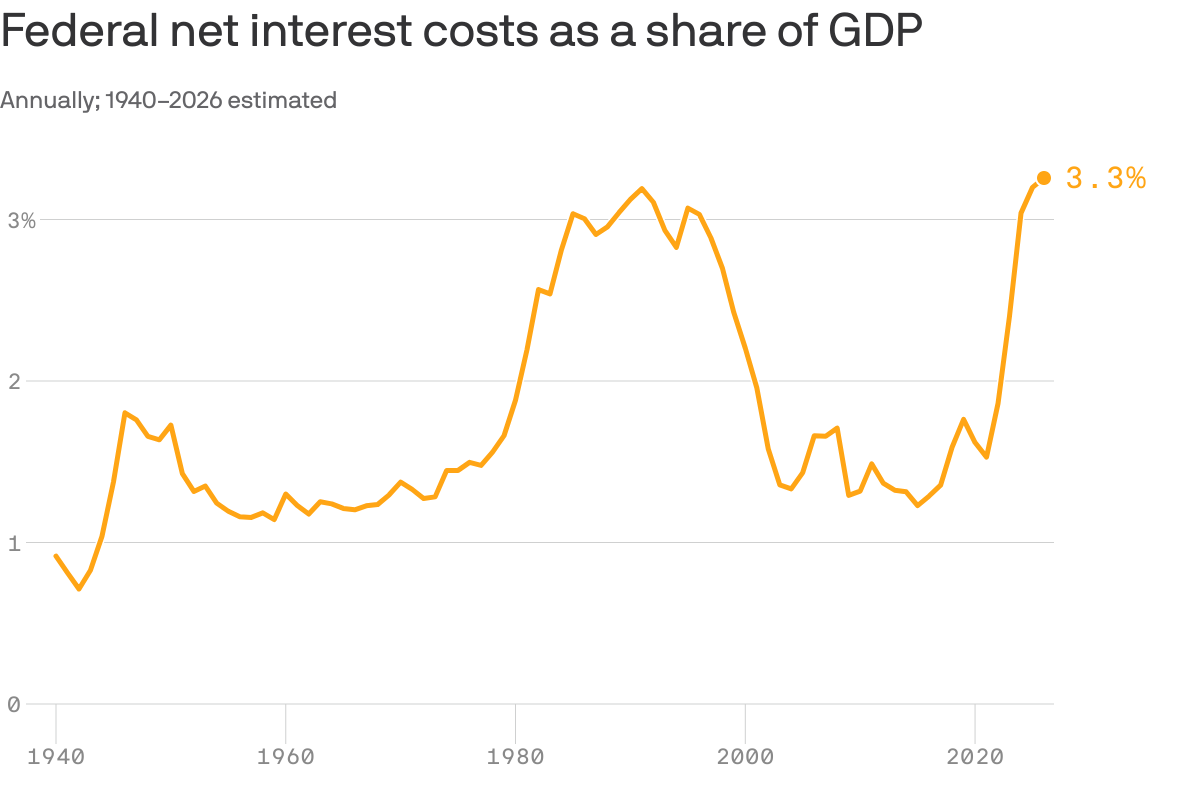
The budget deficit swells, while the cost of debt rises
The U.S. budget deficit is ballooning, reaching $2 trillion this fiscal year, according to the latest figures.
Why it matters: That’s the largest deficit since 2021, when the U.S. was climbing out of the pandemic recession.
- The deficit is being driven in part by the cost of servicing the nation’s enormous debt at a time when interest rates are rising due, in part, to the inflationary impact of the Iran war.
By the numbers: The federal government paid out $1.052 trillion in net interest on its outstanding debt — all those Treasury notes and bonds we keep writing about — for the 2026 fiscal year, which ended Sept. 30, according to the Treasury data.
- That’s more than what was spent on defense, and was the country’s third-biggest outlay after Social Security ($1.67 trillion) and Medicare ($1.07 trillion).
Stunning stat: Federal net interest costs in 2026 are estimated at 3.3% of GDP, which would be a record high, according to an estimate from the Committee for a Responsible Federal Budget.
Between the lines: This is the price tag for years of borrowing at much higher interest rates — a sort of new normal since inflation started rising in 2021.
- Rising interest costs add to the deficit, driving still more borrowing and putting additional pressure on the federal budget.
The intrigue: The last time interest costs approached these levels was when President George H.W. Bush was in office.
- At the time, the administration negotiated a bipartisan deficit reduction package that raised taxes, breaking President Bush’s infamous “Read my lips, no new taxes” pledge and arguably led to him losing re-election.
- Still, in the 1990s, the Clinton administration and Congress worked to balance the budget through tax increases and spending cuts.
What to watch: There’s little appetite for that kind of work from either party, but the so-called bond vigilantes might still press for it.