St Barts: The hidden City restaurant looking beyond the British larder
The Toast the City Awards are mere days away, with the great and good of the Square Mile preparing to descend upon Steel Yard for the party of the year. One of the Finalists is the stunning Barts North Wing – but did you know there is also an incredible place to grab lunch after your visit? Carys Sharkey dives into Restaurant St Barts.
Walk up from St Paul’s, past the shiny ruins of Bank of America and up to the Smithfield circus, where lawyers and financiers spill out of pubs in the shadow of the market. Head past the drinkers on Cloth Fair and down the narrow Bartholomew’s Passage and back round into Bartholomew Close. Then enter through the wide chocolate-brown door underneath a residential block.
Setting foot inside Restaurant St Barts is one of the most discombobulating experiences I’ve had arriving for dinner. There are quicker ways to get there. I missed a turn and had to loop around, but the added chaos of high-summer Thirsty Thursday in the City made the arrival in this intensely serene restaurant all the more remarkable.
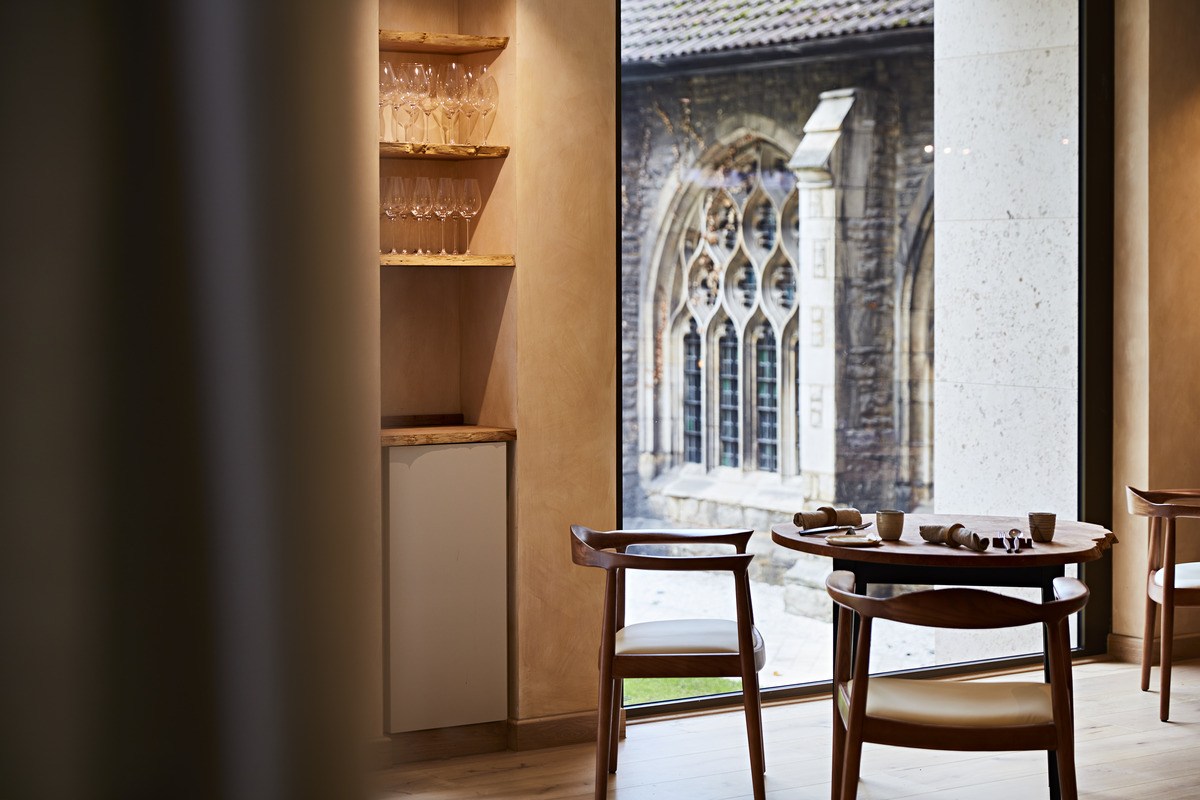
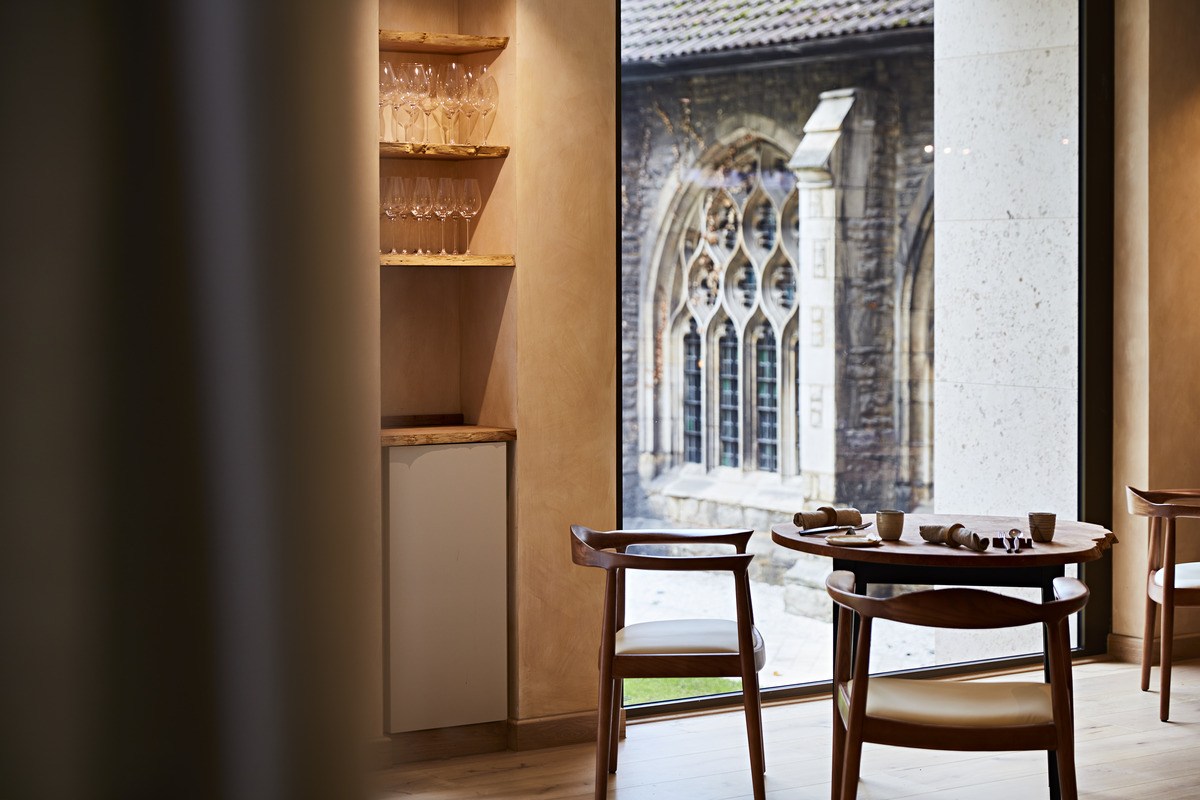
The space really is something. From the entrance it opens up in a Scandi-style sweep of wood, linens and light. Chairs in the bar area are burnished with sheepskins and the walls are brutal with concrete lit by mounted candles. But as the restaurant unfurls, past the open kitchen with its driftwood ephemera of drying meats, fruits and stacks of fermenting jars, and into the main dining room, the whole space opens onto the medieval church of St Bartholomew the Great, which dates back to 1123. Nowhere mixes past and present quite like the City.
For executive chef and co-founder Johnnie Crowe, the location is a big part of the restaurant’s draw.
“It really feels like an escape from the city,” he tells me.
“I think experience-led restaurants like ours need to have an element of intrigue and excitement about every aspect of the experience, and the location we have definitely does that.”
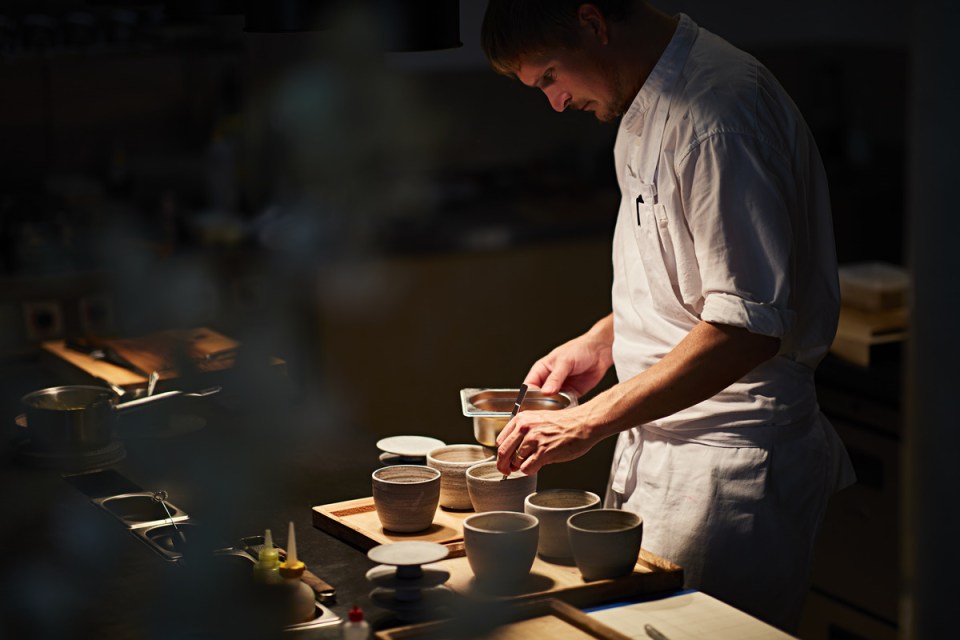
St Barts is a Michelin-starred restaurant that only uses British ingredients in its tasting menus. Crowe, who co-founded St Barts in 2022 with Luke Wasserman and Toby Neill, has built a restaurant around his producers. Before Barts, the trio owned Nest in Shoreditch, which this summer was transformed into the much-lauded and much-Instagrammed British bistro Tavern. But St Barts is where Crowe’s dogged devotion to homegrown suppliers pushes him to put out a seriously unique menu.
“Our suppliers are the main focus of the restaurant. We’ve spent years building up our relationships and researching new and different people who grow, fish and farm. It allows us to do what we do and be 100 per cent British to the core,” he says.
As with all good meals, dinner at St Barts starts with snacks and cocktails. A martini briny with sea fennel rather than olives is paired with beautifully fatty drapes of house-cured coppa (‘gabagool’ in The Sopranos). Next comes a bomb cheese and onion tart, and then a quail liver parfait on a sort of Hobnob that would also make an amazing pudding. As you move into the church-framed dining room, the table is made up to look like a 17th-century still life of summer’s bounty. A nest of quail eggs, sugar snap peas, a block of pork fat, ears of corn, crab shells, a tangle of red currants.
It’s here in the dining room that the relationship with British producers – and the way it slips and slides between the familiar and unexpected – really shines.
The first half of the tasting menu features a dish of peas. The peas, grassy, bittersweet and yet perfectly toothsome, are as good as any in the world. It makes sense for Crowe to centre a dish on them. Glistening in a lovage oil – the most medieval of hardy herbs – the peas top a lardo chawanmushi. Peas, pork and plant: this dish feels so rooted in the British larder (that said, it paired amazingly with a Nikolaihof Grüner Veltliner from Austria that tasted like an extinguished sparkler – wine and coffee are, thankfully, exceptions to the rule).
Later, quail with a bruising mole (a deeply aromatic Mexican sauce) is served on a plate scattered with little picky bits. It’s a fun, slightly kitschy, squirrel plate of exceptional ingredients, including a heart, a big blackberry and a nasturtium leaf. But the star – and one of the best things I’ve eaten all year – is a side of corn. Crowe makes butter from dried corn and then folds things through fresh British corn which has been barbecued on the cob.
But then a lobster dish totally upended my expectations of British produce. Served in two parts, it starts with a rich nest of Singapore-leaning noodles, and ends with the tail served with quinoa. The real surprise in both was the sansho, a highly floral, zesty Japanese pepper, which makes the sweet richness of lobster zip. Crowe told me it’s grown in Lewes.
“We source it from Namayasai Farm. Ikuyo, who runs the farm, is incredible. We depend on her for so many different products and absolutely love working with her.”
The UK has more niche suppliers and green-fingered enthusiasts than we give credit for. So perhaps the biggest challenge for a restaurant using solely British ingredients is moving with the ebb and flow of the seasons. As we move through autumn and into winter, corn and peas fade to memory. Crowe plays with fermentation and pickling to stretch the seasons. Meat trim is turned to garum, cherry blossoms and elderflowers are suspended in jars, and “Pink Flamingo peas” from Norfolk are transformed into miso.
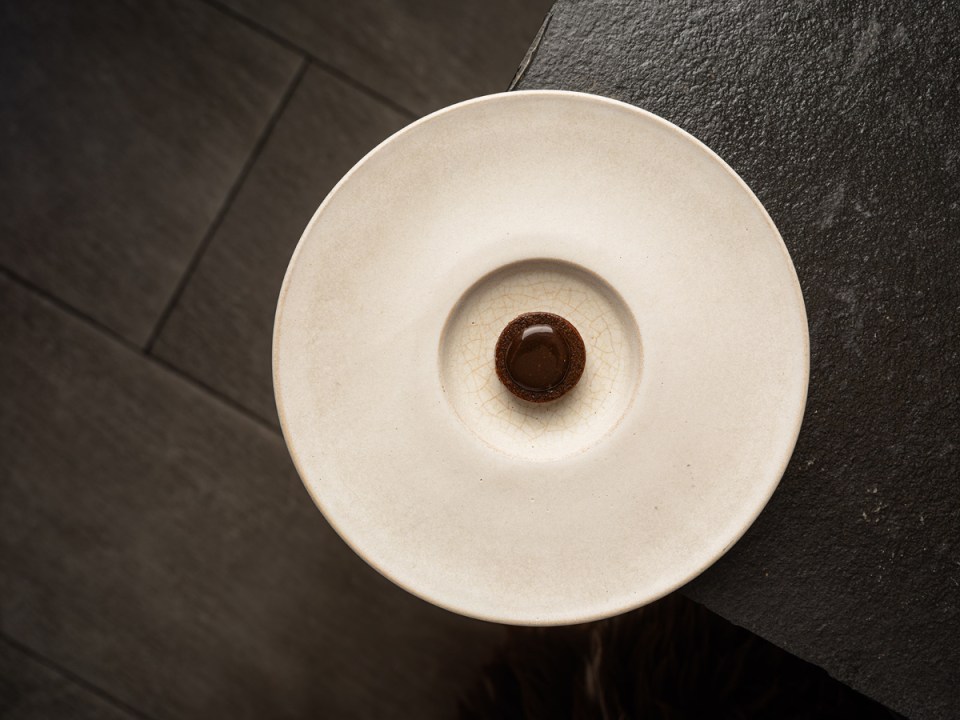
So it’s perhaps St Barts’ pudding and signature dish that distils Crowe’s cooking ethos so fully. Barley is inoculated with koji and left to ferment and blacken for a couple of months, producing a chocolatey product that’s then blitzed into a roasty, bitter-rich ganache. The barley is also used to make an ice cream, a caramel and a tuile. Out of a single grain Crowe squeezes out one of the tastiest desserts in London. And when paired with the Domaine de Rancy, a bread and butter vin doux naturel, it’s practically unbeatable.
Leaving the gentle hold of St Barts and returning to the pint-smashed City is an adjustment. I hope to return soon to see what Crowe can make of the colder, shorter days, and to discover more than I thought possible when it comes to homegrown.