VOL REPORT: Post-Midterms Volatility in Focus
The upcoming midterm elections in the US are being closely watched for potentially consequential political implications, but their impact on financial markets is shaping up as muted.
That’s because the broad vote expectation – Democrats winning the House of Representatives and possibly the Senate, with a Republican White House – is for a divided government, which would make expansive new laws, sweeping tax overhauls, or major legislative shifts unlikely for 2027 and 2028.
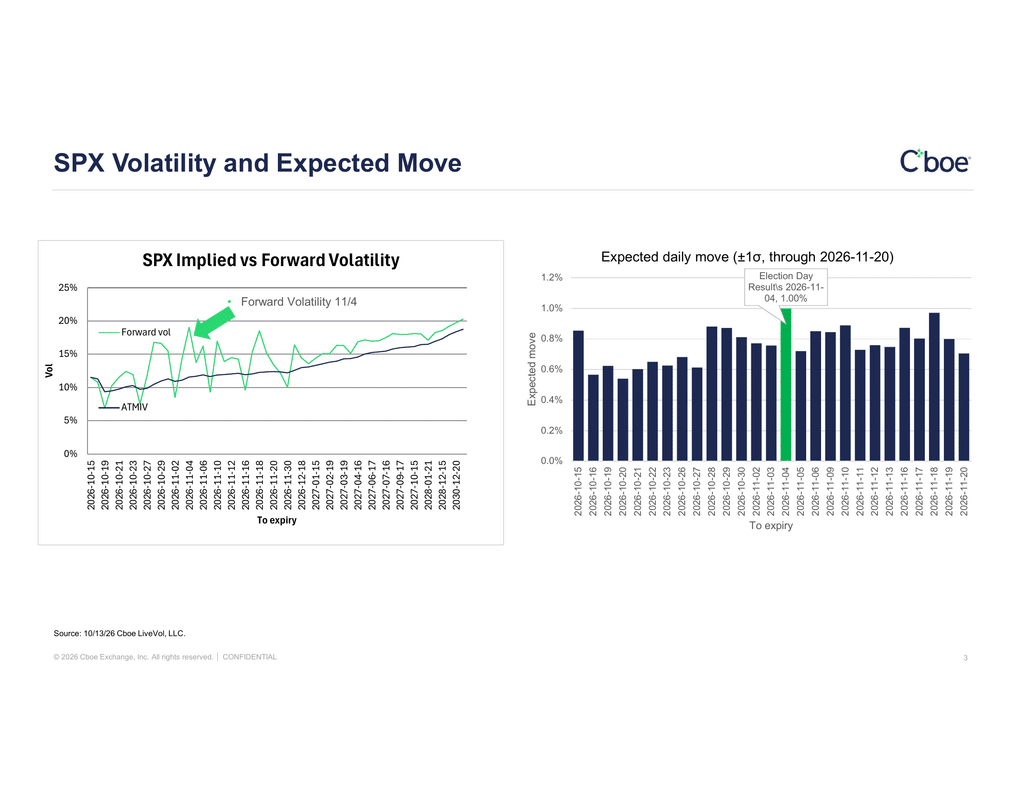
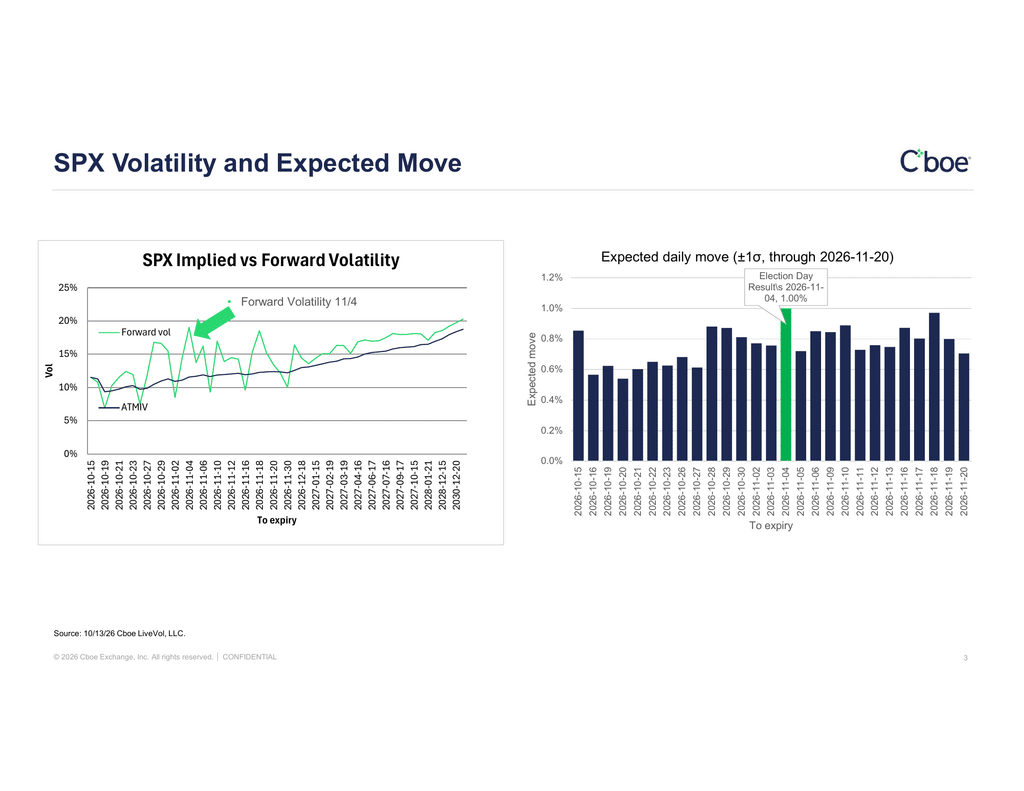
Forward volatility is expected to increase slightly more than 1% on Wednesday, November 4, the day after Election Day, according to Cboe Global Markets data, compared with the historical average closer to 4%. The next-day increase after presidential elections averages about 7%.
“The ultimate conclusion is that we’re going to see gridlock,” said Ed Tom, Senior Director of Derivatives Market Intelligence at Cboe. “That’s why markets aren’t pricing in much of a change for the midterms.”
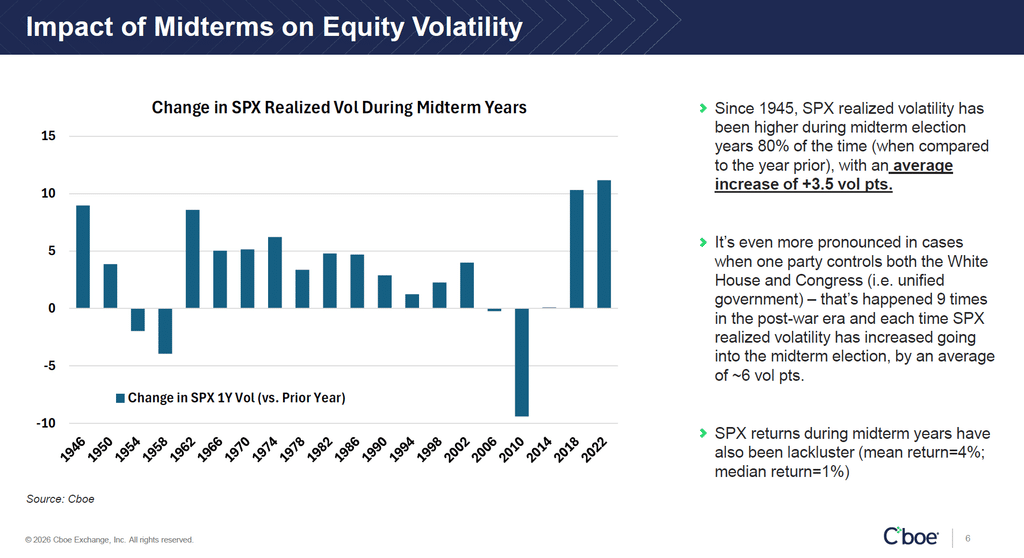
State Street Investment Management previewed market reaction to the midterms in a recent research note. “While voters loathe gridlock, capital markets often prefer it,” the note stated. “Fewer legislative surprises can allow fundamentals, rather than politics, to play a larger role in driving returns.”
Equity investors have climbed a “wall of worry” in 2026, staying resilient through tariffs, Fed independence, war with Iran, oil prices, inflation, rising bond yields, and AI skepticism. Looking ahead to 2027, “the year after the election has historically delivered strong returns,” State Street noted. “The S&P 500 has not declined in the 12 months following a midterm election since 1930.”
The Cboe Volatility Index has illustrated the market’s resilience in 2026. The VIX, a leading barometer of investor sentiment and market volatility, increased in March and April to briefly top 30 but has otherwise mostly fluctuated between 15 and 20.
The VIX has increased this week amid renewed concern about the AI trade, retesting market resolve. But so far this year, “When faced with a 1.5 percent one-day market decline, VIX traders have been basically buying the dip — they buy upside calls and sell downside puts,” Tom said. That is the sign of a resilient market.”
(The VOL REPORT is a Traders Magazine – Cboe Global Markets content collaboration that covers volatility and its implications for market participants and operators.)