



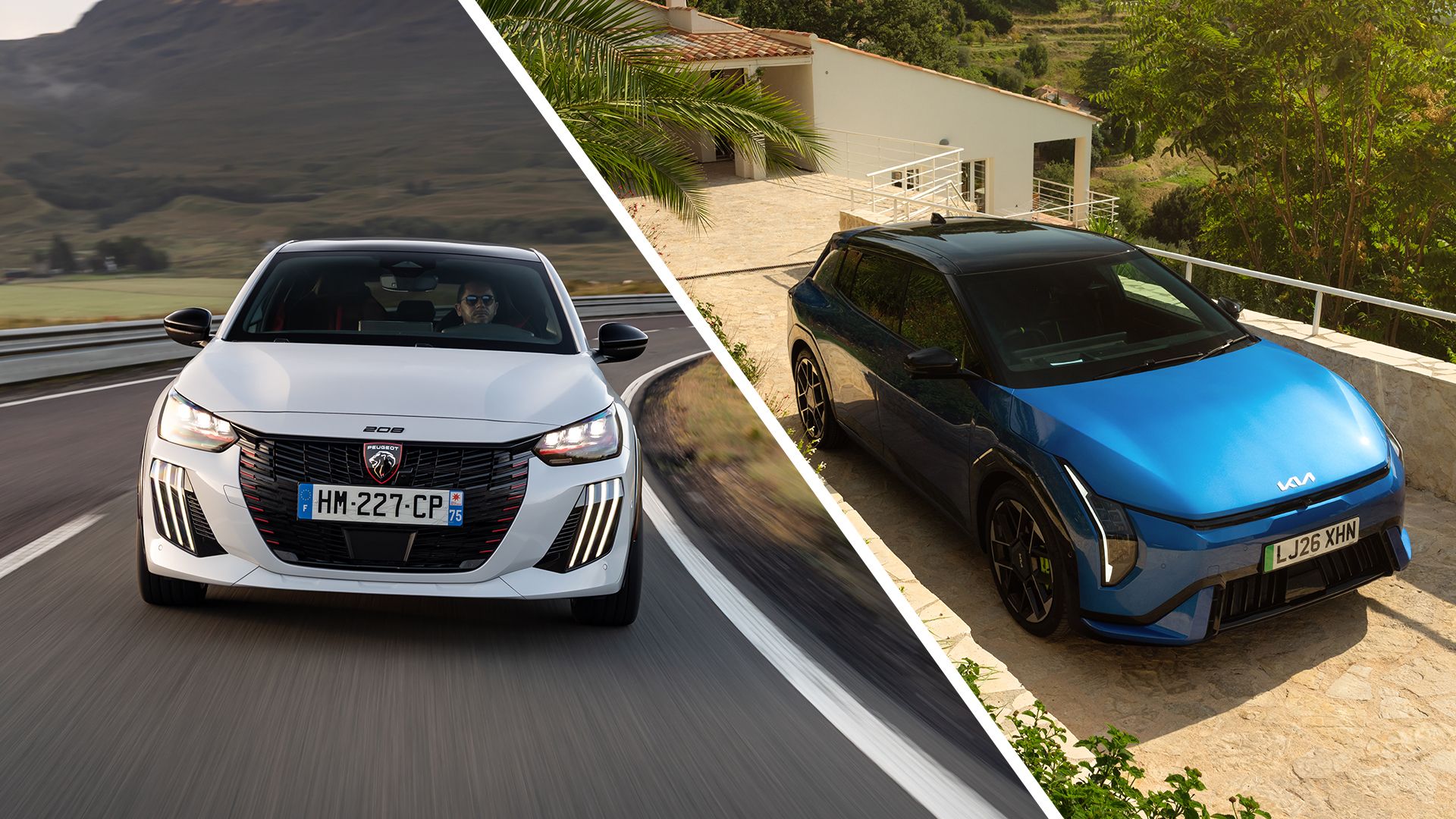
Return of the hot hatch heroes — I drove the Kia EV4 and Peugeot E-208 GTi
Only recently, the internet was ablaze with news that Volkswagen will be applying a proper GTI badge to both its ID.3 and electric Polo models, the former of which will be the most powerful car to wear the iconic insignia.
Granted, that’s not quite VW committing to a fully-electric Golf GTI, but it’s about as close as we are going to get for now.
Often considered the king of the hot hatches, a Golf GTI has long offered the blueprint for high-performance, everyday vehicles that will carry out mundane hatchback duties without complaint, but will happily transform into grin-inducing back-road destroyers when the mood takes.
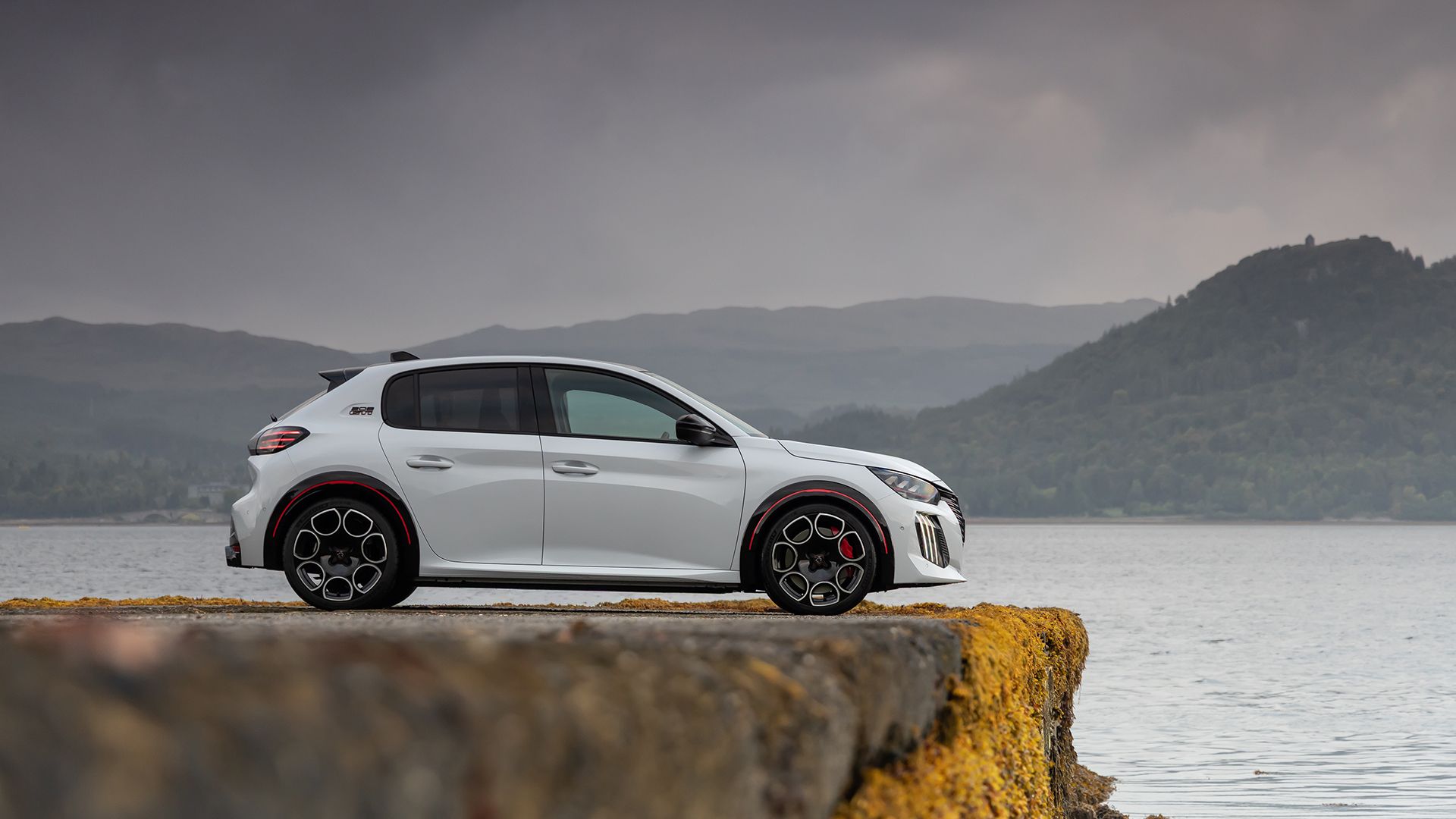
But the German marque isn’t the only one to enjoy hero status when it comes to small, feisty automobiles, as Peugeot also enjoys a long and illustrious history with a GTi badge of its own.
It’s fitting, then, that Peugeot should also unveil its own electrified hatchback with those unmistakable three letters stamped upon its rump.
The sub-£35,000 Peugeot E-208 GTi (around $46,300 / AU$66,000) is further proof that rapid, affordable small cars are very much back on the menu.
The French firecracker
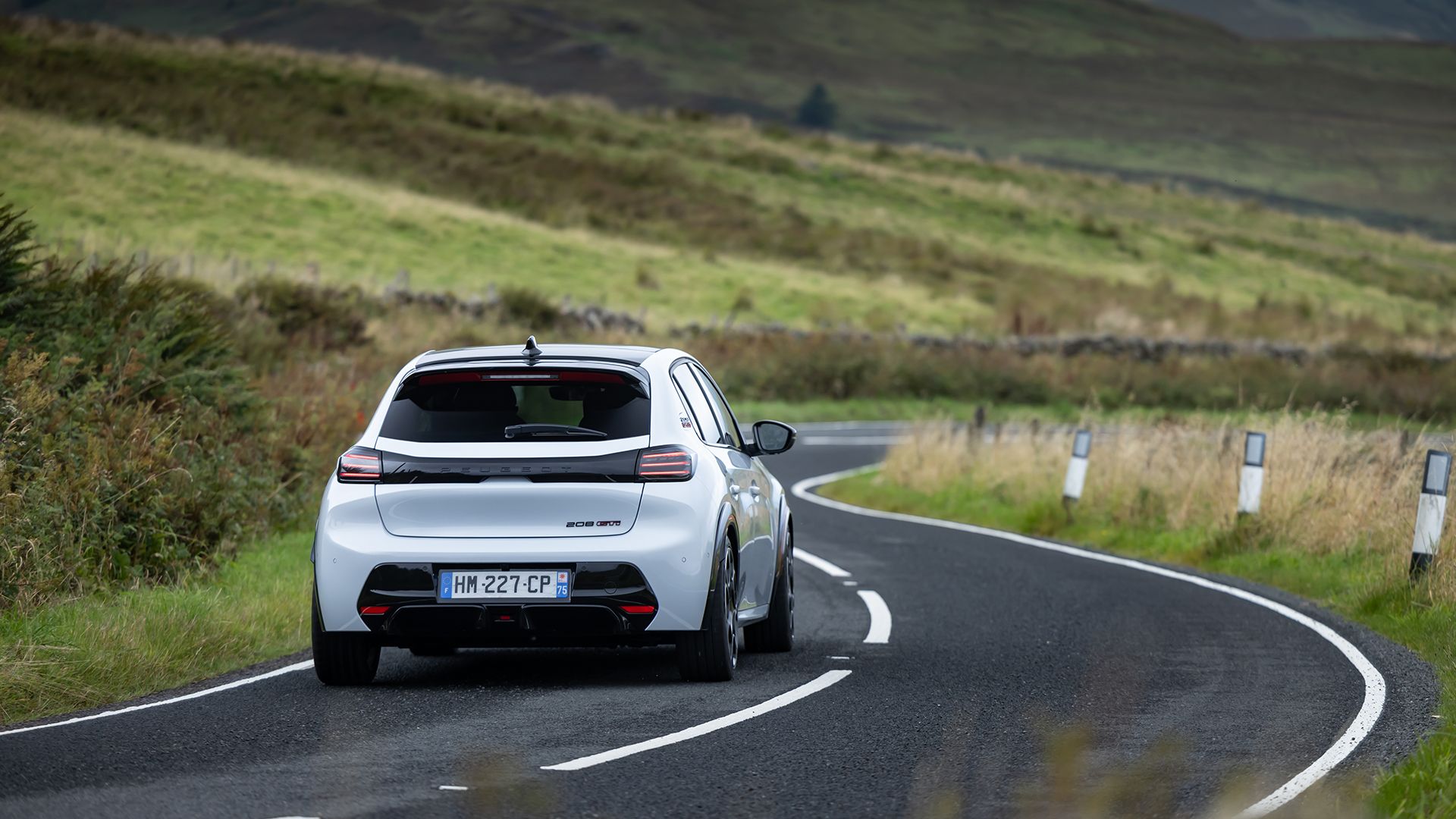
Unlike numerous EV startups, as well as many established automotive players, Peugeot has enjoyed a long and fruitful love affair with both motorsports and the souped-up road-going creations that have been spawned.
The latest E-208 GTi, despite lacking an internal combustion engine, can trace its roots back to the very first 604 GTi of the early 1980s, the OG 205 GTi and, of course, the respected 308 and 208 GTi models that spanned 2013 to the early 2020s.
This electrified hot hatch starts with the same basic 54kWh battery as the regular E-208, but Peugeot Sport (responsible for the French marque’s endurance racing program) has substantially reworked the powertrain, battery management and chassis around it.
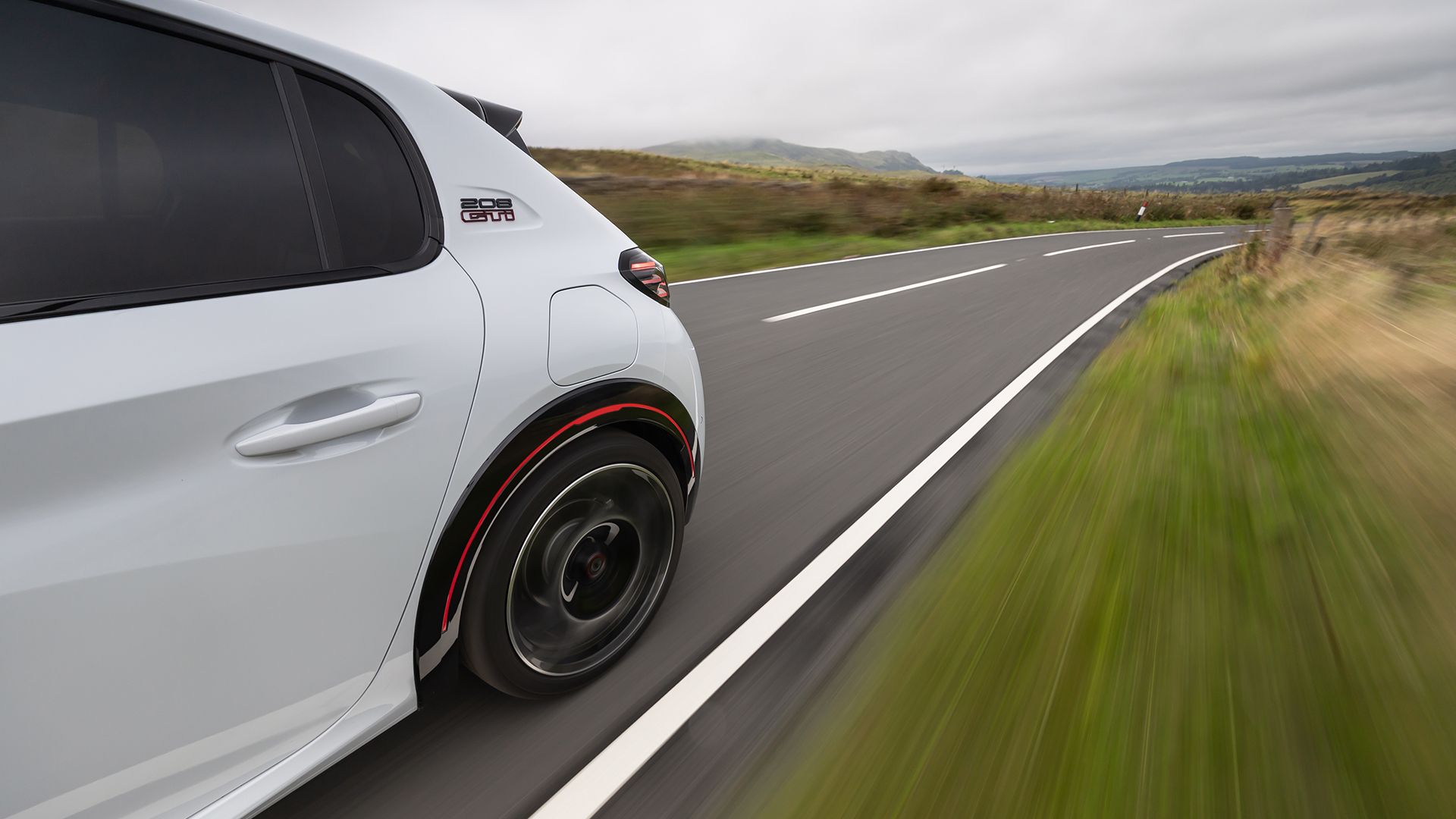
The culmination of all this is a vehicle that feels destined to tackle fun, twisty routes.
The electric motor, which is mounted to the front axle, produces 281PS (around 278bhp) and 345Nm of torque. The result is a 0-62mph time of 5.5 seconds and a top speed of 112mph.
Peugeot quotes 182bhp per ton, which, while not quite as featherweight as its GTi-badged forebears, is still a good deal lighter than the majority of bloated performance EVs on the market.
The culmination of all this is a vehicle that feels destined to tackle fun, twisty routes, with enough power to raise smiles but not so much that the driver feels like they are hanging on for dear life.
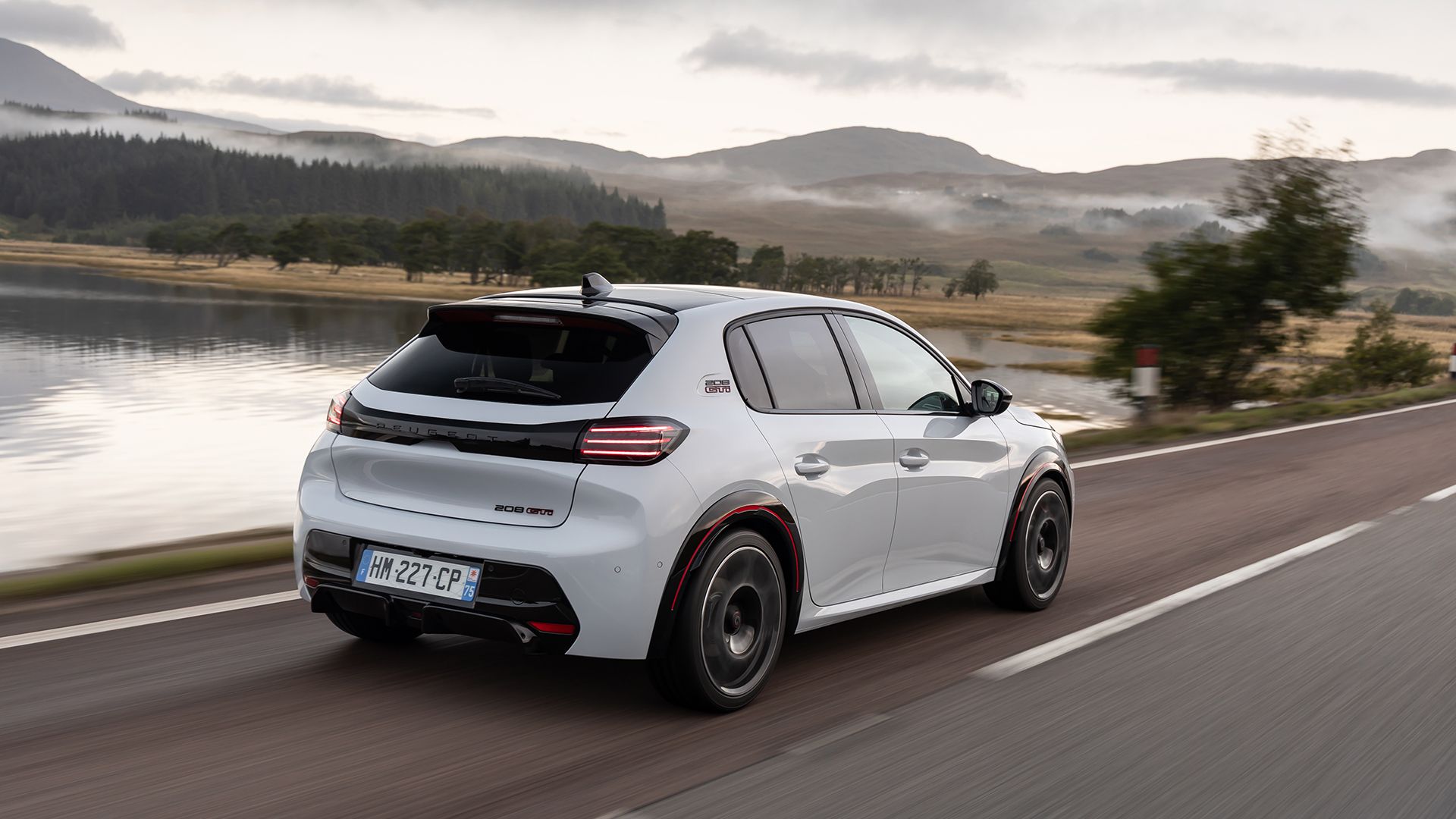
This is made possible by the fact that Peugeot Sport has comprehensively reworked the chassis, lowering the car by 30mm and widening the tracks by 56mm at the front and around 28mm at the rear.
The springs, dampers, steering and anti-roll bars have all been recalibrated, while a mechanical limited-slip differential is integrated into the gear reducer to corral the machine around corners.
Depress the accelerator and the E-208 GTi scampers off the line with puppy-like enthusiasm.
It isn’t Tesla Ludicrous levels of neck-snapping acceleration, but the whiff of torque steer and minor loss of traction as the front wheels spin up immediately cast minds back to the halcyon days of those legendary Renault RS, GTi and SRi badges.
To further aid driver involvement, Peugeot Sport didn’t want to muddy the performance waters with vague regenerative braking. So, when Sport Mode is selected, the E-208 GTi relies solely on its hydraulic braking system, with 355mm front discs and fixed four-piston calipers.
Up in the rain-soaked hills of Scotland, the E-208 GTi came alive, tucking into corners and propelling out of them like a go-kart. Hours and hours of fun.
The brakes might not be endowed with phenomenal feel and feedback, but they inspire tons of confidence, while the limited-slip differential and gently guiding traction control keep lead-footed drivers largely out of trouble.
There’s no fake gearbox to contend with, but a subtle synthesized engine note acts as a soundtrack in Sport Mode. It’s not as booming or in-your-face as Kia’s (more on that later), but does a good job of keeping EV motion sickness at bay.
Everyday thrills
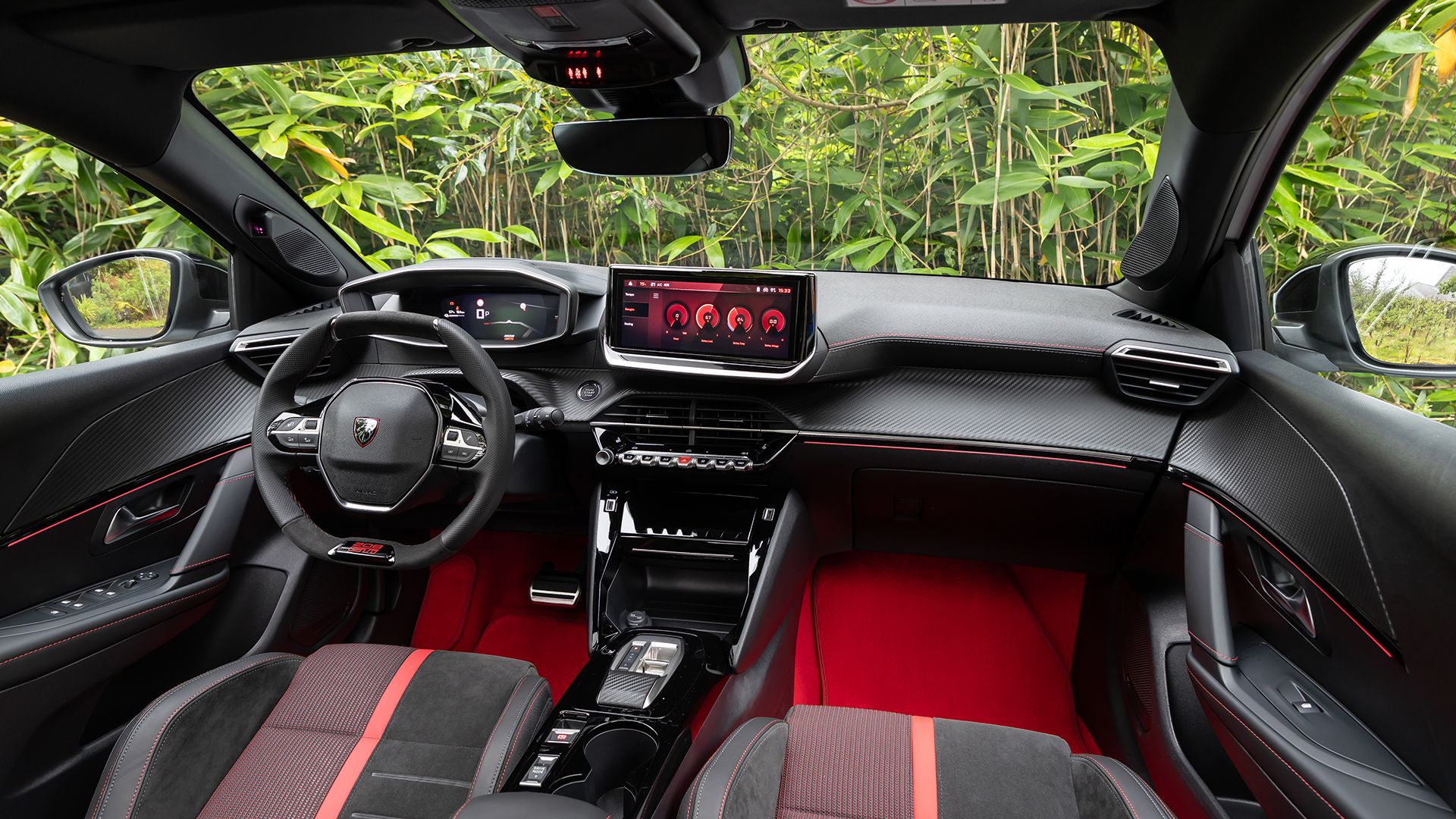
Despite the sports seats and gloriously retro GTi badging throughout the cabin of the warmed-up E-208, this remains a car that can be used every day. There’s room in the back for two adults, a decent-sized trunk and all the infotainment modern conveniences you could want.
Alas, driving like your pants are on fire will seriously eat into the 233-mile WLTP range, with enthusiastic journalists on this particular test drive returning from the roughly 90-mile Scottish route with a mere 5% battery remaining. That’s shocking.
But Peugeot says you won’t have to wait too long to charge it, with a 20-80% session taking less than 30 minutes from a 100kW outlet.
If all that sounds like too much of a compromise for some red-hot electric fun, Kia has a slightly more “sensible” option.
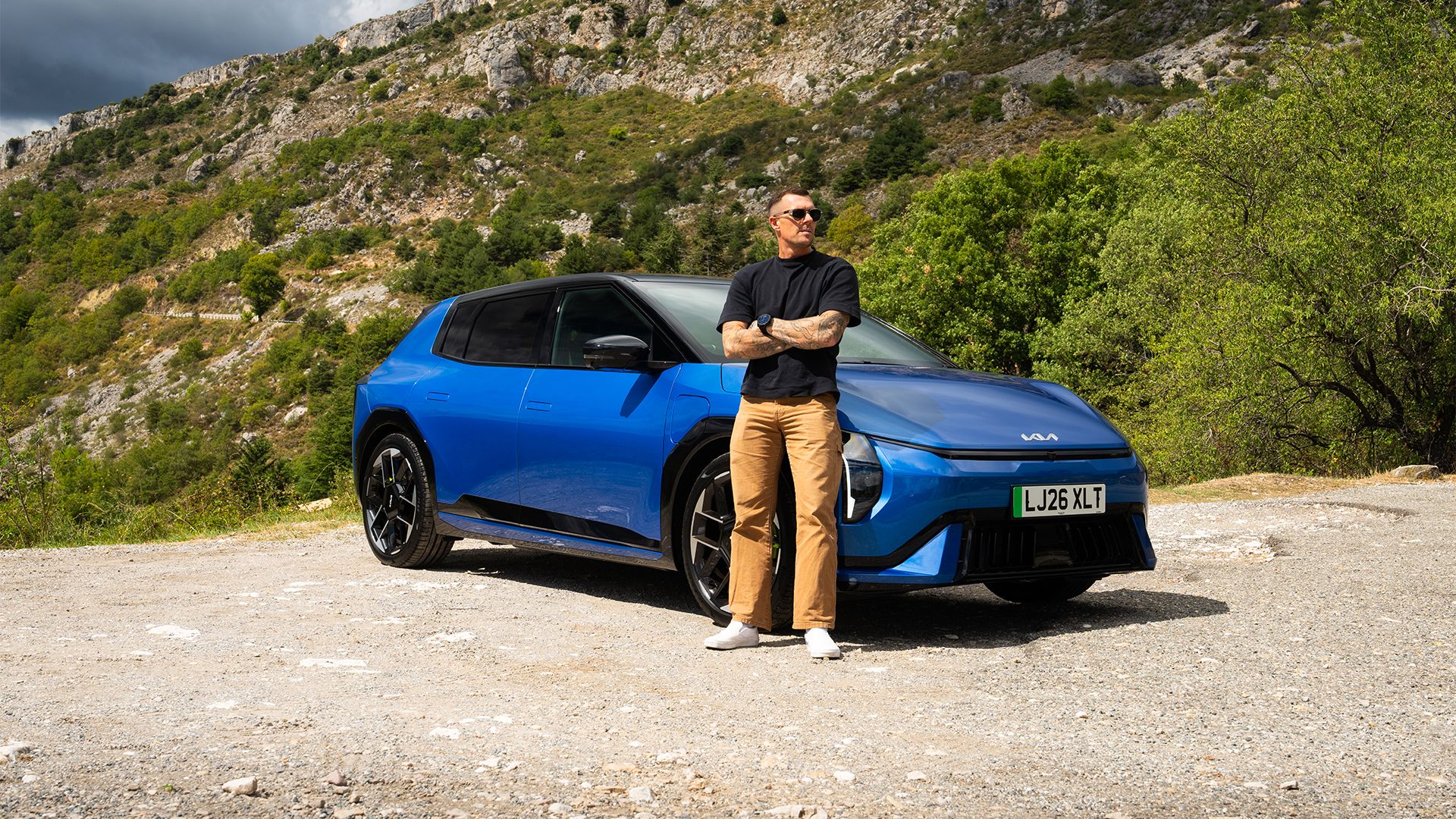
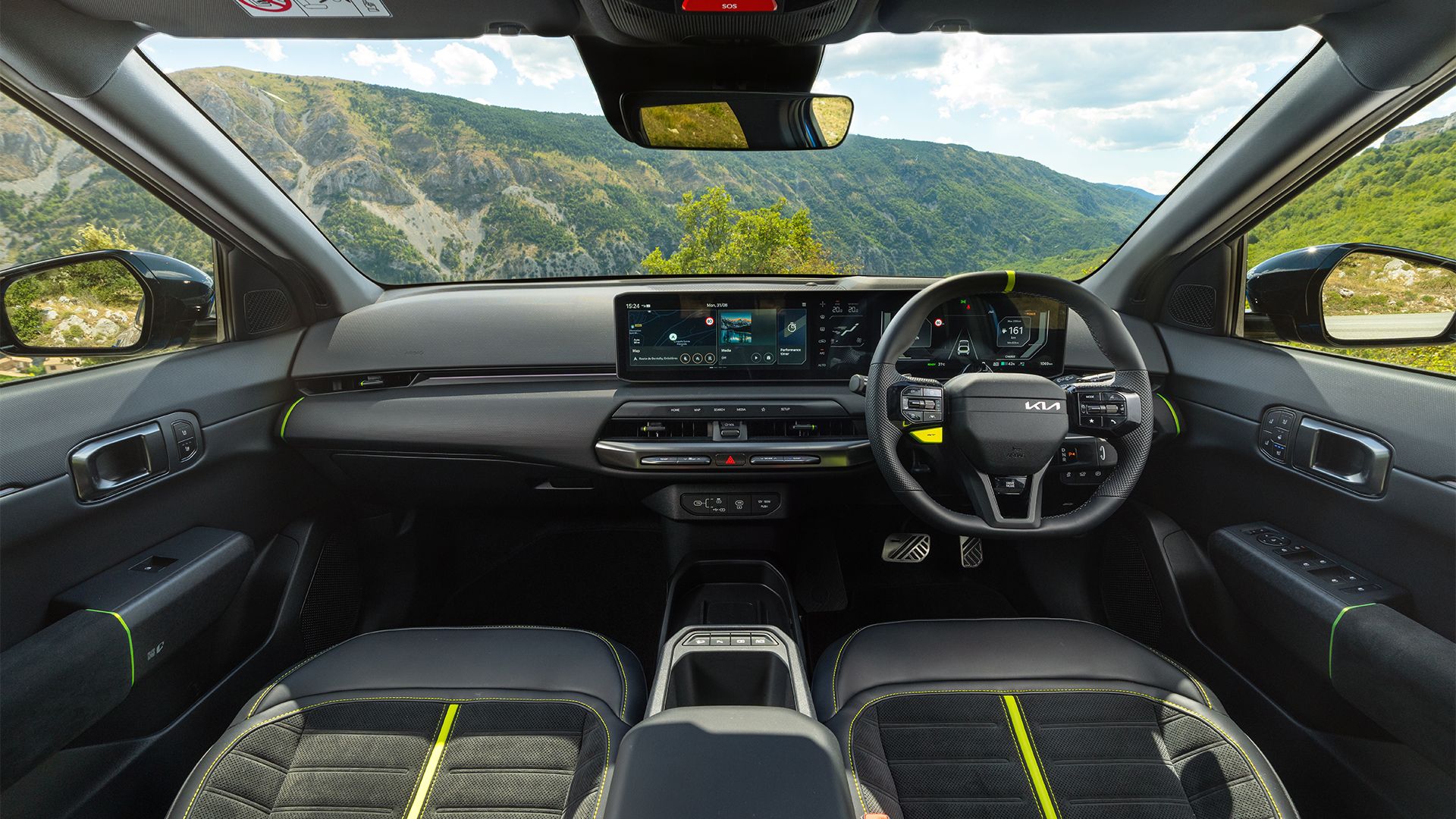
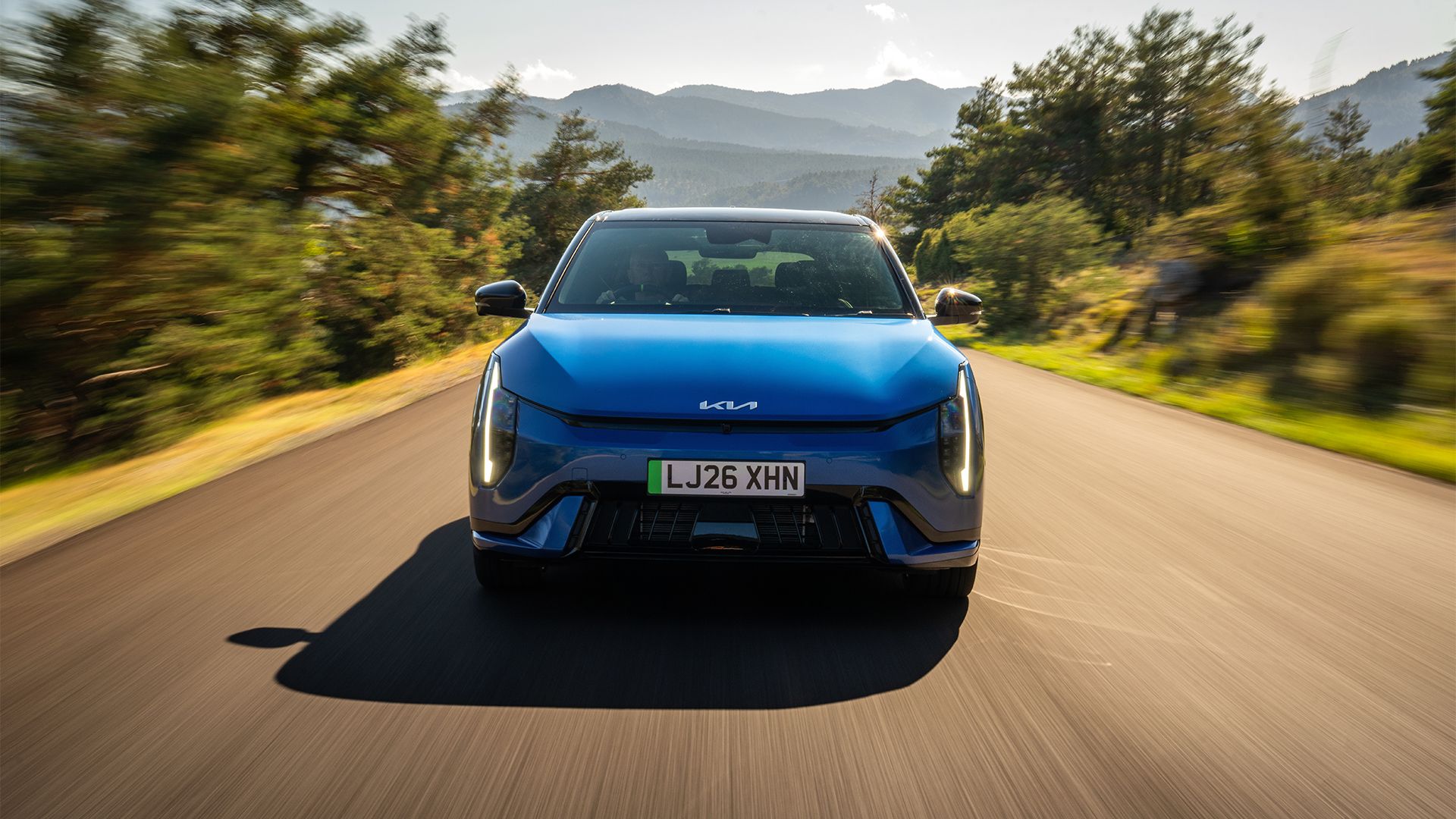
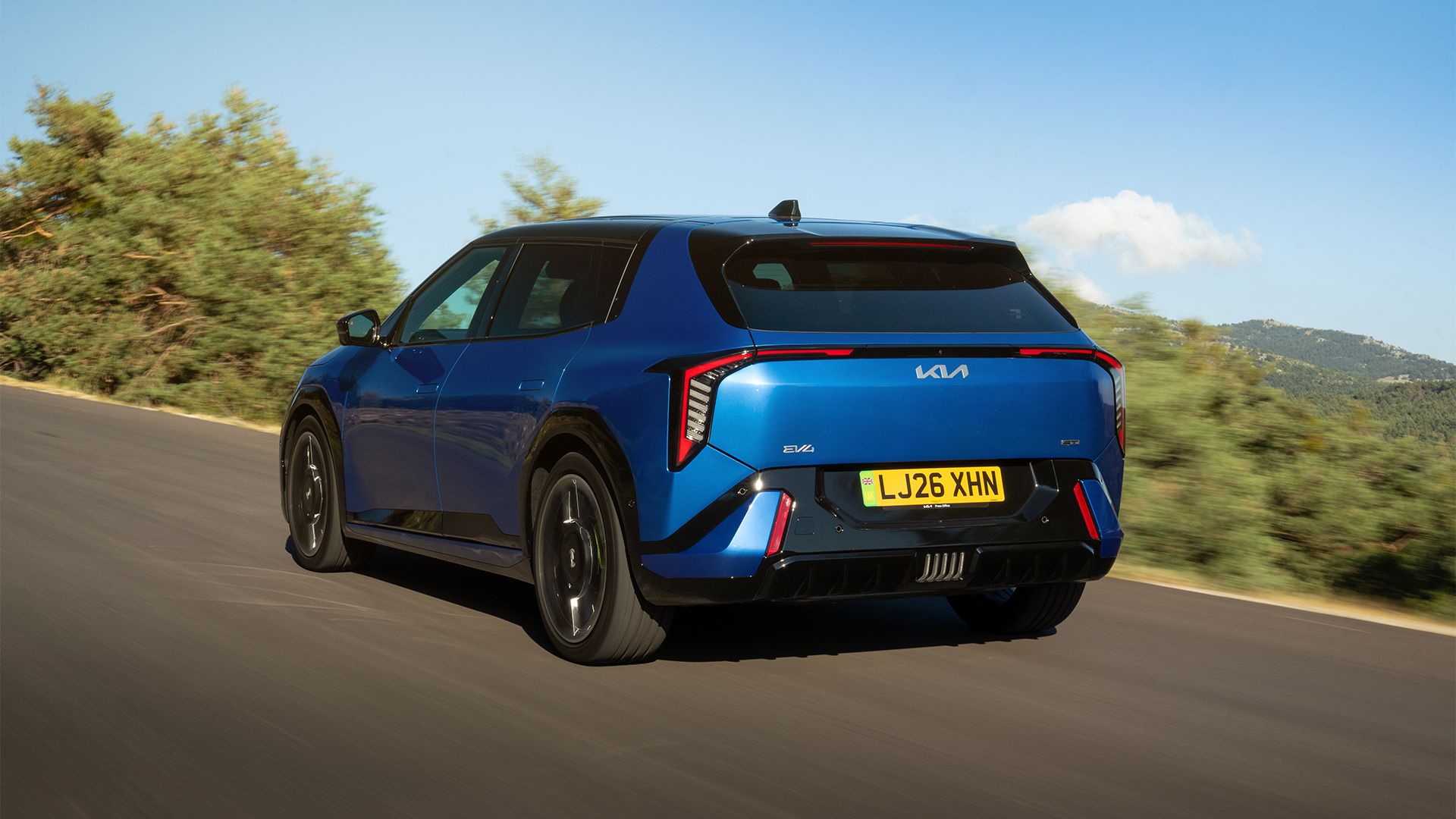
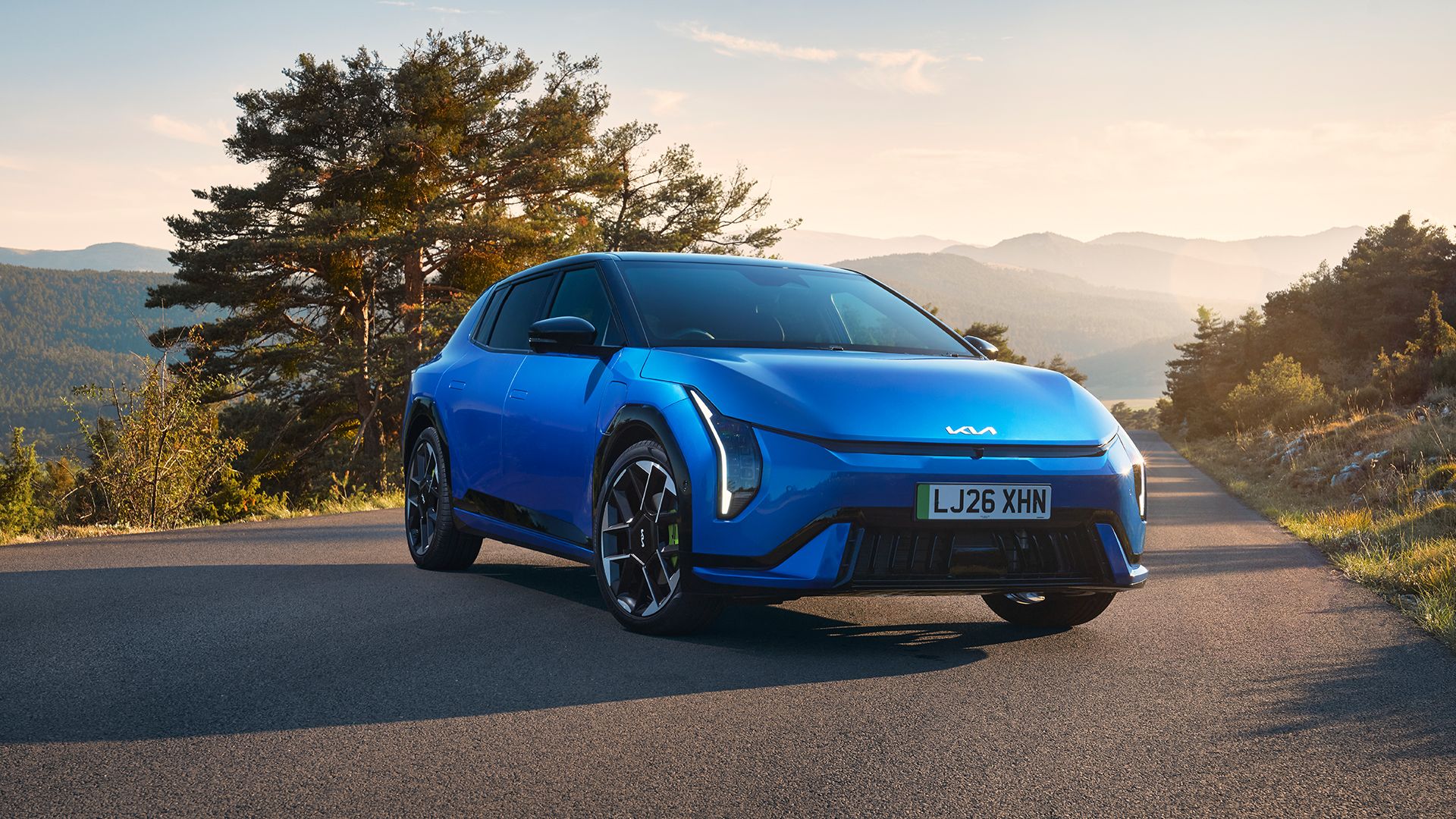
Its latest EV4 GT, which borrows heavily from Hyundai’s N performance division, offers a more usable 313 miles of official range from its much larger 81.4kWh NMC battery.
There’s a 145kW permanent-magnet motor at the front producing 283Nm, joined by a 70kW rear induction motor making 185Nm.
Combined output is 215kW, or 288bhp, with 468Nm of torque. That’s enough for 0-62mph in 5.6 seconds, while 50-75mph takes just 3.9 seconds.
It is undeniably heavier than the lithe Peugeot and it certainly feels it, but the extra punch from the dual motors makes it feel equally brisk off the line.
Like Peugeot’s sporting division, Kia has also introduced a comprehensive chassis overhaul, including electronically controlled suspension, adaptive dampers, hydraulic bushings and electronically controlled Dynamic Torque Vectoring Control.
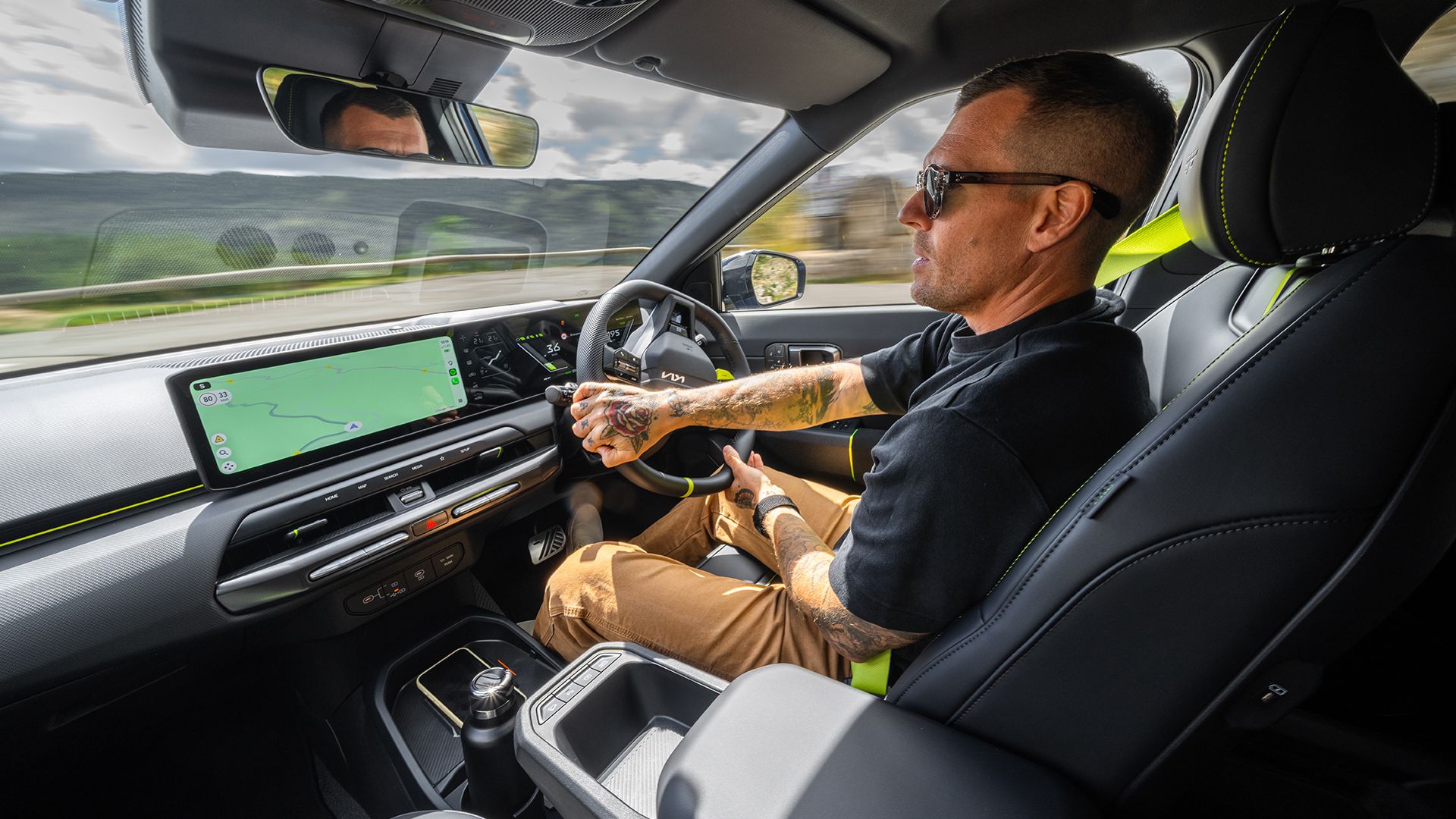
Pile on the revs and it’s possible to hit a purely virtual “limiter”.
There are also larger 325mm brakes and a six-speed Virtual Gear Shift system borrowed from Hyundai’s N division, designed to make the power delivery feel more familiar to anyone used to a performance gas-powered car.
Pile on the revs and it’s possible to hit a purely virtual “limiter”, while the paddles behind the steering wheel transform from regenerative braking adjusters in regular modes to a full-on flappy-paddle gearbox when the shiny GT button on the steering wheel is pressed.
Compared with the E-208 GTi, it’s the more comfortable daily cruiser, too, with bags of room in the rear for passengers and an ultra-modern, comfortable cabin that’s perfect for longer trips.
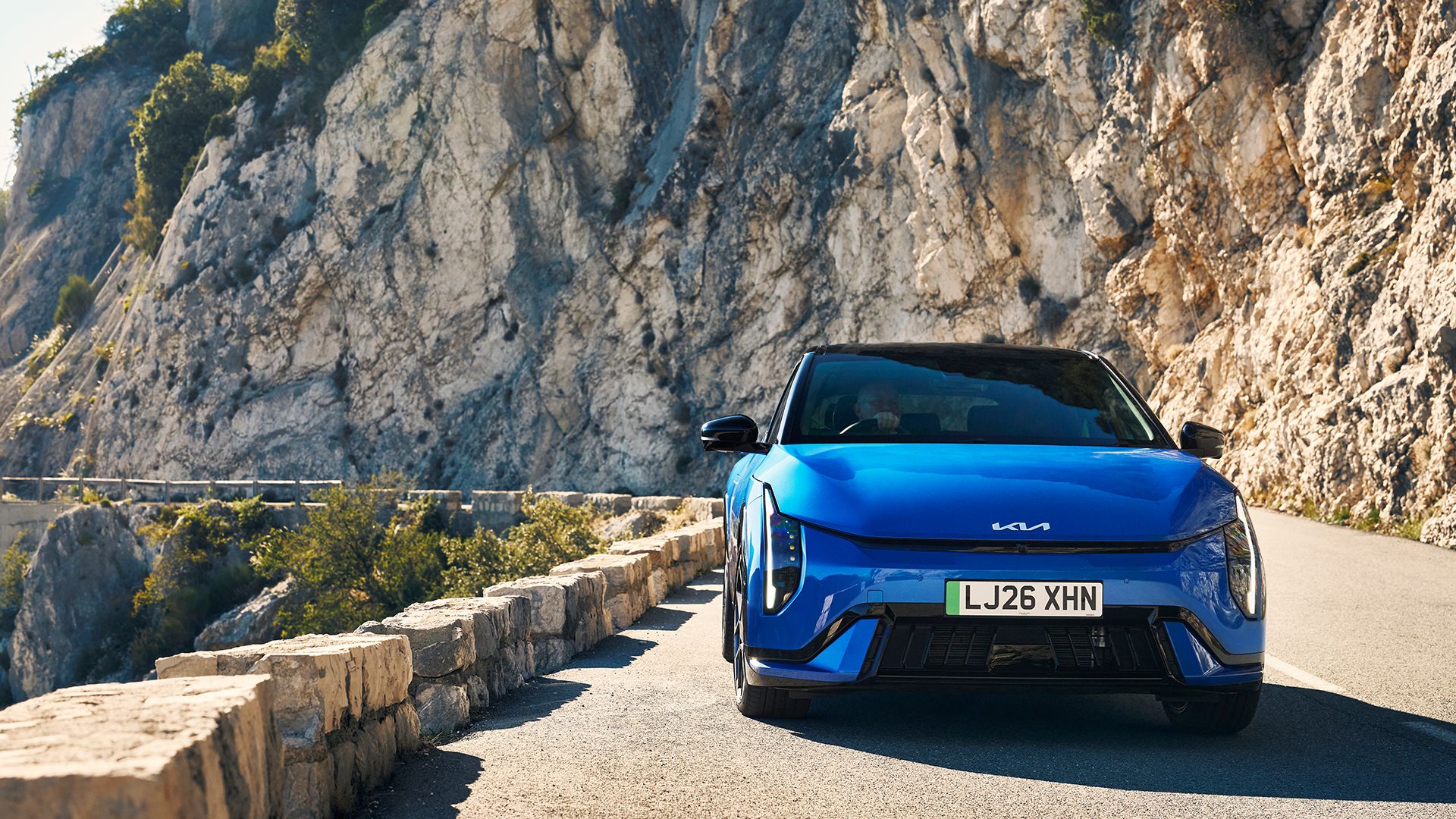
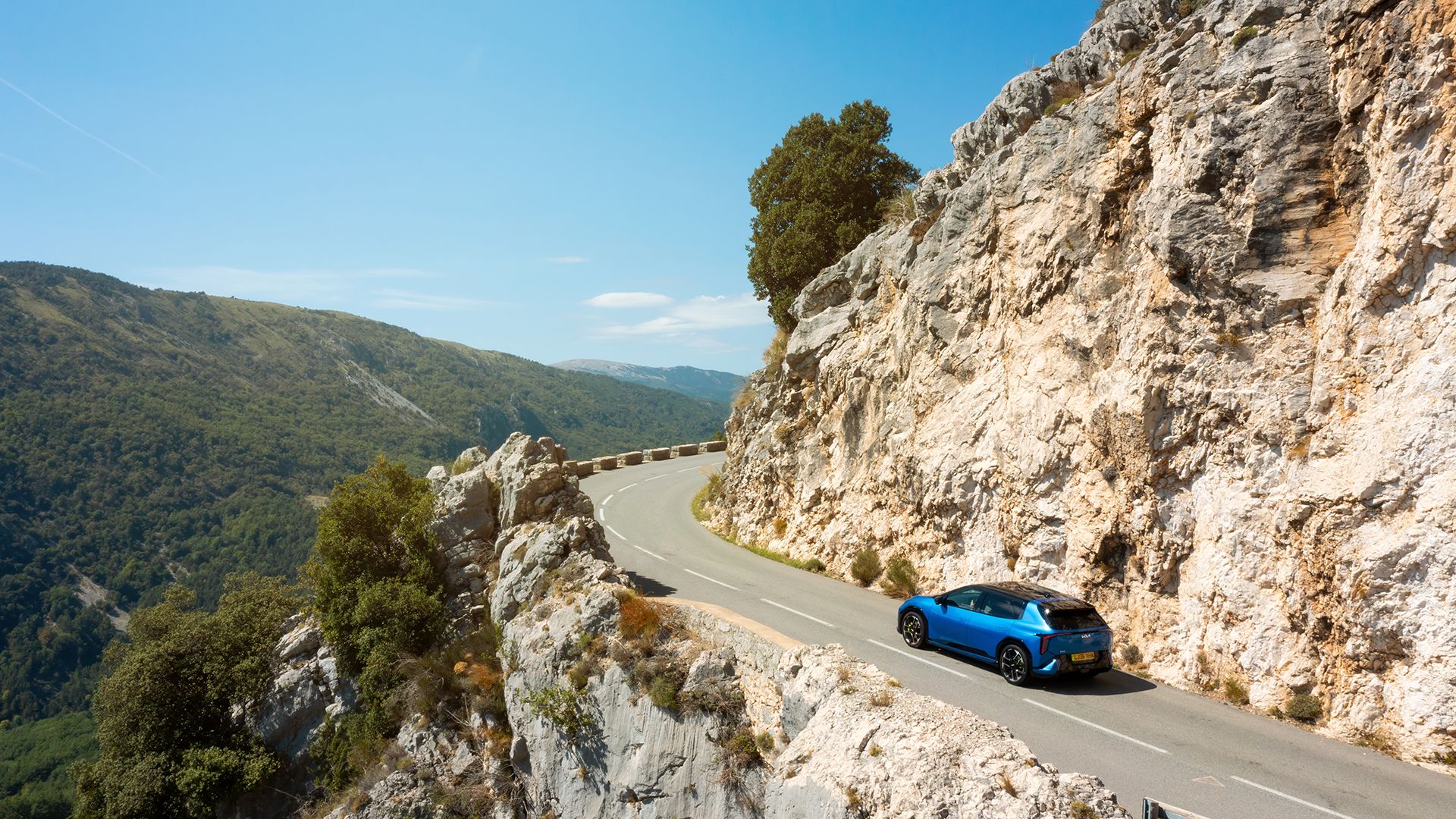
Regardless, on the winding roads of southern France, the EV4 GT’s hottest modes proved more than tempting and, despite being the larger and heavier vehicle, it still managed to prove that electric vehicles can be so much more than one-trick drag-strip ponies.
However, Kia is asking around £49,345 (around $65,300 / AU$93,100) for its souped-up EV, which is almost £15,000 (around $19,850 / AU$28,300) more than the Peugeot E-208 GTi. The latter was by far the most fun, if you can overlook the terrible range.
But with manufacturers now clearly placing an emphasis on more affordable and genuinely entertaining small EVs, it looks like driving enthusiasts will soon have arguably the most tempting shortlist there has ever been.
And for that, I’m grateful.