AMD’s 256-core monster EPYC CPU is its most expensive processor ever launched — 600W ‘Venice’ 9996 has 1 GB cache, supports PCIe 6.0 and MRDIMM, both cutting-edge enterprise-only tech that probably won’t come to consumers until after 2030
- AMD’s full EPYC 9006 price list tops out with the 256-core, 600W EPYC 9996 at $14,904 on a per-1,000-unit basis
- The CPU, which costs ~$58 per core or $29 per thread, is narrowly more expensive ($91) than its own older Turin flagship, which clocked in at $14,813
- While PCIe 6.0 is forecast to reach PCs around 2030, MRDIMM, a registered server module that specifically caters to AI memory bandwidth needs, may never make the jump
AMD has published specifications and 1,000-unit pricing for all 31 processors in its 6th Gen EPYC 9006 “Venice” family, and the top-of-stack chip sets a new high for the company on multiple fronts.
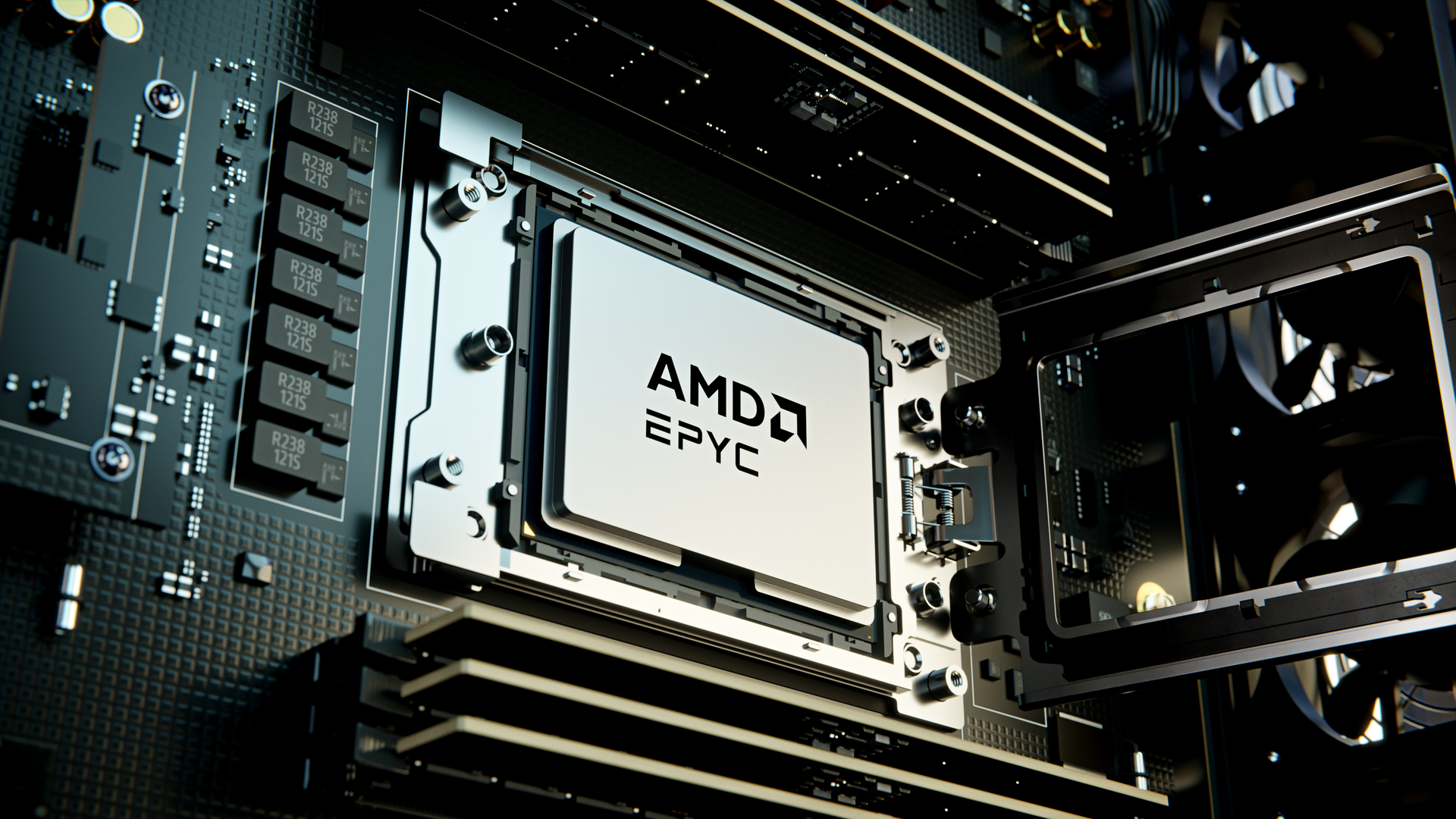
The AMD EPYC 9996 combines 256 Zen 6c cores and 512 threads with 1,024MB of L3 cache and a 600W default power rating on AMD’s new SP7 socket, and it lists at $14,904, according to a full SKU sheet reported by StorageReview and corroborated by TechPowerUp.
The price is the highest for a single CPU that AMD has ever charged, as it continues to leverage its CPU lead and GPU business to carve itself a piece of an increasingly lucrative AI pie.
A measly pricing record coupled with plenty of real upgrades under the hood
When AMD’s Turin launched in October 2024, it listed the 192-core EPYC 9965 at $14,813; our TechRadar Pro coverage described it previously as its most expensive processor to date.
Fast forward two years, and we have a CPU that costs $91 more but adds 64 Zen 6c cores, with benchmarks pointing to it as a significant performance upgrade for only a 1% increase in cost.
Hyperscalers willing to pay $77 a core for the EPYC 9965 would be more than happy to pay AMD’s $58 ask, but that might be a moot point here; AMD’s pricing is essentially guidance before OEM discounts and negotiations kick in for consumers who generally want chips in the hundreds or thousands for a typical deployment.
Interestingly, $14,904 might be where AMD’s pricing caps out, but it is not the most anyone has historically asked for a server CPU; Intel’s 128-core Xeon 6980P launched at $17,800 in 2024, making it considerably more expensive than its competition.
With a mammoth 600W power rating (AMD has retired its TDP rating for a ‘default CPU power’ figure that provides a more accurate power consumption under specific workloads), a gigabyte of L3 cache, and 256 Zen 6c ‘compact’ cores under the hood, the AMD EPYC 9996 is one of the fastest CPUs money can buy.
It also offers PCIe 6.0 connectivity and MRDIMM support for higher memory bandwidth, both key technologies for a current-generation AI workstation or datacenter’s performance needs. The former is expected to reach desktop PCs by 2030, while the latter, a registered, buffered server module, might never see the inside of one for the foreseeable future.
AMD currently holds 46% of server CPU revenue, according to Mercury Research, which can lead one to conclude that AMD’s nearest competitor is, as Storage Review put it, “its own last generation,” at a time when Intel is still playing catch-up and OEMs are turning to Nvidia’s Vera Rubin offerings as an alternative in the same space.
A more cynical take would be that list prices have drifted so far from what buyers actually pay that holding the sticker flat costs AMD very little, even as OEM partners and hyperscalers get to see the actual costs, which might not be as simple as an additional 64 cores for a $91 increase in cost at a time when AI demand outstrips supply on various fronts.