


The Download: the Pentagon’s AI-powered lie detector and young organ limits
This is today’s edition of The Download, our weekday newsletter that provides a daily dose of what’s going on in the world of technology.
The Pentagon wants $30 million to build an AI-powered lie detector
The US government wants to spend $30.3 million over the next five years on an improved lie detector, according to a Department of Defense budget request.
The program, called “Polygraph+” or “Polygraph Next,” will focus on scoring algorithms that use AI and machine learning, as well as a technique called “standoff sensing,” which can take physiological readings from a person without attaching a device to them.
The project aims to improve the accuracy and reliability of polygraph assessments. But it could just be the latest in a long line of failed attempts to use technology to detect lies.
—Amit Katwala
Young organs may not be a fountain of youth for recipients
Around this time last year, a hot mic caught Vladimir Putin and Xi Jinping discussing the possibility of living forever. “With the developments of biotechnology, human organs can be continuously transplanted, and people can live younger and younger, and even achieve immortality,” Putin reportedly said.
He seemed to be referring to the “replacement” theory of longevity, supported by experiments that involved physically stitching young mice to old ones. Unfortunately for Putin, new research on transplanted hearts pours a little cold water on this idea. But it also offers useful insights for organ transplantation.
Find out what the research reveals about the limits of rejuvenation.
—Jessica Hamzelou
This story is from The Checkup, our weekly biotech newsletter. Sign up to receive it in your inbox every Thursday.
Roundtables: the deadly failures of the virtual border wall
The US has spent billions building a “virtual wall” of surveillance towers along its southern border, promising to detect and apprehend border crossers and save lives. But an MIT Technology Review investigation found more than a thousand people died within the advertised range of the towers without getting caught.
On Monday September 28, our editor-in-chief Mat Honan, senior AI reporter James O’Donnell and senior reporter for features and investigations Eileen Guo will join a subscriber-only conversation about the investigation. They’ll examine the failures of border surveillance technology and uncover the stories of the people who die in the borderlands.
Register now to attend on Monday, September 28 at 7:00pm BST / 2:00pm EDT / 11:00am PDT.
Want to join the conversation? Subscribe to MIT Technology Review for exclusive access to all our Roundtables.
Read the full MIT Technology Review investigation here.
The must-reads
I’ve combed the internet to find you today’s most fun/important/scary/fascinating stories about technology.
1 ChatGPT helped the Tumbler Ridge shooter focus on attack tactics
A new investigation found it also advised on evading safeguards. (Mother Jones)
+ British Columbia is suing OpenAI over its failure to alert police. (BBC)
+ And wants OpenAI to pay for a replacement school. (Ars Technica)
+ Do AI chatbots cause delusions or amplify them? (MIT Technology Review)
2 Ukraine just used drones to drop military robots behind Russian lines
The “world-first” assault sent the devices into enemy territory. (Ars Technica)
+ The robots can attack, scout and clear routes for troops. (Business Insider)
+ Europe has a drone-filled vision for future wars. (MIT Technology Review)
3 Google is about to launch AI chips into space
The satellite will run simple AI queries from orbit. (Reuters $)
+ The project is part of plans to put AI data centers in space. (Gizmodo)
+ Here’s how we could put data centers in space. (MIT Technology Review)
4 A new DNA test can diagnose brain tumors in hours
The technology analyzes a tumor’s DNA to identify its type. (BBC)
5 Tesla’s Semi is finally ready to hit the road
The long-delayed electric truck is reaching customers this week.(Verge)
+ It could be a big deal for electric trucking. (MIT Technology Review)
6 Meta has gained an early lead over OpenAI in the AI device market
The Muse Charm is expected to ship before OpenAI’s hardware. (CNBC)
+ Meta promises to put privacy at the center of the products. (Axios)
7 A mathematician has discovered a rare eight-faced shape
He argues that the strange three-holed object can exist in 3D. (New Scientist $)
8 AI agents are flooding researchers with collaboration requests
Some bots are asking for data, money, and research partnerships. (Nature)
9 Venus may have swallowed its own moon
The planet’s slow rotation could have dragged the moon to its doom. (Wired $)
10 Mark Zuckerberg has finally explained his fashion glow-up
His makeover is intertwined with Meta’s wearables push. (NYT $)
Quote of the day
“They’ve got to inflict an enormous amount of pain and suffering on you so that they can save you. And so I think AI’s kind of like that.”
—Jensen Huang compares AI’s need for fossil fuels to surgery in an interview on The Ezra Klein Show.
One more thing

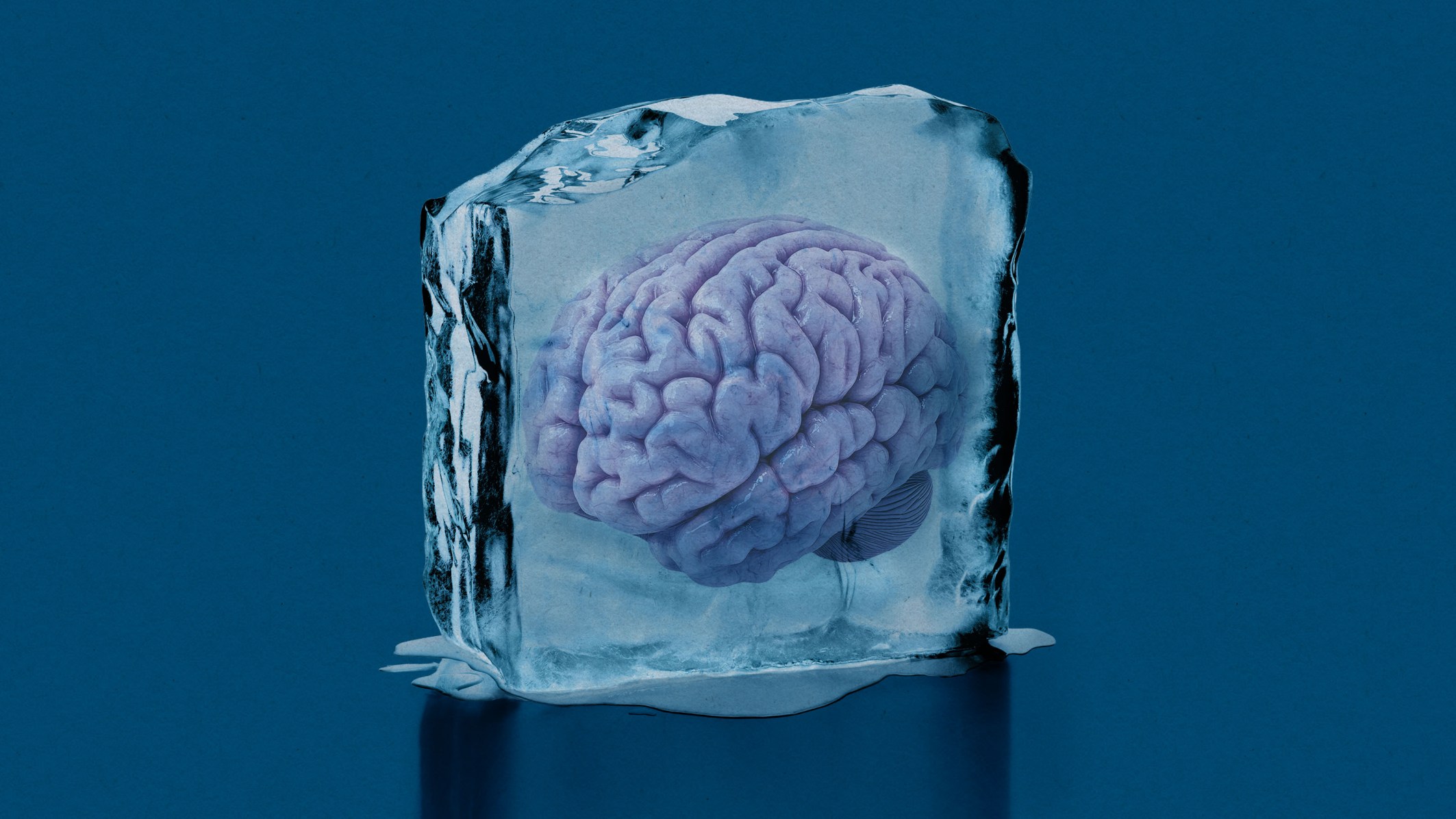
This scientist rewarmed and studied pieces of his friend’s cryopreserved brain
L. Stephen Coles’s brain sits in a vat at a storage facility in Arizona. It has been held there at a temperature of around −146°C for more than a decade, largely undisturbed. Before he died in 2014, Coles had the brain frozen with an ambitious goal in mind: reanimation.
His friend, cryobiologist Greg Fahy, believes it could be revived one day. But other experts are less optimistic.
Still, Fahy’s research could lead to new ways to study the brain. And using cryopreservation for organ transplantation is becoming a viable reality.
Read the full story to find out what the future holds for the technology.
—Jessica Hamzelou
We can still have nice things
A place for comfort, fun, and distraction to brighten up your day. (Got any ideas? Drop me a line.)
+ A French village recently hosted its annual pig-squealing championship.
+ Things get deliciously unattractive at the Iowa State Fair’s annual ugliest cake contest.
+ Greater Victoria is home to more than 1,000 Little Free Libraries, each with its own personality.
+ A study found that seeing someone dressed as Batman nearly doubled the rate of people giving up their seat to a pregnant woman.