
Regulators Push Ahead With Digital Asset Frameworks

U.S. financial regulators are moving ahead with efforts to accommodate digital assets and tokenized securities within existing market structures, even as broader legislation remains uncertain.
Speaking at SIFMA’s Digital Assets Conference on Wednesday, September 23, officials from the Securities and Exchange Commission (SEC), Commodity Futures Trading Commission (CFTC) and FINRA pointed to a growing mix of regulatory relief, rulemaking and industry experimentation that could bring more activity on-chain.
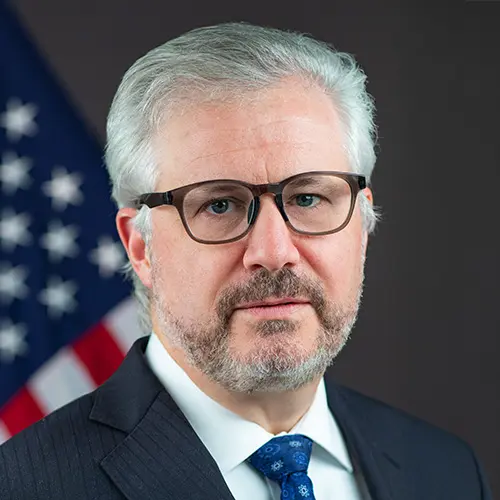
Richard Gabbert, Chief of Staff of the SEC’s Crypto Task Force and Senior Advisor to the Chairman, highlighted the Commission’s recently released innovation exemption, which establishes a conditional framework allowing NMS stocks to trade through tokenized securities venues using automated market makers, or AMMs.
“The best way to look at this is as an initial step to eventual rulemaking,” Gabbert said, comparing the approach with the SEC’s development of Regulation ATS in the 1990s.
The exemption is deliberately limited, covering restricted numbers of securities, trading volumes and time periods. Tokens must provide holders with the same rights and privileges as the equivalent class of NMS stock, while smart contracts must be auditable and deployed on a public permissionless ledger.
Gabbert stressed that the exemption is not the only route available to firms interested in moving securities on-chain. Firms could potentially operate tokenized securities through existing regulatory structures, including alternative trading systems, while others could approach SEC staff for tailored relief.
The SEC also intends the framework to be accessible to a broad range of market participants, including fintech companies, crypto-native firms and potentially broker-dealers, exchanges and transfer agents. Registered firms participating under the exemption would generally need to keep the activity operationally separate from their regulated businesses.
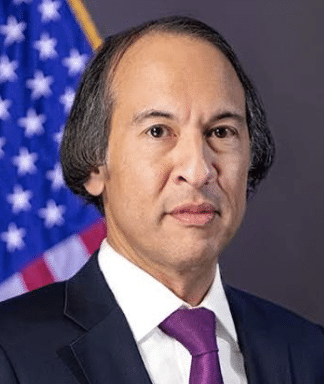
At the CFTC, regulators are similarly trying to remove barriers where existing rules may not fit emerging technology. Amir Zaidi, Chief of Staff to the CFTC Chairman, pointed to recent no-action relief for passive software providers offering front-end interfaces into registered markets. The relief allows qualifying providers to operate without registering as introducing brokers, subject to conditions.
Zaidi said the agency wants to provide greater certainty for software developers that are providing “digital rails” through which users interact with programmatic, self-executing software.
The CFTC is also preparing an advance notice of proposed rulemaking that would explore a framework for a subcategory of designated contract markets called “crypto asset markets.” The initiative would also examine the Commission’s authority over retail leveraged spot transactions and actual delivery.
While regulators discussed policy changes, FINRA offered a snapshot of how broker-dealers are responding. Jason Foye, head of FINRA’s Crypto Hub, described the industry as entering a period of “expanded experimentation” with on-chain markets.
FINRA received responses from more than 3,200 firms, representing 94% of its membership, to a voluntary survey examining current and planned crypto activity. Around 261 firms said they were either already active in crypto or expected to become active over the next 12 months. That included roughly 90 firms that were not currently active, representing about a 52% increase in the active population.
Private placements and third-party arrangements that give customers access to crypto trading or custody remain among the largest areas of activity. But FINRA is also seeing increased interest in custody and trading of digital securities and stablecoins, as well as tokenization itself.
Around 12 firms currently reported tokenizing assets, according to Foye, with that number potentially rising to more than 40 over the coming year.
For now, however, the numbers point to what Foye characterized as expanded experimentation. About 90% of respondents expected crypto-related volumes of $100 million or less, while more than 85% expected the business to account for less than 10% of total revenue.
The panel also addressed efforts by the SEC and CFTC to make it easier for firms to offer different types of financial products through a single platform, sometimes described as a “super app.”

Gabbert said coordination between the agencies is important because some of that activity is already taking place offshore. Providing clearer definitions and addressing regulatory friction could make it easier for U.S. firms to offer securities and other products through more integrated platforms.
For FINRA, that convergence could put greater emphasis on how firms communicate with customers. Foye highlighted FINRA Rule 2210, governing communications with the public, saying investors will need clear information about the protections that apply or do not apply to different assets offered through the same platform.
Despite the push toward new structures, regulators repeatedly emphasized that existing obligations do not disappear when activity moves on-chain. Anti-money laundering, sanctions compliance and customer identification remain important considerations depending on the structure and activity involved.
Looking ahead, Foye said the next year should give regulators a clearer picture of effective practices and the challenges different business models encounter.
“We’ll learn a lot over the next 12 months,” he said, particularly about what is working, what is difficult and where additional regulatory interpretation may be needed.